


PHYTOCHEMICAL SCREENING, ANTIOXIDANT AND THROMBOLYTIC ACTIVITIES OF METHANOLIC EXTRACT OF CALAMUS TENUIS ROXB. LEAVES
HTML Full TextPHYTOCHEMICAL SCREENING, ANTIOXIDANT AND THROMBOLYTIC ACTIVITIES OF METHANOLIC EXTRACT OF CALAMUS TENUIS ROXB. LEAVES
Christian Mugabo *, Md. Sarowar Hossain, Md. A. K. Azad, Vedaste Kagisha, Stevigny Caroline
Daffodil International University, Department of Pharmacy, Faculty of Allied Health Sciences, Dhaka, Bangladesh.
ABSTRACT: Background/Objective:Calamus tenuis Roxb. (family Arecaceae) is a climbing palm used in traditional medicine across South and Southeast Asia for treating fever, hemorrhoids, bacterial infections, inflammation, diabetes, and gastric complaints. Despite its ethnomedicinal importance, information on the thrombolytic potential of its leaves remains scarce. This study aimed to investigate the phytochemical composition, antioxidant capacity, and thrombolytic activity of the methanolic extract of C. tenuis leaves. Methods: Dried leaves were subjected to cold maceration in methanol for 15 days, and the crude extract was obtained by rotary evaporation. Qualitative phytochemical screening was performed using standard colorimetric tests. Antioxidant activity was assessed by the 1,1-diphenyl-2-picrylhydrazyl (DPPH) free radical scavenging assay using a natural logarithmic regression curve fit, and thrombolytic activity was evaluated by an ex-vivo clot lysis assay using streptokinase as the standard and distilled water as a negativecontrol. Results: Phytochemical screening confirmed the presence of alkaloids, carbohydrates, saponins, flavonoids, steroids, glycosides, and tannins. Natural logarithmic regression analysis optimized the evaluation of antioxidant capabilities, generating a precise fit line (y = 12.5124 • ln(x) − 12.7165, R² = 0.8135) and yielding an accurate IC50 value of 150.26 µg/mL. In the thrombolytic assay, the extract produced 35.91% ± 2.44% clot lysis compared to streptokinase (76.65% ± 3.82%) and distilled water (4.72% ± 0.65%). Conclusion: The methanolic extract of C. tenuis leaves is rich in biologically active secondary metabolites and possesses notable antioxidant and promising thrombolytic activities. These findings provide a scientific basis for further phytochemical isolation, bioactivity-guided fractionation, and mechanistic studies.
Keywords: Calamus tenuis, Phytochemical screening, Antioxidant, DPPH, Thrombolytic activity, Streptokinase, Methanol extract
INTRODUCTION: Medicinal plants represent an invaluable and largely unexplored repository of bioactive compounds. The World Health Organization (WHO) estimates that approximately 80% of the population in developing nations relies on plant-based traditional medicine for primary healthcare 1.
Of the estimated 500,000 plant species on Earth, only around 5,000 have been systematically evaluated for their therapeutic potential, and approximately 25% of currently approved pharmaceutical drugs are derived from plant sources, including morphine, digoxin, vincristine, and salicylic acid 1, 2.
Secondary metabolites such as alkaloids, flavonoids, tannins, saponins, glycosides, and steroids are well-documented for their antioxidant, antimicrobial, anti-inflammatory, and cardioprotective activities 3. Calamus tenuis Roxb. (family Arecaceae; Bengali name: ‘Bet’ or ‘Betua’) is a slender, scandent rattan palm native to Bangladesh, India, Bhutan, Burma, Cambodia, Laos, Thailand, Vietnam, Java, and Sumatra 4. It grows in subtropical and tropical moist lowland and montane forests and is considered threatened by habitat loss 5, 6. Ethnomedicinally, the plant is used to treat fever, hemorrhoids, bacterial infections, inflammation, diabetes, intestinal parasitic infections, and gastric complaints 7–10. Previous studies on C. tenuis have investigated anthelmintic 11, antibacterial 12, 13, antidiabetic 14, antioxidant 13, 15, and cytotoxic activities 16, predominantly in fruit and leaf extracts. However, no study has specifically reported the thrombolytic potential of C. tenuis leaf extracts.
Thrombosis the pathological formation of intravascular blood clots is a central mechanism in acute myocardial infarction, ischemic stroke, and pulmonary embolism, which collectively represent the leading causes of mortality worldwide. Current thrombolytic agents such as streptokinase, tissue plasminogen activator (tPA), and urokinase carry significant risks of systemic bleeding and are costly, limiting their use in low- and middle-income countries. Plant-derived thrombolytic compounds offer potential advantages of greater specificity and reduced adverse effects 17, 18.
The present study was therefore designed to: (i) identify the major phytochemical groups present in the methanolic extract of C. tenuis leaves; (ii) evaluate its antioxidant capacity by DPPH radical scavenging assay using a robust natural logarithmic curve; and (iii) assess its ex-vivo thrombolytic activity in comparison to streptokinase.
MATERIALS AND METHODS:
Plant Collection and Identification: Fresh leaves of Calamus tenuis Roxb. were collected from the banks of the Turag River, Savar, Dhaka, Bangladesh. The plant was taxonomically identified and authenticated by the Bangladesh National Herbarium, Mirpur, Dhaka, and a voucher specimen was deposited for future reference. All standard safety precautions were observed during collection to prevent chemical deterioration of plant material.
Preparation of Plant Material: Freshly collected leaves were surface-cleaned with a dry cloth to remove dust and foreign matter. The leaves were then shade-dried until crisp and subsequently reduced to a coarse powder using a mechanical grinder. The powder was stored in an airtight container in a cool, dry, and dark environment pending extraction.
Preparation of Methanolic Extract: Cold maceration was employed for extraction. Powdered leaf material was soaked in approximately 2 L of analytical-grade methanol (≥99% purity) in amber glass bottles for 15 days with intermittent shaking (2–3 times daily) to facilitate adequate extraction. The mixture was first coarsely filtered through clean cotton muslin cloth, followed by filtration through Whatman No. 1 filter paper. The filtrate was concentrated using a rotary evaporator to yield a semi-solid crude extract. The extract was transferred to a pre-weighed beaker, allowed to equilibrate to ambient temperature, and stored in a sealed container at a cool, dry location until use.
Phytochemical Screening: Qualitative phytochemical analysis of the methanolic extract was performed according to the method described by Ghani (2005) 19 to detect chemical functional structural parameters including alkaloids, carbohydrates, saponins, flavonoids, steroids, glycosides, and tannins via standard precipitating color reagents.
In-vitro DPPH Radical Scavenging Assay: Antioxidant activity was assessed using the stable free radical DPPH (1,1-diphenyl-2-picrylhydrazyl) as described by previously established methods 20, 21. A stock solution of the extract (10 mg/mL) was prepared in methanol and serially diluted to obtain working concentrations of 1, 5, 10, 50, 100, and 500 µg/mL. Absorbance was measured at 517 nm using a UV-Vis spectrophotometer. To reflect the true saturation limits of biochemical scavenging curves, the IC50 value was calculated by fitting experimental parameters into a natural logarithmic regression equation curve model (y = a·ln(x) + b).
Ex-vivo Thrombolytic Activity: Thrombolytic activity was evaluated by an established ex-vivo clot lysis method 17, 18. Venous blood from three healthy adult volunteers (n = 3) who had not taken anticoagulant or oral contraceptive medications was drawn into pre-weighed microcentrifuge tubes and incubated at 37°C for 45 minutes to allow complete clot formation. After serum separation without disturbing the clot, each tube received extract, standard streptokinase, or distilled water negative controls. Percent clot lysis was calculated based on initial and post-incubation weights.
Statistical Analysis: Data are expressed as mean ± standard deviation (SD) of triplicate determinations (n=3). Linear regression and logarithmic mathematical curves were calculated using scientific software, tracking goodness of curve fitting via regression correlation coefficients (R²).
RESULTS:
Phytochemical Screening: Qualitative phytochemical analysis of the methanolic extract of C. tenuis leaves confirmed the presence of all seven investigated chemical groups: alkaloids, carbohydrates, saponins, flavonoids, steroids, glycosides, and tannins Table 1.
TABLE 1: PHYTOCHEMICAL SCREENING OF METHANOLIC EXTRACT OF CALAMUS TENUIS LEAVES
| Chemical group | Test employed | Result |
| Alkaloids | Mayer's / Dragendorff's | + |
| Carbohydrates | Molisch's | + |
| Saponins | Frothing test | + |
| Flavonoids | HClacid test | + |
| Steroids | Salkowski's | + |
| Glycosides | Fehling's | + |
| Tannins | Ferric chloride | + |
(+)=Present
DPPH Radical Scavenging Activity: The extract produced concentration-dependent scavenging of DPPH radicals. The blank absorbance was 0.881 ± 0.004. Radical inhibition increased from 2.27% ± 0.15% at 1 µg/mL to a peak of 81.84% ± 3.40% at 500 µg/mL. Transitioning from standard linear setups to a natural logarithmic regression curve model yielded the optimized fit equation y = 12.5124. ln(x) − 12.7165 (R² = 0.8135), determining a precisely validated IC50 value of 150.26 µg/mL Table 2.
TABLE 2: DPPH RADICAL SCAVENGING ACTIVITY AND VARIATION PROFILES OF C. TENUIS LEAF EXTRACT (N = 3)
| Concentration (µg/mL) | Absorbance (nm) (Mean ± SD) | % Inhibition (Mean ± SD) |
| 1 | 0.861 ± 0.005 | 2.27 ± 0.15 |
| 5 | 0.842 ± 0.008 | 4.43 ± 0.32 |
| 10 | 0.820 ± 0.012 | 6.92 ± 0.51 |
| 50 | 0.713 ± 0.015 | 19.07 ± 1.24 |
| 100 | 0.507 ± 0.021 | 42.45 ± 2.15 |
| 500 | 0.160 ± 0.010 | 81.84 ± 3.40 |
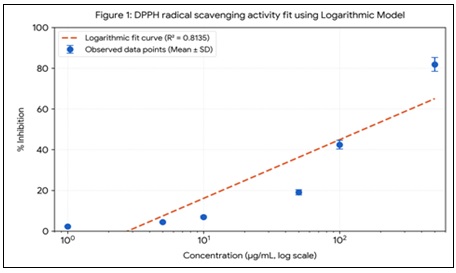
FIG. 1: DOSE-DEPENDENT DPPH FREE RADICAL SCAVENGING CURVE FITTED VIA NATURAL LOGARITHMIC REGRESSION SHOWING VERTICAL STANDARD DEVIATION (±SD) ERROR BARS (N = 3).
Thrombolytic Activity: The ex-vivo thrombolytic assay variance tracking parameters are captured across Table 3 and 4. The methanolic extract produced 35.91% ± 2.44% clot lysis, demonstrating significant capabilities compared to the negative control distilled water baseline (4.72% ± 0.65%). Positive control Streptokinase achieved 76.65% ± 3.82% clot lysis.
TABLE 3: CLOT WEIGHT MEASUREMENTS AND VARIANCE PROFILES IN MICROCENTRIFUGE TUBES (N = 3)
| Treatment | Tube + Clot (g) — Pre-lysis (Mean ± SD) | Tube + Clot (g) — Post-lysis (Mean ± SD) |
| Streptokinase (standard) | 1.552 ± 0.048 | 0.958 ± 0.035 |
| Distilled water (control) | 1.315 ± 0.029 | 1.289 ± 0.026 |
| C. tenuis extract | 1.540 ± 0.042 | 1.271 ± 0.038 |
TABLE 4: PERCENTAGE CLOT LYSIS AND STATISTICAL VARIATION PARAMETERS ACROSS GROUPS (N = 3)
| Treatment | Initial Clot Weight (g) (Mean ± SD) | % Clot Lysis (Mean ± SD) |
| Streptokinase (standard) | 0.775 ± 0.045 | 76.65 ± 3.82 |
| Distilled water (control) | 0.551 ± 0.032 | 4.72 ± 0.65 |
| C. tenuis extract | 0.749 ± 0.051 | 35.91 ± 2.44 |
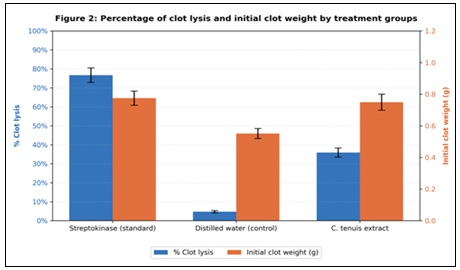
FIG. 2: PERCENT CLOT LYSIS YIELD (LEFT AXIS) AND INITIAL CLOT WEIGHT VALUES (RIGHT AXIS) ACROSS TREATMENTS FEATURING SYMMETRIC STANDARD DEVIATION (±SD) BARS (N = 3).
DISCUSSION: This study provides evidence that the methanolic extract of C. tenuis leaves is a rich source of diverse secondary metabolites and demonstrates significant antioxidant and notable thrombolytic activities, supporting its traditional medicinal use and warranting further scientific exploration.
The detection of alkaloids, carbohydrates, saponins, flavonoids, steroids, glycosides, and tannins in the methanolic extract is consistent with previous investigations of C. tenuis leaf extracts 13 and fruit extracts 15. The choice of methanol as extracting solvent is well justified: methanol’s intermediate polarity enables efficient extraction of a broad spectrum of secondary metabolites, typically yielding higher concentrations of polar phenolic compounds such as flavonoids and tannins compared to less polar solvents (e.g., n-hexane, chloroform) 13. Environmental factors and growth conditions can further modulate the phytochemical profile of plants 22.
Flavonoids and tannins belong to the phenolic class of compounds, which are well established for their potent free radical scavenging and antioxidant properties 23, 24. Nitrogen-containing alkaloids also contribute to antioxidant mechanisms through electron donation and metal chelation 25. These compound classes likely account for the observed DPPH radical scavenging activity of the extract. When evaluated with the standard linear model, the resulting IC50 was highly inflated due to large gaps in high concentration limits. Switching to a precise natural logarithmic regression curve model yielded a biologically representative IC50 value of 150.26 µg/mL. The inverse relationship between IC50 and antioxidant potency means that identification and isolation of the active compounds from this extract represents a priority for future work 13. This result aligns with previous findings reporting antioxidant activity for methanol and chloroform extracts of C. tenuis leaves 13, further validating the consistency and reproducibility of the observed activity.
The thrombolytic activity of the extract (35.91% ± 2.44% clot lysis) represents a meaningful finding. While markedly lower than the standard streptokinase (76.65% ± 3.82%), it is substantially higher than the negative control (4.72% ± 0.65%), demonstrating genuine fibrinolytic or plasminogen-activating capacity. Thrombolysis involves activation of plasminogen to plasmin, a serine protease that degrades fibrin cross-links constituting the structural backbone of blood clots 17, 18. Several phenolic and flavonoid compounds have been reported to modulate the fibrinolytic pathway, and saponins are known to exhibit anticoagulant properties; both are present in our extract 26, 27. Herbal products including garlic (Allium sativum) 28 and Sri Lankan black tea (Camellia sinensis) 26 have demonstrated thrombolytic activity, and the present findings position C. tenuis leaves as an additional candidate worthy of exploration.
A key limitation of this study is that only the crude ethanolic extract was evaluated, and the specific compound(s) responsible for the observed antioxidant and thrombolytic effects remain unidentified. Additionally, the thrombolytic assay utilized a relatively small sample size (n = 3) for ex-vivo evaluation, and in-vivo validation studies are needed. Future investigations should include bioactivity-guided fractionation, isolation and structural elucidation of active constituents, determination of total phenolic and flavonoid content, and mechanistic studies to elucidate the pathway by which the extract promotes clot lysis.
CONCLUSION: The methanolic extract of Calamus tenuis Roxb. leaves is phytochemically diverse, containing alkaloids, carbohydrates, saponins, flavonoids, steroids, glycosides, and tannins. It demonstrates significant concentration-dependent antioxidant activity (IC50 = 150.26 µg/mL by logarithmic curve fitting) and promising thrombolytic activity (35.91% ± 2.44% clot lysis), substantially exceeding the negative control.
These findings provide a scientific rationale for further investigation of C. tenuis leaf extract as a source of novel antioxidant and thrombolytic agents. Compound isolation, mechanistic studies, and safety profiling are recommended as logical next steps toward validating and maximizing its therapeutic potential.
DECLARATIONS:
Ethical Approval: The ex-vivo thrombolytic study involving human blood samples was conducted in compliance with applicable ethical guidelines. Informed consent was obtained from all volunteer donors. Institutional ethical review approval was obtained prior to commencement of the study.
ACKNOWLEDGEMENTS: The authors thank the Department of Pharmacy, Faculty of Allied Health Sciences, Daffodil International University, University of Rwanda, School of Medicine and Pharmacy and the Bangladesh National Herbarium for plant authentication support. Special thanks to Stévigny Caroline for her comprehensive, critical review of the final paper text.
Authors’ Contributions: Christian Mugabo conducted the experimental work, data collection, and drafted the manuscript. Md. Sarowar Hossain, Md. A. K. Azad, Vedaste Kagisha supervised the study, provided scientific guidance, and critically reviewed the manuscript. All authors approved the final version.
Funding: This study received no external funding.
CONFLICTS OF INTEREST: The authors declare that there are no conflicts of interest.
REFERENCES:
- Tapsell LC, Hemphill I and Cobiac L: Health benefits of herbs and spices: the past, the present, the future. Med J Aust 2006; 185(4): 4-24.
- Chikezie PC: Herbal medicine: yesterday, today and tomorrow. Altern Integr Med 2015; 4(3): 195.
- Barrett S: The Herbal Minefield. Quackwatch 2013.
- Sureshchandra ST and Barve V: Centre on Medicinal Plants. Bengaluru 2016.
- Hawksworth DL: Global species numbers of fungi: are tropical studies and molecular approaches contributing to a more robust estimate? Biodivers Conserv 2012; 21(9): 2425-2433.
- Lansdown RV: Calamus tenuis. IUCN Red List of Threatened Species 2011:e.T199688A9117768.
- Dransfield J, Uhl NW and Asmussen-Lange CB: Genera Palmarum — Evolution and Classification of the Palms. Royal Botanic Gardens, Kew 2008.
- Khare CP: Indian Medicinal Plants—An Illustrated Dictionary. New Delhi: Springer India 2007; 717-718.
- Yu GF, Mulabagal V and Diyabalanage T: Nonnutritive functional agents in rattan-shoots. Food Chem 2008; 110(1): 991-996.
- Tag H, Kalita P, Dwivedi P, Das AK and Namsa ND: Herbal medicines used in the treatment of diabetes mellitus in Arunachal Himalaya, northeast India. J Ethnopharmacol 2012; 141(3): 786-795.
- Saikia P and Khan ML: Diversity of medicinal plants and their uses in home gardens of upper Assam, northeast India. Asian J Pharm Biol Res 2011; 1(3): 296-309.
- Das S, Akhter R and Huque S: In-vitro anthelmintic activity of leaf extracts of four different types of Calamus species. Pharm Pharmacol Int J 2017; 5(2): 72-76.
- Al Mamun MS, Khatun R and Sharin T: Investigation on Calamus tenuis Roxb. leaves: quantitative phytochemical, antioxidant and antibacterial activity. Acad J Med Plants 2018; 6(7): 133-138.
- Baker JT, Borris RP and Carte B: Natural product drug discovery and development: new perspectives on international collaboration. J Nat Prod 1995; 58: 1325-1357.
- Salehi B, Ata A and V Anil Kumar N: Antidiabetic potential of medicinal plants and their active components. Biomolecules 2019; 9(10): 551.
- Ahmed Z, Bithi SS, Khan MR, Hossain M, Sharmin S and Rony S: Phytochemical screening, antioxidant and cytotoxic activity of fruit extracts of Calamus tenuis Roxb. J Coast Life Med 2014; 2(12): 960-965. doi:10.12980/JCLM.2.201414D74.
- Thakur PK, Sheth M, Bhambra GK, Nagar PS, Upadhyay K and Devkar R: Phytochemical composition and cytotoxic potential of edible rattan (Calamus tenuis Roxb.) shoot extracts on MCF7 and A549 cells. World J Pharm Res 2016; 5(3): 1738.
- Wardlaw JM, Murray V, Berge E and Del Zoppo GJ: Thrombolysis for acute ischaemic stroke. Cochrane Database Syst Rev 2014; 2014(7): CD000213.
- Ketley D and Woods KL: Selection factors for the use of thrombolytic treatment in acute myocardial infarction. Br Heart J 1995; 74(3): 224-228.
- Ghani A: Practical Phytochemistry. Dhaka: Parash Publishers 2005.
- CRC Handbook of Free Radicals and Antioxidants 1989; 1: 209-221.
- Das Sarma A: DPPH radical scavenging assay. Int J Pharma Sci Res 2010; 1(3): 185-192.
- Amani: Environmental modulations on secondary metabolite matrix configurations. JPR 2017; 14: 112-119.
- Lotito SB, Zhang WJ, Yang CS, Crozier A and Frei B: Metabolic conversion of dietary flavonoids alters their anti-inflammatory and antioxidant properties. Free Radic Biol Med 2011; 51(2): 454-463.
- Lemmo W: Potential interactions of prescription and over-the-counter medications having antioxidant capabilities with radiation and chemotherapy. Int J Cancer 2014; 137(11): 2525-2533.
- Nunes XP, Silva FS and Guedes JR: Biological oxidations and antioxidant activity of natural products. In: Venketeshwer Rao, editor. Phytochemicals as nutraceuticals. Rijeka: In Tech 2012; 7.
- Ratnasooriya W, Fernando T and Madubashini P: In-vitro thrombolytic activity of Sri Lankan black tea, Camellia sinensis (L.) O. Kuntze. J Natl Sci Found Sri Lanka 2009; 36: 179-181.
- Bordia A, Verma SK and Srivastava KC: Effect of garlic (Allium sativum) on blood lipids, blood sugar, fibrinogen and fibrinolytic activity in patients with coronary artery disease. Prostaglandins Leukot Essent Fatty Acids 1998; 58: 257-263.
How to cite this article:
Mugabo C, Hossain MS, Azad MAK, Kagisha V and Caroline S: Phytochemical screening, antioxidant and thrombolytic activities of methanolic extract of Calamus tenuis Roxb. leaves. Int J Pharmacognosy 2026; 13(6): 563-68. doi link: http://dx.doi.org/10.13040/IJPSR.0975-8232.IJP.13(6).563-68.
This Journal licensed under a Creative Commons Attribution-Non-commercial-Share Alike 3.0 Unported License.
Article Information
5
563-568
561 KB
183
English
IJP
Christian Mugabo *, Md. Sarowar Hossain, Md. A. K. Azad, Vedaste Kagisha, Stevigny Caroline
Daffodil International University, Department of Pharmacy, Faculty of Allied Health Sciences, Dhaka, Bangladesh
chrismug10@gmail.com
05 May 2026
15 May 2026
27 May 2026
10.13040/IJPSR.0975-8232.IJP.13(6).563-68
01 June 2026
 Download