


EVALUATION OF THE ANTI-UROLITHIASIS POTENTIAL OF AYURVEDIC MARKETED FORMULATION IN EXPERIMENTAL ANIMAL MODELS
HTML Full TextEVALUATION OF THE ANTI-UROLITHIASIS POTENTIAL OF AYURVEDIC MARKETED FORMULATION IN EXPERIMENTAL ANIMAL MODELS
Mohd Adil Ansari *, Rohit Kumar Bijauliya, Pushpendra Kannojia, Pankaj Kumar Shankhdhar and Anita Yadav
BIU College of Pharmacy, Bareilly International University, Bareilly, Uttar Pradesh, India.
ABSTRACT: Urolithiasis is a common urinary tract disorder characterized by the formation and retention of urinary calculi, predominantly composed of calcium oxalate. The present study evaluated the anti-urolithiatic potential of Go-Pathri, an Ayurvedic marketed formulation, in experimental rats. Male Wistar albino rats were divided into five groups (n=6). Urolithiasis was induced using 0.75% ethylene glycol, followed by treatment with Cystone (750 mg/kg) or Go-Pathri (50 and 100 mg/kg) for 14 days. Urine volume, urinary calcium, oxalate, phosphorus and magnesium, and serum uric acid, creatinine and BUN were evaluated. Histopathological examination of renal tissues was also performed. Ethylene glycol produced marked alterations in urinary and serum biochemical parameters and promoted renal calcium oxalate deposition. Go-Pathri treatment improved urine output, reduced urinary stone-forming constituents and serum uric acid, creatinine and BUN levels, and reduced renal crystal deposition. The 100 mg/kg dose showed greater improvement than 50 mg/kg. These findings demonstrated the potential anti-urolithiatic and renoprotective effects of Go-Pathri.
Keywords: Go-Pathri, Urolithiasis, Ethylene glycol, Calcium oxalate, Renoprotection
INTRODUCTION: Urolithiasis is a common disorder of the urinary tract characterized by the formation of calculi in the kidneys, ureters, urinary bladder, or urethra. It develops through urinary supersaturation followed by crystal nucleation, growth, aggregation, adhesion, and retention within the urinary tract 1. Calcium oxalate and calcium phosphate are the predominant constituents of urinary stones, while uric acid, struvite, and cystine stones may also occur.
Inadequate fluid intake, dietary factors, metabolic abnormalities, urinary tract infections, genetic predisposition, and alterations in urinary pH are important contributing factors 2, 3, 4. Oxidative stress, inflammation, and renal tubular injury may further facilitate crystal retention and progression of stone formation. Clinically, urolithiasis may cause colicky pain, hematuria, dysuria, nausea, vomiting, and urinary obstruction 5.
Current management includes adequate fluid intake, analgesics, antispasmodics, urinary alkalinizers, and medications that facilitate stone passage, whereas larger or complicated calculi may require surgical or endoscopic intervention. The high recurrence rate associated with urolithiasis has increased interest in preventive and complementary therapeutic approaches 6, 7, 8.
Ayurveda has traditionally utilized medicinal plants and polyherbal formulations for the management of Mutrashmari and other urinary disorders 9. Go-Pathri, an Ayurvedic marketed formulation, is traditionally used for urinary calculi, dysuria, burning micturition, and urinary tract discomfort 10. The formulation contains several herbal and alkaline ingredients, including Punarnava (Boerhavia diffusa), Gokshura (Tribulus terrestris), Pippali (Piper longum), Giloy (Tinospora cordifolia), Yavashar derived from Hordeum vulgare, Tulsi (Ocimum sanctum), Lajwanti (Mimosa pudica), and SajjiKshar (SwarjikaKshara) 11, 12, 13, 14.
These ingredients are traditionally associated with diuretic, anti-inflammatory, antioxidant, nephroprotective, and ashmari-hara properties. Phytoconstituents such as flavonoids, alkaloids, saponins, tannins, terpenoids, essential oils, and other bioactive compounds may contribute to the overall pharmacological effects of the formulation 15. The combined action of these ingredients may support urinary flow, reduce crystal formation and aggregation, alleviate urinary tract inflammation, and facilitate the elimination of urinary calculi 16, 17.
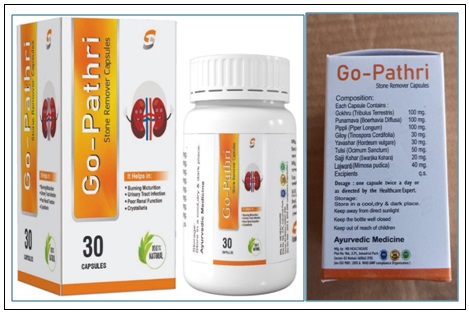
FIG. 1: AYURVEDIC FORMULATION GO-PATHRI
Despite its traditional use, systematic scientific evaluation of the anti-urolithiatic efficacy of Go-Pathri is necessary to establish its therapeutic potential using validated experimental models. Therefore, the present study is proposed to evaluate the anti-urolithiatic potential of Go-Pathri in experimental animal models by assessing relevant urinary and serum biochemical parameters and associated renal tissue changes. The findings may provide scientific evidence regarding the traditional use of Go-Pathri and contribute to understanding its potential role in the management of urolithiasis.
MATERIALS & METHODS:
Procurement of Go-Pathri Capsule: Ayurvedic Marketed Formulation (Go-Pathri) capsules were procured from a Spine Health Care, Haryana. After procurement, the capsules were stored under standard recommended storage conditions, ensuring protection from moisture, heat, and direct sunlight, in order to maintain their stability and integrity. The samples were preserved appropriately until they were required for further analysis.
In-vivo Anti-Urolithiasis Activity:
Selection of Animal Model: The present study was conducted as per CPCSEA no: CAH/BIU/2026/016, Date: 21/02/2026. The Male Wistar albino rats [150-200g] used for this study were produced from Central Animal House, BIU College of Pharmacy, Bareilly International University, Bareilly, U.P., India. Recently acquired Wistar albino rats were quarantined and acclimatized for one week before experimentation. The animals were housed in well-ventilated, climate-controlled polypropylene cages under controlled environmental conditions with 55–60% relative humidity and paddy husk bedding. They were provided a standard pellet diet and clean drinking water ad libitum, except during fasting. Bedding was changed twice weekly, and animals were identified using appropriate cage labels and picric acid markings. Urolithiasis was induced by administering 0.75% ethylene glycol in drinking water for the specified experimental period 18, 19.
Treatment Groups: The animals were divided into five groups, with six animals in each group, as described below 20:
TABLE 1: TREATMENT GROUPS
| Group | Description | Route & Dose Schedule |
| Group 1 | Animals were given normal food and drinking water ad libitum. | Oral, daily for 28 days |
| Group 2 | Animals received 0.75% (v/v) ethylene glycol (EG). | Oral, daily for 14 days |
| Group 3 | Animals were administered the standard drug, Cystone (750 mg/kg). | Oral, daily for 14 days for disease induction, followed by Cystone (750 mg/kg) orally for the next 14 days |
| Group 4 | Animals were administered Go-Pathri Capsule at a dose of 50 mg/kg (low dose; standard dose = 500 mg). | Oral, daily for 14 days for disease induction, followed by Go-Pathri Capsule (50 mg/kg) orally for the next 14 days |
| Group 5 | Animals were administered Go-Pathri Capsule at a dose of 100 mg/kg (high dose; standard dose = 500 mg). | Oral, daily for 14 days for disease induction, followed by Go-Pathri Capsule (100 mg/kg) orally for the next 14 days |
Groups 2, 3, 4, and 5 were provided with regular food ad libitum and drinking water containing 0.75% (v/v) ethylene glycol (EG) ad libitum to induce hyperoxaluria and promote calcium oxalate (CaOx) deposition in the kidneys. Groups 3, 4, and 5 received their respective treatments from the 15th day to the 28th day. Group 3 received the standard drug Cystone (750 mg/kg), while Groups 4 and 5 received Go-Pathri Capsule at doses of 50 mg/kg and 100 mg/kg, respectively, as curative treatment regimens 21.
Analysis of Urine and Serum: Urine samples were collected from individually housed rats in metabolic cages over 24 h on days 0, 14, and 28. Urine volume was recorded, and samples were preserved at 4°C after appropriate acidification. Urinary calcium, magnesium, phosphorus, and oxalate levels were estimated using standard analytical methods. Urinary sediments were examined microscopically for crystal size and morphology. Blood samples were collected on days 0, 14, and 28 under mild anesthesia, allowed to clot, and centrifuged to obtain serum. Serum uric acid, creatinine, and blood urea nitrogen (BUN) were estimated using standard diagnostic kits 22, 23.
Histopathology: After the completion of experimental period, the rats were anesthetized using ether and then sacrificed. An incision was made over the abdomen and the kidneys were removed, cleaned and preserved using 10% neutral formalin. One kidney was fixed using formalin and embedded in paraffin. Later, 5μm thick sections were prepared and stained with hematoxylin-eosin solution. These sections were examined under plain and polarized microscope to capture the histopathological changes 24, 25.
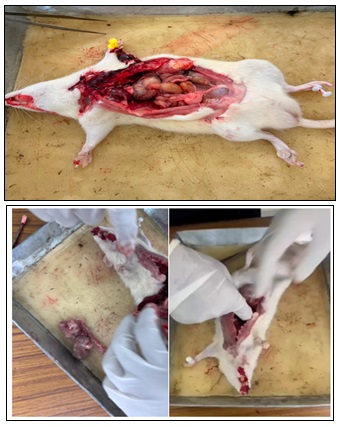
FIG. 2: DISSECTION OF RAT
Data Analysis: Differences among data were determined using one-way ANOVA followed by Dunnett's multiple comparison tests (Graph pad Prism software for Windows, Version 2.03.1998). P < 0.05 was considered to be statistically significant 26, 27.
RESULTS AND DISCUSSION:
In-vivo Anti-Urolithiatic Activity:
Urine Volume: The effect of Go-Pathri capsule on urine volume was evaluated over 28 days, with measurements recorded on days 0, 14, and 28 and expressed as mean ± SEM. Baseline urine volumes were comparable among all groups.
The normal control group showed a gradual increase in urine volume, whereas the disease control group receiving 0.75% ethylene glycol showed a progressive reduction, which was significant on day 28 (p < 0.05). Cystone (750 mg/kg) significantly improved urinary output compared with the disease control group. Go-Pathri at 50 and 100 mg/kg partially restored urine volume, with the 100 mg/kg dose producing a greater numerical improvement. However, its effect remained less pronounced than that of Cystone, suggesting a potential diuretic and urinary tract protective effect.
TABLE 2: EFFECT OF GO-PATHRI CAPSULE ON URINE VOLUME IN RATS
| Group | Treatment | Urine volume (mL/24 h) | ||
| Day 0th | Day 14th | Day 28th | ||
| Group 1 | Normal control | 13.8 ± 0.76 | 14.6 ± 0.77 | 15.8 ± 0.65 |
| Group 2 | Disease control (0.75% EG) | 14.4 ± 0.65 | 11.7 ± 0.54 | 10.5 ± 0.87* |
| Group 3 | Standard (Cystone 750 mg/kg) | 15.9 ± 0.54 | 14.2 ± 0.31 | 14.3 ± 0.54** |
| Group 4 | Go-Pathri 50 mg/kg | 16.5 ± 0.79 | 13.5 ± 0.45 | 11.8 ± 0.77* |
| Group 5 | Go-Pathri 100 mg/kg | 15.4 ± 0.45 | 14.9 ± 0.88 | 12.3 ± 0.55** |
Results were expressed as mean ± SEM. *p<0.05 compared to the normal control group, **P<0.05 compared to the disease control using one way ANOVA followed by Dunnett’s test.
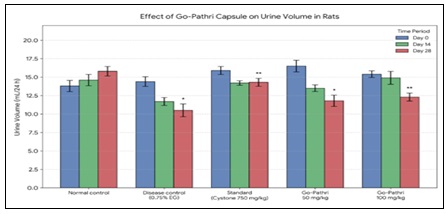
FIG. 3: EFFECT OF GO-PATHRI CAPSULE ON URINE VOLUME IN RATS. Results were expressed as mean ± SEM. *p<0.05 compared to the normal control group, **P<0.05 compared to the disease control using one way ANOVA followed by Dunnett’s test.
Urine Constituents: The effect of Go-Pathri Capsule on urinary stone-forming constituents, including calcium, oxalate, phosphorus, and magnesium, was evaluated and expressed as mean ± SEM.
The disease control group receiving 0.75% ethylene glycol showed significant alterations compared with the normal control group, with increased calcium (4.651 ± 0.02), oxalate (5.310 ± 0.02), and phosphorus (5.264 ± 0.18), along with decreased magnesium (1.555 ± 0.14; p < 0.05). Cystone markedly restored these parameters toward normal values. Go-Pathri at 50 and 100 mg/kg produced dose-dependent improvements, reducing calcium, oxalate, and phosphorus while increasing magnesium levels, with the 100 mg/kg dose showing greater activity than 50 mg/kg. Overall, Go-Pathri demonstrated a favorable corrective effect on altered urinary biochemical parameters associated with urolithiasis.
TABLE 3: EFFECT OF GO-PATHRI CAPSULE ON STONE-FORMING CONSTITUENTS
| Parameter | Group 1 | Group 2 | Group 3 | Group 4 | Group 5 |
| Normal control | Disease control (0.75% EG) | Cystone 750 mg/kg | Go-Pathri 50 mg/kg | Go-Pathri 100 mg/kg | |
| Calcium | 1.723 ± 0.05 | 4.651 ± 0.02* | 2.091 ± 0.09 | 3.955 ± 0.08 | 3.344 ± 0.15** |
| Oxalate | 0.935 ± 0.035 | 5.310 ± 0.02* | 1.354 ± 0.12 | 4.038 ± 0.38 | 3.282 ± 0.23 |
| Phosphorus | 1.325 ± 0.096 | 5.264 ± 0.18 | 1.753 ± 0.08** | 4.344 ± 0.30 | 3.521 ± 0.24* |
| Magnesium | 5.638 ± 0.185 | 1.555 ± 0.14* | 5.132 ± 0.31** | 2.691 ± 0.09 | 3.378 ± 0.06* |
Results were expressed as mean ± SEM. *p<0.05 compared to the normal control group, **P<0.05 compared to the disease control using one way ANOVA followed by Dunnett’s test.
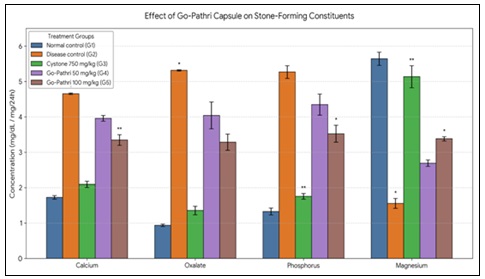
FIG. 4: EFFECT OF GO-PATHRI CAPSULE ON STONE-FORMING CONSTITUENTS. Results were expressed as mean ± SEM. *p<0.05 compared to the normal control group, **P<0.05 compared to the disease control using one way ANOVA followed by Dunnett’s test.
Serum Uric Acid: The effect of Go-Pathri Capsule on serum uric acid levels was evaluated over a 28-day treatment period, with results expressed as mean ± SEM. Baseline uric acid levels were comparable among all experimental groups (1.81 ± 0.07–1.84 ± 0.08 mg/dL).
On day 14, the disease control group receiving 0.75% ethylene glycol (EG) showed an increase in serum uric acid to 2.76 ± 0.12 mg/dL compared with 1.85 ± 0.08 mg/dL in the normal control group. On day 28, EG administration further increased uric acid to 3.18 ± 0.14 mg/dL (p < 0.05), whereas Cystone, Go-Pathri 50 mg/kg, and Go-Pathri 100 mg/kg reduced the levels to 2.05 ± 0.09, 2.28 ± 0.10, and 2.12 ± 0.08 mg/dL, respectively (p < 0.05 vs. disease control).
Thus, Go-Pathri significantly attenuated EG-induced elevation of serum uric acid, with the 100 mg/kg dose producing a greater effect than the 50 mg/kg dose and approaching the response observed with Cystone.
TABLE 4: EFFECT OF GO-PATHRI CAPSULE ON SERUM (URIC ACID) IN RATS
| Group | Treatment | Uric acid (mg/dL) | ||
| Day 0th | Day 14th | Day 28th | ||
| Group 1 | Normal control | 1.82 ± 0.09 | 1.85 ± 0.08 | 1.80 ± 0.07 |
| Group 2 | Disease control (0.75% EG) | 1.84 ± 0.08 | 2.76 ± 0.12 | 3.18 ± 0.14* |
| Group 3 | Cystone 750 mg/kg | 1.81 ± 0.07 | 2.70 ± 0.11 | 2.05 ± 0.09* |
| Group 4 | Go-Pathri 50 mg/kg | 1.83 ± 0.08 | 2.74 ± 0.12 | 2.28 ± 0.10** |
| Group 5 | Go-Pathri 100 mg/kg | 1.82 ± 0.09 | 2.72 ± 0.11 | 2.12 ± 0.08** |
Results were expressed as mean ± SEM. *p<0.05 compared to the normal control group, **P<0.05 compared to the disease control using one way ANOVA followed by Dunnett’s test.
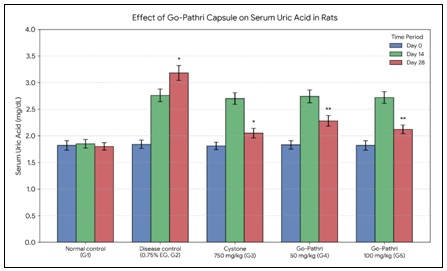
FIG. 5: EFFECT OF GO-PATHRI CAPSULE ON SERUM (URIC ACID) IN RATS. Results were expressed as mean ± SEM. *p<0.05 compared to the normal control group, **P<0.05 compared to the disease control using one way ANOVA followed by Dunnett’s test.
Serum Creatinine Levels: The effect of Go-Pathri Capsule on serum creatinine levels in rats was evaluated over a 28-day treatment period, and the results were expressed as mean ± SEM. On Day 0, serum creatinine levels were comparable among all experimental groups, ranging from 0.71 ± 0.04 to 0.73 ± 0.04 mg/dL, indicating similar baseline renal function. On Day 14, the normal control group maintained a nearly constant creatinine level of 0.74 ± 0.03 mg/dL, whereas the disease control group receiving 0.75% EG showed an increase to 1.08 ± 0.05 mg/dL. The Cystone, Go-Pathri 50 mg/kg, and Go-Pathri 100 mg/kg groups showed levels of 1.05 ± 0.04, 1.07 ± 0.05, and 1.06 ± 0.04 mg/dL, respectively. On Day 28, the disease control group exhibited a marked increase in serum creatinine to 1.32 ± 0.06 mg/dL (p < 0.05 vs. normal control), while Cystone significantly reduced the level to 0.79 ± 0.03 mg/dL (p < 0.05 vs. disease control). Go-Pathri at 50 and 100 mg/kg reduced serum creatinine to 0.88 ± 0.04 and 0.82 ± 0.03 mg/dL, respectively (p < 0.05 vs. disease control). Thus, Go-Pathri Capsule significantly attenuated EG-induced elevation of serum creatinine, with the 100 mg/kg dose showing a greater reduction than the 50 mg/kg dose and approaching the response observed with Cystone.
TABLE 5: EFFECT OF GO-PATHRI CAPSULE ON SERUM (CREATINE) IN RATS
| Group | Treatment | Creatinine (mg/dL) | ||
| Day 0th | Day 14th | Day 28th | ||
| Group 1 | Normal control | 0.72 ± 0.04 | 0.74 ± 0.03 | 0.71 ± 0.04 |
| Group 2 | Disease control (0.75% EG) | 0.73 ± 0.03 | 1.08 ± 0.05 | 1.32 ± 0.06* |
| Group 3 | Cystone 750 mg/kg | 0.71 ± 0.04 | 1.05 ± 0.04 | 0.79 ± 0.03** |
| Group 4 | Go-Pathri 50 mg/kg | 0.72 ± 0.03 | 1.07 ± 0.05 | 0.88 ± 0.04** |
| Group 5 | Go-Pathri 100 mg/kg | 0.73 ± 0.04 | 1.06 ± 0.04 | 0.82 ± 0.03** |
Results were expressed as mean ± SEM. *p<0.05 compared to the normal control group, **P<0.05 compared to the disease control using one way ANOVA followed by Dunnett’s test.
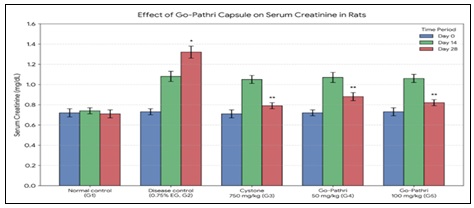
FIG. 6: EFFECT OF GO-PATHRI CAPSULE ON SERUM (CREATINE) IN RATS. Results were expressed as mean ± SEM. *p<0.05 compared to the normal control group, **P<0.05 compared to the disease control using one way ANOVA followed by Dunnett’s test
Serum Blood Urea Nitrogen (BUN): The effect of Go-Pathri Capsule on serum blood urea nitrogen (BUN) levels in rats was evaluated over a 28-day treatment period, and the results were expressed as mean ± SEM. On Day 0, BUN levels were comparable among all experimental groups, ranging from 18.3 ± 0.71 to 18.6 ± 0.69 mg/dL, indicating similar baseline values. On Day 14, the normal control group maintained a BUN level of 18.7 ± 0.68 mg/dL, whereas the disease control group receiving 0.75% EG showed an increase to 27.8 ± 0.91 mg/dL. The Cystone, Go-Pathri 50 mg/kg, and Go-Pathri 100 mg/kg groups showed BUN levels of 27.1 ± 0.88, 27.4 ± 0.90, and 27.2 ± 0.87 mg/dL, respectively. On Day 28, the disease control group exhibited a marked elevation in BUN to 32.5 ± 1.02 mg/dL (p < 0.05 vs. normal control), whereas Cystone significantly reduced the level to 20.4 ± 0.74 mg/dL (p < 0.05 vs. disease control). Go-Pathri at 50 and 100 mg/kg reduced BUN levels to 22.8 ± 0.81 and 21.1 ± 0.76 mg/dL, respectively (p < 0.05 vs. disease control). Overall, Go-Pathri Capsule significantly attenuated the EG-induced elevation of serum BUN, with the 100 mg/kg dose showing greater improvement than the 50 mg/kg dose and approaching the response observed with Cystone.
TABLE 6: EFFECT OF GO-PATHRI CAPSULE ON SERUM (BUN) IN RATS
| Group | Treatment | BUN (mg/dL) | ||
| Day 0 | Day 14 | Day 28 | ||
| Group 1 | Normal control | 18.4 ± 0.72 | 18.7 ± 0.68 | 18.2 ± 0.65 |
| Group 2 | Disease control (0.75% EG) | 18.6 ± 0.69 | 27.8 ± 0.91 | 32.5 ± 1.02* |
| Group 3 | Cystone 750 mg/kg | 18.3 ± 0.71 | 27.1 ± 0.88 | 20.4 ± 0.74* |
| Group 4 | Go-Pathri 50 mg/kg | 18.5 ± 0.70 | 27.4 ± 0.90 | 22.8 ± 0.81* |
| Group 5 | Go-Pathri 100 mg/kg | 18.4 ± 0.73 | 27.2 ± 0.87 | 21.1 ± 0.76** |
Results were expressed as mean ± SEM. *p<0.05 compared to the normal control group, **P<0.05 compared to the disease control using one way ANOVA followed by Dunnett’s test.
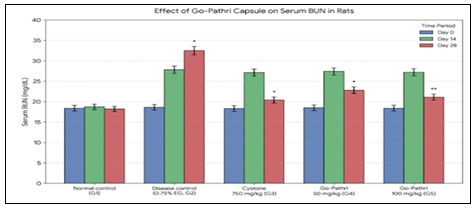
FIG. 7: EFFECT OF GO-PATHRI CAPSULE ON SERUM (BUN) IN RATS. Results were expressed as mean ± SEM. *p<0.05 compared to the normal control group, **P<0.05 compared to the disease control using one way ANOVA followed by Dunnett’s test.
Histopathology: Histopathological examination of the renal tissues revealed marked differences among the experimental groups. The vehicle-treated control group showed normal renal architecture, with intact glomeruli and tubules and no evidence of calcium oxalate crystal deposition or other pathological alterations in the nephron segments. In contrast, the urolithiatic disease control group exhibited several prominent calcium oxalate deposits within the renal tubules, accompanied by dilation of the proximal tubules and mild-to-moderate interstitial inflammation. These alterations indicated substantial renal injury associated with experimentally induced urolithiasis. Treatment with Go-Pathri in groups IV–V resulted in a noticeable reduction in the number of intratubular calcium oxalate deposits, with comparatively preserved renal tubular architecture. Similarly, rats treated with the standard drug Cystone (group III) showed fewer calcium oxalate deposits than the disease control group. Overall, the findings suggest that Go-Pathri and Cystone provided protective effects against crystal deposition and associated renal tissue damage.
CONCLUSION: The present study demonstrated that Go-Pathri Capsule possessed promising anti-urolithiatic activity in ethylene glycol-induced experimental urolithiasis in rats. Treatment with Go-Pathri improved urine volume and favorably modulated urinary calcium, oxalate, phosphorus and magnesium levels. It also attenuated the elevation of serum uric acid, creatinine and BUN associated with ethylene glycol-induced renal dysfunction. Histopathological findings further supported these biochemical observations by showing a reduction in intratubular calcium oxalate deposition and preservation of renal tubular architecture.
The 100 mg/kg dose generally produced greater improvement than the 50 mg/kg dose and showed responses approaching those of the standard drug Cystone. The observed effects may be attributed to the combined diuretic, antioxidant, anti-inflammatory and nephroprotective properties of the formulation's herbal and alkaline constituents. Overall, Go-Pathri showed potential as an anti-urolithiatic formulation, although further studies are required to establish its mechanisms and clinical efficacy.
ACKNOWLEDGEMENT: Nil
CONFLICT OF INTEREST: Nil
REFERENCES:
- Satishchandra MA, Surya Teja V, Sravani M and Eshwariah C: In-vitro Urolithiasis activity of Thinopyrum intermedium methanolic extract on calcium oxalate crystals prepared by Precipitation method. Research Journal of Pharmacy and Technology 2021; 14 (3): 1310-1312.
- Charde M, Shukla A, Bukhariya V, Mehta J and Chakole R: Herbal remedies as antioxidants: an overview. International Journal of Pharmacological Research 2011; 1(2): 25- 34.
- Bijauliya RK, S Alok, SK Jain, VK Singh and Sing DH: Herbal and allopathic medicine for kidney, gallbladder and urinary stones: A review. International Journal of Pharmaceutical Sciences and 2017.
- Bijauliya RK, SK Jain and Alok S: Antilithiatic activity of ethanolic leaves extract of Dalbergia sissoo ethylene glycol induced lithiasis in rats. International Journal of Pharmaceutical Sciences and 2018.
- Khan SR, Glenton PA, Backov R and Talham DR: Presence of lipids in urine, crystals and stones: implications for the formation of kidney stones. Kidney International 2002; 62: 2062–2072.
- Chopra A, Saluja M and Tillu G: Ayurveda-modern medicine interface: A critical appraisal of studies of Ayurvedic medicines to treat osteoarthritis and rheumatoid arthritis. J Ayurveda Integr Med 2010; 1(3): 190-8. doi: 10.4103/0975-9476.72620. PMID: 21547047; PMCID: PMC3087360.
- Chauhan A, Semwal DK, Mishra SP and Semwal RB: Ayurvedic research and methodology: Present status and future strategies. Ayu 2015; 36(4): 364-369. doi: 10.4103/0974-8520.190699. PMID: 27833362; PMCID: PMC5041382.
- Scales CD, Smith AC, Hanley JM and Saigal CS: Urologic Diseases in America Project. Prevalence of kidney stones in the United States. Eur Urol 2012; 62(1): 160-5.
- Bijauliya RK, Jain SK and Alok S: Antilithiatic activity of ethanolic leaves extract of Dalbergia sissoo ethylene glycol induced lithiasis in rats. Int J Pharm Sci & Res 2018; 9(11): 4923-29. doi: 10.13040/IJPSR.0975-8232.9(11).4923-29.
- Curhan GC, Willett WC, Rimm EB and Stampfer MJ: Family history and risk of kidney stones. J Am Soc Nephrol 1997; 8(10): 1568-73. [PubMed]
- Espino-Grosso PM and Canales BK: Kidney stones after bariatric surgery: risk assessment and mitigation. Bariatr Surg Pract Patient Care 2017; 12(1): 3-9.
- Taylor EN, Stampfer MJ and Curhan GC: Obesity, weight gain, and the risk of kidney stones. JAMA 2005; 293(4): 455-62.
- Gentle DL, Stoller ML, Jarrett TW, Ward JF, Geib KS and Wood AF: Protease inhibitor-induced urolithiasis. Urology 1997; 50(4): 508-11.
- Parkhomenko E, De Fazio A, Tran T, Thai J, Blum K and Gupta M: A Multi-Institutional Study of Struvite Stones: Patterns of Infection and Colonization. J Endourol 2017; 31(5): 533-537.
- Ma Q, Fang L, Su R, Ma L, Xie G and Cheng Y: Uric acid stones, clinical manifestations and therapeutic considerations. Postgrad Med J 2018; 94(1114): 458-462.
- Bijauliya RK, Alok S, Singh M and Mishra SB: Morphology, phytochemistry and pharmacology of Syzygium cumini (Linn.) - an overview. Int J Pharm Sci Res 2017; 8(6): 2360-71.doi: 10.13040/IJPSR.0975-8232.8(6).2360-71.
- Oza S and Savalia V: “Evaluation of a polyherbal formulation for antiurolithitic activity: a biochemical and histopathological analysis in ethylene glycol induced rat model”. International Journal of Pharmaceutical Sciences and Drug Research 2025; 17(4): 363-70, https://doi.org/10.25004/IJPSDR.2025.170407.
- Nair AS, Archana A, Sreelakshmi K, Nandhakumar J and Seena KX: A review on herbal drugs in the management of Urolithiasis. Journal of Pharmacognosy and Phytochemistry 2025; 14(1): 283-289.
- Biswas S, Dasar D, Khandare K & Wanjari A: Efficacy of Novel Herbal Formulation in Efficacy of Novel Herbal Formulation in Conservative Management of Mutrashmari (Urolithiasis) - A Case Report. International Journal of Ayurvedic Medicine 2023; 13(4): 1078–1082. https://doi.org/10.47552/ijam.v13i4.3107
- Lasota A, Wasilewska A & Rybi-Szumińska A: Current status of protein biomarkers in urolithiasis a review of the recent literature. Journal of Clinical Medicine 2023; 12(22), 7135. https://doi.org/10.3390/jcm12227135
- Hsiao CY, Chen TH, Lee YC, Hsiao MC, Hung PH, Chen YY and Wang MC: Urolithiasis is a risk factor for uroseptic shock and acute kidney injury in patients with urinary tract infection. Front Med (Lausanne) 2019; 6: 288. doi: 10.3389/fmed.2019.00288. PMID: 31867338; PMCID: PMC6906152.
- Meenakshi SC, Beldal BS & Londonkar R: Phytochemical screening and gc-ms analysis of methanolic extract of Bombax ceiba International Research Journal of Pharmacy 2018; 9: 67-70.
- Pawar AT and Vyawahare NS: Protective effect of ethyl acetate fraction of Biophytum sensitivum extract against sodium oxalate-induced urolithiasis in rats. Journal of Traditional and Complementary Medicine 2017; 7: 476-86.
- Tiwari P, Kothiyal P and Ratan P: Antiurolithiatic effect of some polyherbal formulations used in experimentally induced urolithiasis: a review International Research Journal of Pharmacy 2017; 8(5): 14-22.
- Chandel VK, Jain S and Choubey A: An overview on phytomolecules and screening method of antiurolithiatic activity. Journal of Drug Delivery & Therapeutics 2019; 9(4): 848-57.
- Christina AJM and Muthumani P: Phytochemical investigation and antilithiatic activity of Abelmoschus moschatusmedikus. International Journal of Pharmacy and Pharmaceutical Science 2013; 5(1): 108-13.
- Emamiyan MZ, Vaezi G, Tehranipour M, Shahrohkabadi K and Shiravi A: Preventive effects of the aqueous extract of Cichorium intybus L. flower on ethylene glycol-induced renal calculi in rats. Avicenna Journal of Phytomedicine 2018; 8(2): 170.
How to cite this article:
Ansari MA, Bijauliya RK, Kannojia P, Shankhdhar PK and Yadav A: Evaluation of the anti-urolithiasis potential of ayurvedic marketed formulation in experimental animal models. Int J Pharmacognosy 2026; 13(10): 1027-36. doi link: http://dx.doi.org/10.13040/IJPSR.0975-8232.IJP.13(10).1027-36.
This Journal licensed under a Creative Commons Attribution-Non-commercial-Share Alike 3.0 Unported License.
Article Information
5
1027-1036
1123 KB
9
English
IJP
Mohd Adil Ansari *, Rohit Kumar Bijauliya, Pushpendra Kannojia, Pankaj Kumar Shankhdhar and Anita Yadav
BIU College of Pharmacy, Bareilly International University, Bareilly, Uttar Pradesh, India.
adilansari5952@gmail.com
15 September 2026
29 September 2026
30 September 2026
10.13040/IJPSR.0975-8232.IJP.13(10).1027-36
01 October 2026
 Download