


ECOLOGY AND ETHNOBOTANICAL STUDY OF SOME IMPORTANT PLANTS OF BATHINDA DISTRICT (PUNJAB)
HTML Full TextECOLOGY AND ETHNOBOTANICAL STUDY OF SOME IMPORTANT PLANTS OF BATHINDA DISTRICT (PUNJAB)
Ravi Kumar *, Suman Lata Tripathi, Shilpa Yadav and Sunita Swami
P.G. Department of Botany, Govt. Dungar College, Bikaner, Rajasthan, India.
ABSTRACT: Bathinda district in the semi-arid Malwa region of Punjab possesses diverse medicinal flora associated with traditional healthcare practices. This study documented important medicinal plants, their ethnomedicinal uses, and threats to local plant resources and traditional knowledge through interviews with local inhabitants and literature review. Herbs were the dominant life form, while leaves, roots, bark, fruits, seeds, latex, gums, and whole plants were commonly used. Major therapeutic applications included skin diseases, wounds, digestive and respiratory disorders, fever, inflammation, urinary problems, and general weakness. Important species included Azadirachta indica, Withania somnifera, Phyllanthus emblica, Acacia nilotica, Tribulus terrestris, and Boerhavia diffusa. Traditional knowledge is declining because of modernization, intensive agriculture, habitat disturbance, and inadequate documentation. Systematic documentation, scientific validation, sustainable harvesting, community awareness, and in situ and ex situ conservation are essential to preserve Bathinda’s medicinal-plant diversity and ethnobotanical heritage.
Keywords: Ethnobotany, Ecology, Bathinda, Medicinal Plants, Traditional Knowledge, Punjab
INTRODUCTION: Ethnobotanical knowledge is an ancient and significant aspect of Indian history. It refers to the relationship between humans and the plant resources in their environment (Jain, 1991). India is one of the world's largest mega-biodiversity hotspots, possessing a wide range of ethno-medicinal vegetation used by local people for treating minor to major health problems. In India, traditional plant-based medicine is widely practiced in rural areas. Bathinda district has rich traditional knowledge of medicinal plants, which is transferred orally from generation to generation. Due to modernization, this knowledge is at risk of disappearing. Herbal medicine was considered safe, gentle, and effective, addressing not only physical symptoms but also mental and emotional well-being.
It was used for treating conditions such as allergies, asthma, premenstrual syndrome, chronic fatigue, rheumatoid arthritis, and cancer. Different herbs acted on different body systems. It was emphasized that herbs should be used properly and preferably under the guidance of an experienced Ayurvedic physician. Local communities were reported to depend on medicinal plants for treating ailments such as asthma, common cold, sore throat, fever, cardiovascular diseases, and digestive disorders. Most people in traditional communities relied on plant-based medicines, and traditional healers served as the primary healthcare providers.
Ethnobotany had played an important role in drug development and continued to contribute to conservation strategies and forest restoration. Traditional plant knowledge had been passed down through generations by tribal communities through oral traditions.
Study Area and Ecology: Bathinda is located in the Malwa region of Punjab. It experiences a semi-arid climate with hot summers and cold winters. Temperature ranges from 2°C to 45°C. Rainfall is low and irregular. Soil is mainly sandy loam, suitable for agriculture.
Vegetation includes herbs, shrubs, and scattered trees adapted to dry conditions.
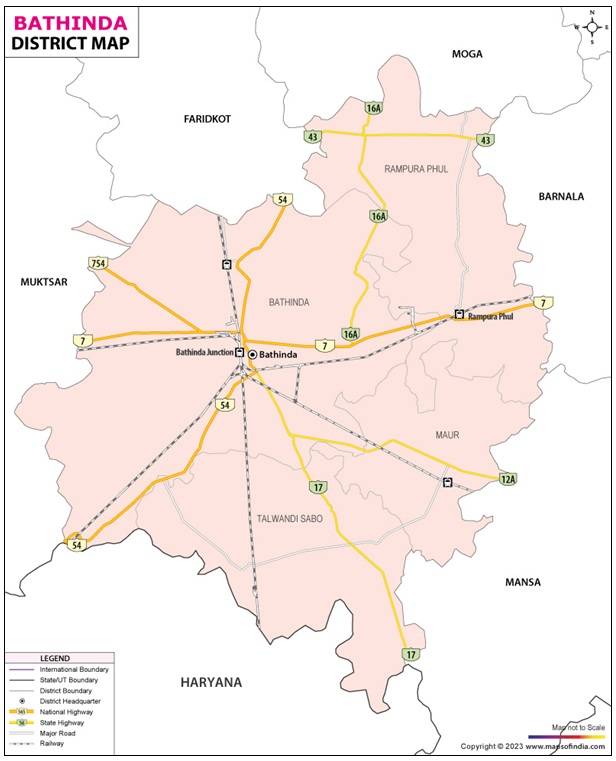
FIG. 1:
Review of Literature: Various ethnobotanical studies conducted have documented medicinal plants in Bathinda. Most plants are used for treating skin diseases, digestive issues, respiratory disorders, and fever. Recent studies emphasize conservation and sustainable use of some important medicinal plants of study area 12. Conducted an ethno-medicinal survey in the Jalandhar district of Punjab, India, to document traditional medicinal plant species used for the treatment of various human as well as animal ailments. A semi-structured questionnaire was employed to collect the information. It was observed that the people of the area used 119 plant species comprising 109 genera and 57 families. Eight species each from the families Apiaceae and Fabaceae were used by the natives as ethnomedicines for the treatment of 40 diseases. A variable number of plant species from other families were also utilized by the natives for different curative purposes. Although every plant part had its own importance in treating one or another disease, the leaves of 35 plant species were predominantly used in various remedial preparations.
The majority of the plants used were cultivated or purchased from the market, possibly due to their easy availability or the non-availability of wild species caused by the destruction of natural habitats as a result of urbanization and industrialization. The data were collected from 100 individuals (both males and females) irrespective of their age, sex, and profession. During the investigation, it was observed that this traditional knowledge was vanishing at a very rapid rate and required immediate documentation for future use. Sincere efforts were also needed to transfer this knowledge to younger generations.
Parvaiz M. (2014) 11 conducted a study to collect indigenous traditional knowledge about medicinal plants and their uses in Mangowal, District Gujarat, Punjab, Pakistan. Rajbir Kaur (2015) 12 stated that plants had an immense role in the sustainability of human life and had been used since ancient times to fulfil human needs. The complex relationship between plants, humans, and cultures was studied with the help of ethnobotany. In Punjab, several plants such as Azadirachta indica, Ficus bengalensis, Ficus religiosa, Terminalia arjuna, Terminalia chebula, Emblica officinalis, Bauhinia variegata, Cassia fistula, Murrayakoenigii, Citrus limon, Acacia nilotica, Acacia auriculiformis, Mangifera indica, Tinospora cordifolia, Aegle marmelos, Dalbergia sissoo, Psidium guajava, Ziziphus jujuba, Albizia lebbeck, and Morus alba were used extensively in various forms for the treatment of different ailments. The review evaluated the role of traditionally important medicinal plants grown in Punjab (India), along with their use as local remedies Shrivastava, et al. (2015) 13 conducted an ethnobotanical study on traditional medicinal plants and documented different types of medicinal plants used by indigenous people. The study focused on identifying medicinal plants, diseases treated, plant parts used, methods of preparation, routes of administration, and additional ingredients. The study enumerated these plant species belonging to 26 genera and 18 families. Singh (2016) 1 conducted a study on the use of medicinal plants by the people of Bhiwani district of Haryana, India. The study focused on identifying medicinal plants, diseases treated, plant parts used, methods of preparation, routes of administration, and added ingredients.
Umair, et al. (2017) 16 presented considerable information on the traditional uses of medicinal plants by the inhabitants of Hafizabad district, Punjab, Pakistan. The study was the first quantitative ethnobotanical investigation from the area, incorporating the popularity level of medicinal plant species using relative popularity level (RPL) and rank order priority (ROP) indices. The highest number of plant species was reported to treat dermatological and gastrointestinal disorders. The study highlighted that the diversity of medicinal plant species and associated traditional knowledge played a significant role in the primary healthcare system.
Singh, et al. (2018) 2 defined herbs in the botanical sense as plants lacking a permanent woody stem that produced seeds and flowers and died after their growing season. In the traditional medicine context, herbs were described as small, non-woody plants valued for their medicinal, savoury, or aromatic properties. It was estimated that about 25% of modern medicines were directly or indirectly derived from higher plants, and according to the World Health Organisation, around 80% of the global population relied on herbal medicine. Herbal medicines had been used since ancient times and had gained popularity among both urban and rural populations for treating different ailments.
Kaur (2020) 5 reported that plant-derived products had a vital biological role in treating various diseases. Their study was conducted to document and investigate the existing ethnomedicinal knowledge of local flora in Kapurthala district, Punjab, India. Usman, et al. (2021) 17 observed that the lack of proper infrastructure and poor economic conditions in rural communities made them dependent on herbal medicines. A field study was conducted to document the medicinal importance of local plants used by inhabitants of old historic villages in Southern Punjab, Pakistan. A total of 58 plant species belonging to 28 families were documented based on information from 200 respondents. Leaves and whole plants were the most commonly used parts, while extracts (38.8 Manju and Tasavur (2021) 7 stated that plants had fulfilled not only basic human needs but also medicinal requirements since the beginning of human civilization. Their importance in phytodiversity conservation and modern medicine development was well recognized. The study highlighted that many diseases were becoming more prevalent in developing countries, leading to high economic burdens. Ethnobotany had played an important role in drug development and continued to contribute to conservation strategies and forest restoration.
Kumar et al. (2022) 15 observed that most medicinal plants belonged to families such as Cucurbitaceae, Liliaceae, Fabaceae, Amaranthaceae, Euphorbiaceae, Asteraceae, Chenopodiaceae, Solanaceae, and Lamiaceae. Leaves were found to have the highest ethnomedicinal value among plant parts. It was also observed that traditional knowledge was transmitted orally from one generation to another, leading to the loss of valuable information due to lack of proper documentation.
Mostafa, et al. (2022) 10 reported that medicinal and aromatic plants were used by people for various purposes, including healthcare, beauty, and as a source of food. Gautam and Adhikari (2023) 14 reported that Harike Wildlife Sanctuary served as a natural repository of medicinal plants and native flora. The study aimed to document medicinal plants used by local people residing around the sanctuary and to develop a systematic record of traditionally used medicinal plants. The authors emphasized the need for regular monitoring to maintain biodiversity. Bakshi, et al. (2025) 4 reported that plants had long been used as a source of traditional medicines due to their therapeutic properties. Their study aimed to document the use of traditional medicinal plants among local people of Verka Block, Amritsar.
Sharma, (2024) 15 focused on the identification and collection of ethnomedicinal data from rangers, guides, and local inhabitants of Kalesar Village and Kalesar National Park. The study emphasized the ethnomedicinal properties of plants growing in the area that were used by locals to treat various illnesses.
Asifa Sameen et al. (2025) 3 reported that diabetes was a chronic metabolic disease and a leading cause of death worldwide. The study highlighted the potential of indigenous medicinal plants as safer and cost-effective alternatives and emphasized the need for further research to identify active compounds for diabetes treatment. Soni and Sidhu (2025) 9 stated that the identification of food and medicines had been made possible through continuous experimentation with plants since ancient times, which had contributed to the development of present-day ethnobotanical knowledge. The study highlighted the close relationship between humans and plants and emphasized its importance in medical applications. An attempt was made to review various ethnobotanical studies conducted in the Punjab region. Furthermore, the study stressed the importance of conserving traditional medicinal knowledge and plant resources.
METHODOLOGY: Ethnobotanical data were collected through both formal and informal interviews with local inhabitants, along with literature review. The people of the study area follow an agropastoral lifestyle and partially depend on agriculture. Most inhabitants possess traditional knowledge of medicinal plants and use them as primary healthcare remedies.
TABLE 1: IMPORTANT ETHNOBOTANICAL PLANTS
| S. no. | Plant Name | Family | Part Used | Uses |
| 1 | Azadirachta indica | Meliaceae | Leaves, bark | Skin diseases, antibacterial |
| 2 | Calotropis procera | Apocynaceae | Latex, leaves | Pain relief, swelling |
| 3 | Withaniasomnifera | Solanaceae | Roots | Weakness, tonic |
| 4 | Phyllanthus emblica | Phyllanthaceae | Fruit | Immunity, Vitamin C |
| 5 | Ficus religiosa | Moraceae | Leaves, bark | Respiratory issues |
| 6 | Acacia nilotica | Fabaceae | Bark, gum | Toothache, wounds |
| 7 | Ziziphus nummularia | Rhamnaceae | Leaves, fruit | Skin diseases, digestion |
| 8 | Tribulus terrestris | Zygophyllaceae | Whole plant | Urinary disorders |
| 9 | Argemone mexicana | Papaveraceae | Latex, seeds | Skin diseases (external use) |
| 10 | Datura stramonium | Solanaceae | Leaves, seeds | Asthma (controlled use) |
| 11 | Achyranthes aspera | Amaranthaceae | Whole plant | Cough, kidney stones |
| 12 | Boerhaviadiffusa | Nyctaginaceae | Roots, leaves | Liver disorders |
| 13 | Euphorbia hirta | Euphorbiaceae | Whole plant | Asthma, cough |
| 14 | Chenopodium album | Amaranthaceae | Leaves | Digestive, laxative |
| 15 | Solanum nigrum | Solanaceae | Leaves, fruit | Liver disorders |
| 16 | Parthenium hysterophorus | Asteraceae | Leaves | Skin issues (external use) |
| 17 | Cynodondactylon | Poaceae | Whole plant | Wound healing |
| 18 | Amaranthus spinosus | Amaranthaceae | Whole plant | Anti-inflammatory |
| 19 | Sida cordifolia | Malvaceae | Whole plant | Fever, pain relief |
| 20 | Abutilon indicum | Malvaceae | Leaves, roots | Anti-inflammatory |
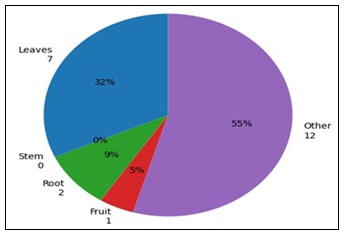
FIG. 2: PLANT PARTS USED (ETHNOBOTANICAL PLANTS)
RESULTS AND DISCUSSION: The study revealed that herbs dominated the flora of Bathinda district. Medicinal use was the most significant category of plant utilization. These plants were widely used for treating common diseases such as skin infections, digestive disorders, and respiratory problems. Traditional knowledge played a crucial role in healthcare; however, it was gradually declining due to modernization.
Conservation Issues: Major threats to ethnobotanical resources included urbanization, intensive agricultural practices, and lack of awareness among local people. Conservation strategies should focus on awareness programs, proper documentation, and sustainable utilization of plant resources.
CONCLUSION: The Bathinda district possesses rich ethnobotanical diversity with significant medicinal importance. There is an urgent need for conservation, scientific validation, and proper documentation to ensure sustainable use and preservation of traditional knowledge for future generations. The study emphasized that such research was essential for exploring local plants for pharmaceutical development and for strengthening the relationship between plants and people in cultural and ecological contexts. It also discussed various global studies and conservation strategies aimed at preserving and transferring this valuable knowledge to future generations. The study emphasized the importance of using modern tools such as bioinformatics for documentation and highlighted the need for conservation of local herbal bio-resources through in-situ and ex-situ methods for sustainable use by future generations.
ACKNOWLEDGEMENT: Nil
CONFLICT OF INTEREST: Nil
REFERENCES:
- Anup Singh: An ethnobotanical study of medicinal plants inBhiwani district of Haryana, India. ISSN 2320-3862.JMPS 2016; 4(2): 212-215
- Ajaypal Singh and Renuka Rani: Medicinal Herbs of Punjab (India). Biological Forum– An International Journal 2018; 10(2): 10-27.
- Asifa Sameen, Haleema Sadia, Tahira Sultana, Khushdil Khan, Khafsa Malik, Hussain Shah, Ateef Ullah, Zohaib U Din, Huma Gul, Muhammad Abdullah and Shabir Ahmad: Ethnobotanical study of medicinal plants used for treatment of Diabetes in Southern Punjab, Pakistan Ethnobotany Research and Applications 2025; 30: 40 (2025)- http://dx.doi.org/10.32859/era.30.40.1-10
- Bakshi A, Sharma N and Minakshi: Exploration of ethnomedicinal practices of plant species for health care in Amritsar, Punjab, India. Vegetos 2025 https://doi.org/10.1007/s42535-025-01487-5
- Kaur J, Kaur R and Nagpal AK: Traditional use of ethnomedicinal plants among people of Kapurthala District, Punjab, India. Phcog Mag 2020; 16: S69-80.
- Kumar S, Raj J & Chand R: An ethnobotanical study of important medicinal plants in Hisar District of Haryana, India. International Journal of Health Sciences 2022; 6(S3): 11195–11199.doi.org/10.53730/ijhs.v6nS3.8620
- Manju and Tasavur Ahad: Ethnobotanical studies: Importance and conservation strategies Biological Diversity: Current Status and Conservation Policies 2021; 1: DOI: 10.26832/aesa-2021-bdcp-02
- Sidhu MC, Kuljinder Kaur and Ahluwalia AS: Ethno-Medicinal Studies of Plants in Jalandhar District of Punjab, India. Society of Plant Research, India 2012; 25(2): 143-150.
- Mona Soni and Sidhu HK: An overview of Ethnobotanical Research in The Indian State of Punjab IJSAR 2025; 12(1): 37-42.
- Mostafa El Khomsi, Yousra Dandani, Noureddine Chaachouay and Driss Hmouni: Ethnobotanical study of plants used for medicinal, cosmetic, and food purposes in the region of Moulay Yacoub, Northeast of Morocc. Journal of Pharmacy & Pharmacognosy Research 2022; 10(1): 13-29. ISSN 0719-4250, DOI: https://doi.org/10.56499/jppres21.1084_10.1.13
- Parvaiz M: Ethnobotanical studies on plant resources of Mangowal, District Gujrat, Punjab, Pakistan. Avicenna J Phytomed 2014; 4 (5): 364-370.
- Rajbir Kaur: Ethnobotanical studies of some of the traditionally important medicinal plants of Punjab (India). Int J Curr Res Aca Rev 2015; 3(5): 262-271
- Rakesh Samar, Shrivastava PN and Manju Jain: Ethnobotanical Study of Traditional Medicinal Plants Used By Tribe of Guna District, Madhya Pradesh, India. Int J Curr Microbiol App Sci 2015; 4(7): 466-471.
- Sameer Gautam and Adhikari BS: Ethnobotanical documentation of Harike Wildlife Sanctuary (Ramsar Site), Punjab, India: A case study Ethnobotany Research and Applications 2023; 25: 25 doi.org/10.32859/era.25.25.1-24
- Sharma R, Saini N, Kumar A, Kumar S, Nautiyal M, Nautiyal D, Ankit and Rawat A: Ethnobotanical study of medicinal plants in Kalesar, Haryana, India. Plant Science Today 2024; 11(sp1): 244-253.https:/doi.org/10.14719/pst.3540
- Umair M, Altaf M and Abbasi AM: An ethnobotanical survey of indigenous medicinal plants in Hafizabad district, Punjab-Pakistan. PLoS ONE 2017; 12(6): e0177912. https://doi.org/10.1371/journal.pone.0177912
- Usman M, Ditta A, Ibrahim FH, Murtaza G, Rajpar MN, Mehmood S, Saleh MNB, Imtiaz M, Akram S and Khan WR: Quantitative Ethnobotanical Analysis of Medicinal Plants of High-Temperature Areas of Southern Punjab, Pakistan. Plants 2021; 10: 1974. https://doi.org/10.3390/plants10101974
How to cite this article:
Kumar R, Tripathi SL, Yadav S and Swami S: Ecology and ethnobotanical study of some important plants of Bathinda district (Punjab). Int J Pharmacognosy 2026; 13(10): 1009-14. doi link: http://dx.doi.org/10.13040/IJPSR.0975-8232.IJP.13(10).1009-14.
This Journal licensed under a Creative Commons Attribution-Non-commercial-Share Alike 3.0 Unported License.
Article Information
2
1009-1014
757 KB
23
English
IJP
Ravi Kumar *, Suman Lata Tripathi, Shilpa Yadav and Sunita Swami
P.G. Department of Botany, Govt. Dungar College, Bikaner, Rajasthan, India.
ravikumargodara06@gmail.com
08 August 2026
29 September 2026
30 September 2026
10.13040/IJPSR.0975-8232.IJP.13(10).1009-14
01 October 2026
 Download