


DEVELOPMENT, PHYSICOCHEMICAL STANDARDIZATION, AND COMPARATIVE EVALUATION OF A POLYHERBAL DIGESTIVE CHURNA
HTML Full TextDEVELOPMENT, PHYSICOCHEMICAL STANDARDIZATION, AND COMPARATIVE EVALUATION OF A POLYHERBAL DIGESTIVE CHURNA
Kavitha Vasudevan *, Adarsh Haridas, Jyothika Joshy, Sona Benny and R. V. Preethi
Department of Pharmacognosy, Al Azhar College of Pharmacy, Thodupuzha, Kerala, India.
ABSTRACT: The increasing global use of Ayurvedic and herbal drugs is attributed to their therapeutic efficacy and reduced adverse effects when compared to conventional medicines. However, concerns regarding adulteration and lack of standardization pose challenges to their effectiveness. This study aims to formulate and evaluate the standardization parameters of an Ayurvedic formulation Polyherbal Digestive Churna through comprehensive analysis based on the guidelines of the World Health Organization (WHO) and the U.S. Food and Drug Administration (FDA). Polyherbal Digestive Churnas are commonly used in Ayurveda for treating various digestive disorders, including Adhmana, Sula, Gulma, and Agnimandya. The present paper reports the preparation and standardization of a polyherbal digestive churna which contain Mentha piperita L. (Peppermint leaves), Anethum graveolens (Dill fruits), Kaempferia galanga (Aromatic Ginger rhizomes), Cyperus rotundus (Java Grass rhizomes) and Palm candy. The preparation was carried out following the Indian Ayurvedic Pharmacopoeia to ensure optimal particle distribution and formulation consistency. A series of physicochemical, biological, and analytical tests were conducted, including flow properties, Carr’s Index, Hausner’s Ratio, angle of repose, moisture content, total ash, acid-insoluble ash, water-soluble extractives, alcohol-soluble extractives, pH of water extract, fluorescence analysis, and digestive properties such as antacid efficacy. Additionally, the shelf-life of the formulation was assessed. The results contribute to the development of standardization parameters for Polyherbal Digestive Churna, ensuring its quality, purity, safety, and efficacy. The Formulated Churna meets the official pharmacopoeial limits (e.g., Ayurvedic Pharmacopoeia of India or USP herbal monographs).
Keywords: Polyherbal digestive churna, Ayurvedic formulation, Standardization, WHO guidelines, FDA guidelines, Digestive disorders, Physicochemical analysis, Quality assurance, Shelf-life, Herbal medicine
INTRODUCTION: In Ayurveda, any combination of powdered or mixed herbs and/or minerals used for the treatment for illness or any pathological condition is referred to as a "Churna." Specific ingredients are cleaned correctly, dried completely, ground, and sieved to make churna. If correctly stored in an airtight container, the resulting powder will maintain its potency for up to a year 1.
Churna can be classified based on particle size into Sthoola Churna (coarse powder), Sookshma Churna (fine powder), and Atyanta Sookshma Churna (very fine powder). It can also be categorized based on ingredients, including Single Herb Powders, Polyherbal Powders, and Metallic Powders (Loha Bhasma) 2.
Churna offers several advantages, such as greater stability compared to liquid Ayurvedic formulations and a lower risk of incompatibility. Its small particle size allows for easy dissolution in body fluids, making it suitable for children and elderly patients, who can take it directly or mixed with water or other liquids. Additionally, Churna is cost-effective, as it does not require special machinery or complex techniques, and it is easier to transport than liquid formulations 3. However, Churna also has some disadvantages. Herbs with a bitter, nauseating, or unpleasant taste are not ideal for Churna preparation, and deliquescent or hygroscopic substances cannot be dispensed in this form. Furthermore, powders that are sensitive to atmospheric conditions are unsuitable for storage and dispensing. Accurate dosing can be challenging 4.
Natural herbs play a vital role in traditional medicine, especially in the form of Churna, which is widely used as a home remedy for gastric problems. Churna, a fine herbal powder, retains the therapeutic properties of medicinal plants while allowing for easy digestion and absorption 5. Digestive health can be improved either by enhancing gastric acid secretion or by increasing bile acid production. Herbal Churna, a traditional Ayurvedic formulation comprising a blend of medicinal herbs and spices, facilitates one or both of these processes, thereby promoting optimal digestion 6. The present study aims to develop a safe and natural alternative to conventional digestive remedies by formulating an herbal churna using commonly available spices that possess both culinary and medicinal properties, with a particular emphasis on their immunomodulatory effects.
Hyperacidity, a prevalent digestive disorder caused by excessive gastric acid secretion, is conventionally managed using synthetic antacids, which may have long-term adverse effects. In contrast, an herbal churna, formulated from readily available natural ingredients, serves as an affordable, accessible, and potentially safer remedy 7. The objective of this research is to formulate an herbal churna for digestive enhancement following standard procedures and to comprehensively evaluate its physicochemical and Pharmacognostic properties using organoleptic, microscopic, physical, chemical, and analytical methodologies. Although traditional medicinal systems have demonstrated efficacy, their widespread adoption is hindered by the lack of standardization parameters. Ayurvedic formulations, such as churna, require rigorous scientific validation to gain broader acceptance within the pharmaceutical and healthcare sectors. This study aims to bridge this gap by standardizing the newly developed herbal churna through systematic evaluation, thereby setting a precedent for future herbal drug formulations. The research endeavors to revolutionize the field of herbal medicine by introducing a scientifically validated churna that aligns with modern quality control standards, thereby providing a viable alternative for managing digestive disorders naturally.
The plants selected for the formulation of Churna were traditionally recognized for their digestive benefits and have been widely used in local remedies. These include Dill Seeds, Rhizomes of Java Grass, Rhizomes of Aromatic Ginger, and the Shoots and Leaves of Peppermint. Each of these ingredients is known for its ability to enhance appetite and improve digestive function in the human body. Additionally, Palm candy, a herbal plant product, has been incorporated into the formulation. This ingredient not only enhances the taste of the Churna but also contributes to its antioxidant properties. Furthermore, Palm candy helps reduce the risk of diabetic ulcers and colon cancer, adding to the overall health benefits of the formulation.
Plant Profile:
Dill Fruits: Dill, derived from the dried ripe fruits of Anethum graveolens Linn. (Family Umbelliferae), is a well-known medicinal herb valued for its diverse therapeutic properties. It is a key ingredient in gripe water, traditionally used to relieve colic pain and flatulence in infants. The aromatic seeds possess carminative, diuretic, stimulant, and stomachic properties, with their essential oil effectively alleviating intestinal spasms, griping, and indigestion. Dill enhances appetite, aids digestion, and combats harmful intestinal bacteria, while also serving as a natural remedy for bad breath. Additionally, it stimulates lactation in nursing mothers, supports urinary health, regulates menstrual cycles, and is used in the treatment of piles. Notably, Dill has shown promise in managing hypertriglyceridemia, highlighting its significance in promoting overall well-being 8.
Java Grass: Java grass, or Musta, consists of the dried rhizomes of Cyperus rotundus (family Cyperaceae) and has been widely used in traditional medicine for its diverse therapeutic benefits. Renowned for its anti-inflammatory, anti-microbial, anti-oxidant, and wound-healing properties, it plays a significant role in treating fevers, digestive ailments, and high blood sugar. In folk medicine, its tubers are used to alleviate stomach and bowel disorders, pain, fever, wounds, boils, and blisters. Ayurveda recognizes its efficacy in managing fevers, dysmenorrhea, and digestive disorders 9.
Aromatic Ginger: Aromatic ginger (Kaempferia galanga L of the family Zingiberaceae), is a tuberous plant native to India and Burma, is widely valued in traditional medicine and Southeast Asian cuisine. Known for its potent antimicrobial, anti-inflammatory, and anticancer properties, it is used to promote wound healing, treat anorexia, nausea, diarrhoea and other digestive disorders. Rich in active compounds such as curcumin, flavonoids, polyphenols, saponins, and essential oils, it exhibits strong antibacterial, antifungal, and antiviral effects. Additionally, it enhances blood circulation, treating kidney and respiratory ailments, and supports skin and rheumatic health. With its diverse therapeutic and culinary applications, Kaempferia galanga remains a vital component of holistic medicine 10, 11.
Peppermint: Peppermint, a member of the mint family, is widely recognized for its therapeutic and culinary applications. It consists of the dried leaves and flowering tops of Mentha piperita L. (peppermint) belonging to the family Lamiaceae. Medicinally, it aids digestion, relieving indigestion, nausea, irritable bowel syndrome (IBS), and bloating. It is also effective in alleviating tension headaches, muscle aches, joint pain, and skin irritation. Peppermint steam is used to clear congestion during colds and flu, while its calming properties help reduce anxiety and insomnia. Beyond medicine, peppermint serves as a popular flavoring in foods, beverages, toothpaste, and mouthwashes, and its essential oil is valued in aromatherapy and skincare 12.
Palm Candy: Palm candy is also known as Panam Kalkandum. It is a natural sweetener derived from the sap of various types of Palm trees of the family Arecaceae. Rich in vitamins, minerals, and anti-oxidants, it offers numerous health benefits beyond its role as a sugar alternative. It helps relieve coughs, sore throats, heartburn, and colds, while its high iron content supports healthy blood levels and combats anemia. With calcium for bone health and kidney-protective properties, it aids in preventing kidney stones and joint issues. Additionally, it supports digestion, mild laxative, which can help with constipation boosts immunity, regulates blood pressure, and may enhance vision, muscle strength, and overall well-being. Free from chemicals and additives, palm candy is a healthier alternative to refined sugar with a lower glycemic index, making it an ideal choice for natural sweetness with added nutritional value 13.
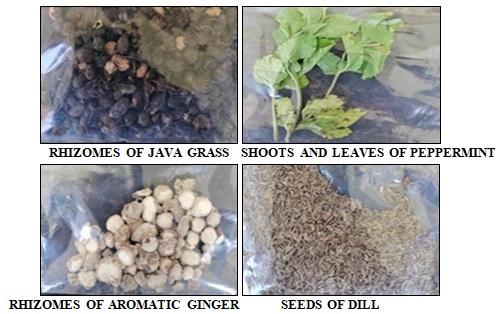
FIG. 1:
Collection and Authentication of Plant Materials: Plant materials, including Dill seeds (Anethum graveolens), Java grass rhizomes (Cyperus rotundus), Aromatic Ginger rhizomes (Kaempferia galanga), and Peppermint shoots and leaves (Mentha × piperita), were procured from a local market in Cherthala. The collected samples were meticulously cleaned, thoroughly dried, and securely packed in zip-lock polyethylene bags before being stored in airtight containers to prevent contamination and preserve their integrity. These dried plant materials were subsequently utilized for preparation and evaluation in further studies. The botanical identity of the specimens was confirmed and authenticated by Dr. Sreeja Krishnan, Head of the Department of Botany, Sree Narayana College, Cherthala.
Preparation of Polyherbal Digestive Churna: Churna, as defined in the Ayurvedic system of medicine, is a fine powder formulation prepared from single or multiple herbal ingredients. The formulation process involves meticulous cleaning, drying, pulverization, and sieving to ensure uniformity and efficacy. Omit this portion.
The poly herbal digestive churna was formulated following the guidelines outlined in the Ayurvedic Pharmacopoeia of India 14. The selected ingredients, including Dill seeds (Anethum graveolens), Aromatic Ginger (Kaempferia galanga), Peppermint (Mentha × piperita), Java grass (Cyperus rotundus), and Palm Candy (Panam Kalkandum), were accurately weighed, individually pulverized, and sieved using Sieve No. 44 and Sieve No. 88. The fraction passing through Sieve No. 44 but retained on Sieve No. 88 was collected, weighed, and subsequently blended in specific proportions to ensure uniformity in the final formulation. The blended churna was re-sieved through the same mesh sizes to maintain consistency and was then transferred into airtight containers for storage and further evaluation.
TABLE 1:
| Contents | Official Formula (100g) | Working Formula
(500g) |
| Dill Seeds | 30g | 150g |
| Java Grass (Rhizomes) | 30g | 150g |
| Aromatic Ginger (Rhizomes) | 20g | 100g |
| Peppermint Leaves | 10g | 50g |
| Palm Candy | 10g | 50g |
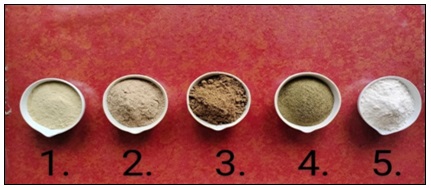
FIG. 2: (1) AROMATIC GINGER (2) JAVA GRASS RHIZOMES (3) DILL SEEDS (4) PEPPERMINT LEAVES (5) PALM CANDY
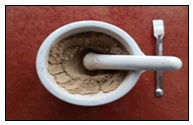
FIG. 3: FORMULATED POLY HERBAL CHURNA
Evaluation of Poly Herbal Churna:
Organoleptic Evaluation: The formulated poly herbal churna was evaluated based on the method described in Ayurvedic Pharmacopoeia of India. Organoleptic evaluation refers to the evaluation of color, odor, taste, texture etc. Organoleptic properties of each ingredient were separately evaluated 15.
Microscopic Evaluation: The powder microscopic study of the churna was done using Phloroglucinol-HCl as staining reagents under 10X magnification 15.
Physical Evaluation: Physical evaluation of formulation was carried out including the determination of Ash values and Extractive values, Moisture content, pH and Fluorescence analysis 16.
Determination of Ash Values: The Ash content or Ash value is the residue remaining after incineration of a plant material. Total ash is useful in detecting the crude drugs that are mixed with various mineral substances like sand, soil, calcium oxalate, chalk powder or other drugs with different inorganic contents to improve their appearance. The maximum temperature used for total ash should be not more than 450 °C.
Total Ash: Take about 2 gm accurately weighed of the ground drug in tarred platinum or silica dish previously ignited and weighed. Scatter the ground drug in a fine even layer on the bottom of the dish. Incarnated by gradually increasing the heat-not exceeding dull red heat- until free from carbon, cool and weigh.
Acid- insoluble Ash: Boil the total ash gently for five minutes with 25 ml of dilute hydrochloric acid, collect the insoluble matter in a Gooch crucible or on an ash less filter paper, wash with hot water, ignite to constant weight at a temperature not exceeding 450 °C. It is then cooled and reweighed. Calculate the percentage of Acid insoluble ash in Mg per gram of air-dried material.
Water Soluble Ash: To the crucible containing the total ash, add 25 ml of water and boil gently for 5 minutes. Collect the insoluble matters in a sintered glass crucible as on an ash less filter paper, then wash with hot water and ignite in a crucible for 15 minutes to constant weight at a temperature not exceeding 450 °C. It is then allowed to cool and weighed. Subtract the weight of this residue in mg from the weight of total ash. Calculate the content of water-soluble ash in mg per gram of air-dried material.
Determination of Extractive Values: It is the measure of the content of the drug extracted by solvents. It is obtained by exhausting crude drugs with different solvents are approximate measure of their chemical constituents.
Procedure: 5g of previously weighed churna is taken in a glass stoppered conical flask. Macerate with 100 ml solvent or 18 hours. Shake frequently to first 6 hours. Filter rapidly through filter paper and evaporate 25ml filtrate to dryness on the water bath in a tarred flat-bottomed shallow dish, dry the residue at 105 °C, cool and weigh. Keep it in a desiccator. Dry the extract to constant weight; finally calculate the % w/w of solvent soluble extractive value with reference to the air-dried drug.
Solvents used
- Chloroform water (1:99)
- Alcohol (Ethanol)
- Ether
Determination of Moisture Content: The churna was placed in a weighing bottle. It was dried at 105 °C in hot air oven and weighed after 15 minutes. When the weight the formulation became constant, then percentage of water loss on drying was calculated.
Determination of pH: 1% Solution of the churna in water was made by decoction. The pH of this 1% solution of formulated poly herbal churna was identified by a well calibrated and accurate pH meter.
Fluorescence Analysis: A little amount of the poly herbal churna is macerated with small quantity of solvents like chloroform, HCl, NaOH, HNO3, Iodine and FeCl3. Then it is analyzed under visible light and UV light and then mark the resultant colors produced under the above regions.
Determination of Physical Characteristics of Polyherbal Churna 17: Physical characters like bulk density, tap density, angle of repose, Hausner ratio and Carr’s index are determined for the poly herbal churna as well as for each of the ingredients separately. The flow property of churna and the ingredients are determined by using these evaluation parameters.
Bulk Density: Bulk density refers to method used to indicate a packing of particles or granules. The equation for determining bulk density (Db) is
Db = M/Vb
Where M is the mass of the particles Vb is the total volume of the packing.
The volume of the packing can be determined in an apparatus consisting of a graduated cylinder mounted on a mechanical tapping device (Jolting Volumeter). The initial volume before tapping the powder gives the bulk density.
Tapped Density: Tapped density is the increased bulk density attained after mechanically tapping a container containing the powdered sample. 50g of weighed formulation was taken and carefully added to the cylinder with the aid of a funnel. The initial volume was noted and then the powdered churna is subjected to 100 taps. The initial volume gave the bulk density value and after tapping the volume reduced, giving the value of tapped density.
Hausner Ratio: Hausner Ratio predicts the powders flow property and is related to the interparticle friction.
Equation for measuring Hausner ratio:
Hausner Ratio = ꝬTapped / ꝬBulk
Carr’s Index: It is an indirect method of measuring the powder flow from bulk density.
Equation for determining Carr’s index 11
Carr’s index = (Ꝭ tapped - Ꝭbulk) / Ꝭtapped × 100
Ꝭ is the density
Angle of Repose: It is an indirect method of quantifying the flow property of powder because of its relationship with interparticle cohesion A fixed funnel and free-standing cone method employs a funnel that is placed on a flat horizontal surface where 15 g of the powdered churna is poured into the fixed funnel until the apex of the conical pile just touched tip of the funnel.
The radius and the height of the pile formed over the graph papers measured by using a scale 11.
Equation for determining Angle of repose
Angle of repose,
θ = Tan-1(h / r)
h = height of the pile
r = radius of the circle
TABLE 2:
| Angle of repose(°) | Flow properties |
| ≤25 | Excellent |
| 25-30 | Good |
| 30-40 | Passable |
| >40 | Very poor |
Chemical Evaluation 18:
Preparation of Alcoholic Extract: The 50g powdered churna should be macerated with ethanol for 24 hours. After the completion of maceration residue should be removed by filtration followed by the evaporation of solvent and extract should be concentrated.
Phytochemical Analysis of Extract: Following chemical tests to be carried out for different extracts of Churna to identify the presence of various phytoconstituents.
Detection of Carbohydrate:
Molisch’s Test: To 2-3 ml of the test solution, added few drops of Molisch’s reagent solution and was shaken. Concentrated sulphuric acid was added from the sides of the test tube. Violet ring is formed at the junction of two liquids 13.
Fehling’s Test: To 1 ml of the test solution, equal quantities of Fehling solution A and B was added and heated. Formation of brick red precipitate indicates the presence of reducing sugars 13.
Iodine Test: To the 3 ml of test solution few drops of iodine solution was added. Blue color appeared which was disappeared on boiling and reappeared on cooling.
Benedict Test: To 5 ml Benedict solution, add 1 ml of the test solution and shake each tube. Place the tube in a boiling water bath and heat for 3 minutes. Remove the tubes from the heat and allow them to cool. Formation of green, red or yellow precipitate indicates the presence of carbohydrates.
Detection of Alkaloids:
Preparation of Test Solution: The test solution was prepared by dissolving the churna in dilute Hydrochloric acid, the solution was filtered. The filtrate was then subjected to the following test for the detection of the presence of alkaloids.
Dragendorff’s Test: Add few ml of Dragendorff’s reagent (potassium bismuth iodide solution) to 3 ml of the filtrate. Formation of orange brown color is indicating the presence of Alkaloids.
Mayer’s Test: Few drops of Mayer’s reagent (potassium iodide solution) were added into 3 ml of test solution. A cream-colored precipitate is formed due to the presence of alkaloids.
Hager’s Test: Small quantity of Hager’s reagent (saturated solution of picric acid) was added in filtrate. A yellow-colored precipitate is formed.
Wagner’s Test: Few drops of Wagner’s reagent (iodide in potassium iodide) were added in filtrate. A reddish-brown precipitate is formed.
Detection of Saponins:
Preparation of Test Solution: It was prepared by boiling the churna in water and filtered making it as aqueous extract.
Foam Test: The filtrate was vigorously shaken with water and formation of foam
Liebermann-Burchard Test: To the filtrate few drops of glacial acetic acid and two drops of con. H2SO4 were added. Color changes from rose to violet, blue to green reveals the presence of steroidal saponins.
Test for Proteins:
Biuret Test: To about 3 ml of the extract, 40% NaOH solution and few drops of 1% CuSO4 was added. Formation of blue color.
Xanthoproteic Test: The test solution was treated with con. HNO3 which on boiling. A yellow precipitate is formed.
Millon’s Test: Millon’s reagent has been added to the test solution and heated in a water bath. A reddish-brown coloration or precipitate.
Detection of Amino Acids:
Preparation of Test Solution: It is prepared by extracting the churna in boiling water.
Ninhydrin Test: 3 ml of test solution was heated and 3 drops of 5% ninhydrin solution was added in boiling water and was boiled for 10 min. purple or bluish color appeared.
Detection of Steroids and Triterpenoids
Preparation of Test Solution: It is prepared by extracting the churna in chloroform and subjected to following test.
Salkowski Test: A few drops of concentrated H2SO4 were added to the test solution and allowed to stand for some time. The formation of red color in the lower layer indicates the presence of steroids and formation of yellow color indicates the presence of triterpenoids.
Liebermann -Burchard Test: Some drops of acetic anhydride were added to test solution; the contents were boiled and cooled. Then concentrated sulphuric acid was added from the sides of test tube. The formation of brown ring at the junction of two layers and the upper layer turns green indicating the presence of steroids.
Detection of Glycosides:
Preparation of Test Solution: It is prepared by extracting the churna in alcohol.
Borntrager’s Test (Anthraquinone Glycoside): To about 3 ml test solution, dilute sulphuric acid was added, boiled and filtered. To cold extract equal volume of benzene or chloroform was added. After shaking, organic solvents were well separated then add ammonium. Ammoniacal layer turned pink.
Keller-Kiliani Test: To the test solution few drops of ferric chloride solution and concentrated H2SO4. Formation of two layers occurs, lower layer of reddish-brown color and upper layer of bluish green color simultaneously.
Baljet Test: Sodium picrate was added to the test solution. The color of solution changed from yellow to orange.
Detection of Flavonoids:
Preparation of Test Solution: To small amount of churna, equal amount of 2M Hydrochloric acid was added and heated for about 30-40 min at 100°C. The extract was cooled down and again extracted with ethyl acetate which was further concentrated to dryness and ready to be used as test sample.
Shinoda Test: 5 ml of ethanol was added in the extract and then few drops of concentrated HCI and 0.5g magnesium turnings were added. Formation of pink color.
Lead Acetate Test: To small quantity of extract, lead acetate solution was added. A yellow-colored precipitate.
Sodium Hydroxide Test: Addition of large amount of NaOH to extract. Showed yellow coloration which decolorized addition of acid, indicates the presence of flavanones.
Detection of Tannins:
Preparation of Solution Test: The test solution was prepared by dissolving the extract in water and alcohol.
Ferric Chloride Solution Test: To 1 ml of the extract, ferric chloride solution was added. Formation of a dark blue or greenish black color.
Gelatin Test: A few ml of 1% gelatin solution containing 10% NaCl were added to the test solution. Formation of white precipitate.
Lead Acetate Test: A few ml of 10% lead acetate was added to the test solution. Formation of white precipitate.
Pharmacological Studies:
Determination of Microbial Content 19: 1gm of churna was dissolved in lactose broth and volume adjusted to 100ml with the same medium. About 10ml of sample was transferred into 100ml of MacConkey broth and incubated for 18-24 hours at 43-45° C. A subculture was prepared on a plate with MacConkey agar and incubated at 43-45° C for 18-24 hours. The growth of red, generally non-mucoid colonies of gram-negative rods appearing as reddish zones indicates the presence of E. coli if not then it indicates the absence of E. coli.
Comparative Antacid Activity of Polyherbal Churna and Sodium Bicarbonate 20: The acid neutralizing capacity test was conducted at temperature 37±3°C. The pH meter was standardized using potassium dihydrogen phosphate, which is a standardized buffer.
Magnetic stirrer was used to produce stirring rate of 300±30 rpm. 2 gm of formulation and 2 ml of standard solution (sodium bicarbonate solution) were separately added to 70 ml distilled water in separate 250 ml volumetric flasks respectively.
The solutions were stirred for 1 minute on magnetic stirrer. pH of both solutions was recorded. 30 ml of 0.1 N HCl were added in both the solutions and kept for stirring on magnetic stirrer for 15 minutes. The pH was recorded. 20 ml of conc.
HCl was added in both the solutions and their pH was recorded. From this we attain the antacid activity of the polyherbal churna.
RESULT:
Organoleptic Evaluation:
TABLE 3:
| Ingredient | Shape/Appearance | Colour | Odour | Taste |
| Dill Seeds | Fruits are oval, compressed, and winged with longitudinal ridges (oil ducts visible as dark lines). | Light brown to dark brown | Strong characteristic aromatic, spicy | Slightly bitter, mildly pungent, aromatic |
| Aromatic Ginger | Rhizome pieces (irregular in shape) | Light brown | Pleasant, strong aromatic, camphoraceous | Pungent, slightly spicy, aromatic |
| Java Grass Rhizomes | Blackish-brown rhizomes with spherical or oval hairy bulging roots | Blackish-brown | Deep, pleasant, earthy aromatic | Mildly bitter to slightly astringent |
| Peppermint Leaves | Oppositely arranged, oblong to lanceolate leaves with serrated margins | Green to greenish-brown | Slightly pungent, characteristic odour | Warm, pungent taste with a cooling sensation |
| Palm Candy | Crystalline | White to pale brown | Odourless | Sweet taste |
| Formulated churna | Fine, homogeneous herbal powder with a smooth and uniform consistency | Light brown to yellowish-brown | Pleasant, characteristic aromatic odour with dominant minty and spicy | Sweet initially due to palm candy, followed by a mildly pungent, aromatic, slightly bitter taste with a pleasant cooling aftertaste |
The Churna successfully passed the sensory evaluation without exhibiting any undesirable characteristics. The prepared polyherbal churna was obtained as a fine, homogeneous, free-flowing powder of light brown colour. It exhibited a pleasant characteristic aromatic odour with predominant minty and spicy herbal notes. The formulation had a sweet taste initially, followed by a mildly pungent, aromatic, slightly bitter flavor with a pleasant cooling aftertaste. The organoleptic properties indicated good acceptability and uniform blending of the herbal ingredients. The assessment revealed that the formulation possessed a uniform texture, a characteristic herbal aroma, an acceptable taste, and satisfactory overall organoleptic properties.
Microscopical Evaluation: Microscopical evaluation of the prepared polyherbal churna revealed the presence of characteristic plant structures, including stomata, trichomes, vessels, root hairs, starch grains, and other cellular components. These microscopic features were consistent with the botanical constituents of the formulation.
Physical Evaluation:
Evaluation of Physio-Chemical Properties of Churna:
TABLE 4:
| Sl. no. | Parameters | Polyherbal churna (% w/w, Mean ± SD |
| 1 | Total ash | 9.01±0.11 |
| 2 | Acid insoluble ash | 2.08 ±0.08 |
| 3 | Water soluble ash | 7.50 ±0.15 |
| 4 | Water soluble extractive | 3.20 ±0.02 |
| 5 | Ethanol soluble extractive | 4.64±0.21 |
| 6 | Ether soluble extractive | 1.28±0.16 |
| 7 | Loss on drying | 0.91±0.22 |
Values are expressed as Mean ± SD (n = 3).
The physicochemical evaluation of the prepared polyherbal churna demonstrated satisfactory quality attributes. The total ash, acid-insoluble ash, and water-soluble ash contents were found to be 9.01 ± 0.11%, 2.08 ± 0.08%, and 7.50 ± 0.15%, respectively. The water-, ethanol-, and ether-soluble extractive values were 3.20 ± 0.02%, 4.64 ± 0.21%, and 1.28 ± 0.16%, respectively, indicating the presence of both polar and non-polar phytoconstituents. The formulation exhibited a low loss on drying (0.91 ± 0.22%), suggesting minimal moisture content and good storage stability.
Flourescence Analysis:
TABLE 5:
| Sl. no. | Treatment/Reagent | Colour under Visible Light | Colour under UV Light (365 nm) |
| 1 | Powder (untreated) | Brown | Green |
| 2 | Chloroform (CHCl₃) | Light brown | Dark brown |
| 3 | Hydrochloric acid (HCl) | Deep brown | Dark brown to black |
| 4 | Sodium hydroxide (NaOH) | Yellowish brown | Greenish-black |
| 5 | Nitric acid (HNO₃) | Brown | Dark green |
| 6 | Iodine solution | Yellowish brown | Greenish-black |
| 7 | Ferric chloride (FeCl₃) | Brownish green | Green |
The fluorescence characteristics of the prepared polyherbal churna were evaluated under visible light and UV light (365 nm) after treatment with different chemical reagents. The powder exhibited distinct colour changes with various reagents, producing characteristic fluorescence patterns under UV light. These observations can serve as a useful qualitative parameter for the identification, authentication, and quality control of the formulation.
Determination of Physical Characters of Polyherbal Churna and its Individual Components:
TABLE 6:
| Ingredients | Bulk density | Tapped density | Hausner
ratio |
Carr’s index | Angle of repose | Flow property |
| Dill seeds | 0.5 | 0.6 | 1.2 | 16.6 | 76.074 | Very poor |
| Peppermint leaves | 0.294 | 0.32 | 1.088 | 8.1 | 28.14 | Excellent |
| Palm candy | 0.71 | 0.83 | 1.169 | 14.457 | 49.6 | Passable |
| Aromatic ginger | 0.37 | 0.51 | 1.378 | 27.45 | 51.047 | Poor |
| Java grass rhizomes | 0.375 | 0.42 | 1.12 | 10.714 | 33.216 | Good |
| Churna | 0.34 | 0.51 | 1.5 | 33.33 | 35.836 | Good |
The pre-compression evaluation revealed varying flow properties among the individual ingredients. Peppermint leaves exhibited excellent flow characteristics, while Java grass rhizomes showed good flow and palm candy demonstrated passable flow. In contrast, dill seeds and aromatic ginger displayed very poor and poor flow properties, respectively, indicating the need for careful blending during formulation. Despite the variability in the flow characteristics of the individual ingredients, the final Churna formulation exhibited good overall flowability with a bulk density of 0.34 g/mL, tapped density of 0.51 g/mL, an angle of repose of 35.84°, Hausner's ratio of 1.50, and Carr's index of 33.33%. These findings suggest that the blending process improved the handling characteristics of the formulation, making it suitable for processing, packaging, and storage.
Chemical Evaluation:
Preliminary Phytochemical Screening of Polyherbal Churna: Preliminary phytochemical screening of the prepared polyherbal churna was carried out using standard qualitative chemical tests for carbohydrates, alkaloids, saponins, proteins, amino acids, steroids, triterpenoids, glycosides, flavonoids, and tannins.
TABLE 7:
| Sl. no. | Phytochemical Constituent | Result |
| 1 | Carbohydrates | + |
| 2 | Alkaloids | + |
| 3 | Saponins | + |
| 4 | Proteins | – |
| 5 | Amino acids | – |
| 6 | Steroids/Triterpenoids | + |
| 7 | Glycosides | + |
| 8 | Flavonoids | + |
| 9 | Tannins | + |
Key: (+) Present; (–) Absent.
Preliminary phytochemical screening of the prepared polyherbal churna revealed the presence of carbohydrates, alkaloids, saponins, steroids/triterpenoids, glycosides, flavonoids, and tannins, whereas proteins and amino acids were not detected.
The presence of these phytoconstituents indicates that the formulation is rich in bioactive secondary metabolites, which may contribute to its therapeutic potential.
Pharmacological Activity Study:
Determination of Microbial Content:
Result: E. coli was absent in the tested churna formulation, indicating that the sample met the acceptable microbial limit for E. coli.
Comparative Antacid Activity of Polyherbal Churna and Sodium Bicarbonate:
TABLE 8:
| Steps | Test drug (Polyherbal churna) | Standard drug (Sodium bicarbonate) |
| 1 | Churna + 70ml distilled water. | Sodium Bicarbonate + 70 ml distilled water. |
| pH –7.11 | pH – 6.8 | |
| 2 | Churna + 70 ml distilled water + 30 ml 0.1 N HCl and stirred for 15 minutes. | Sodium Bicarbonate + 70 ml distilled water + 30 ml 0.1 N HCl and stirred for 15 minutes. |
| pH – 3.5 | pH – 3.7 | |
| 3 | 20 ml conc. HCl added to the above solution. | 20 ml Conc. HCl added to the above solution. |
| pH – 3.86 | pH – 3.7 |
Initially, the polyherbal churna dispersed in distilled water exhibited a pH of 7.11, indicating a slightly alkaline nature, whereas sodium bicarbonate showed a pH of 6.8, suggesting near-neutral to mildly alkaline properties. This initial pH reflects the inherent buffering capacity of both formulations prior to acid challenge.
Upon the addition of 30 ml of 0.1 N hydrochloric acid and stirring for 15 minutes, the pH of the polyherbal churna formulation decreased to 3.5, while the sodium bicarbonate formulation showed a pH of 3.7. The reduction in pH in both cases confirms effective interaction with the added acid. The slightly lower pH observed with the polyherbal churna indicates gradual neutralization and controlled buffering action, whereas sodium bicarbonate demonstrated a comparatively faster neutralization effect.
Further addition of 20 ml of concentrated hydrochloric acid resulted in an increase in pH to 3.86 for the polyherbal churna, while the pH of the sodium bicarbonate formulation remained unchanged at 3.7. The rise in pH observed in the polyherbal churna suggests sustained acid-neutralizing and buffering capacity even under excessive acidic conditions. In contrast, sodium bicarbonate did not show further buffering beyond this stage, indicating limited capacity under high acid load.
DISCUSSIONS: The present study demonstrated that the prepared polyherbal digestive churna possessed satisfactory organoleptic, microscopic, physicochemical, fluorescence, and phytochemical characteristics, indicating its quality and authenticity. The physicochemical parameters, including total ash, acid-insoluble ash, extractive values, and loss on drying, were within acceptable limits, suggesting the purity, stability, and good quality of the formulation. Preliminary phytochemical screening revealed the presence of carbohydrates, alkaloids, saponins, steroids/triterpenoids, glycosides, flavonoids, and tannins, which are known to possess gastroprotective, antioxidant, anti-inflammatory, and acid-neutralizing properties.
The fluorescence analysis further supported the identification and quality control of the formulation by producing characteristic colour changes under visible and UV light. The combined therapeutic potential of Anethum graveolens Linn., Cyperus rotundus L., Kaempferia galanga Linn., Mentha piperita Linn., and palm candy may contribute synergistically to digestive enhancement and the management of gastric hyperacidity. Flavonoids and tannins may protect the gastric mucosa through antioxidant and cytoprotective mechanisms, while alkaloids and other bioactive constituents may help reduce gastric irritation and improve digestive function. These findings suggest that the formulated polyherbal churna possesses promising characteristics as a safe and effective herbal digestive formulation for the management of acid-related gastrointestinal disorders.
CONCLUSION: The present study successfully formulated and standardized a polyherbal digestive churna containing Anethum graveolens Linn., Cyperus rotundus L., Kaempferia galanga Linn., Mentha piperita Linn., and palm candy. The formulation exhibited satisfactory organoleptic, microscopic, physicochemical, fluorescence, and phytochemical characteristics, indicating its quality, purity, and stability. The evaluated physicochemical parameters, including flow properties, moisture content, ash values, extractive values, and pH, were within acceptable limits. Preliminary phytochemical screening confirmed the presence of several bioactive constituents, such as flavonoids, alkaloids, tannins, saponins, glycosides, and steroids/triterpenoids, which may contribute to the digestive and gastro protective properties of the formulation. Furthermore, the in vitro antacid evaluation demonstrated promising acid-neutralizing potential when compared with sodium bicarbonate, suggesting that the prepared polyherbal churna may serve as a safe and effective herbal alternative for the management of gastric hyperacidity and related gastrointestinal disorders. The findings of this study provide baseline quality control parameters for the formulation and may serve as a reference for future standardization studies.
Further in-vitro and in-vivo investigations, including proteolytic, amylolytic, lipolytic, and clinical evaluations, are warranted to establish its digestive efficacy, safety, and therapeutic potential.
ACKNOWLEDGEMENT: The authors gratefully acknowledge St. Joseph's College of Pharmacy, Cherthala, Kerala, for providing the necessary facilities and infrastructure to carry out this research.
CONFLICT OF INTEREST: The authors declare no conflict of interest.
REFERENCES:
- Kotak, Bhargav, Mehta, Mehul, Sud and Sushant: A review on trimada churna: an ayurvedic polyherbal formulation. International Journal of Research in Ayurveda and Pharmacy 2024; 15. 100-105. 10.7897/2277-4343.156200.
- Dipika R. Turankar and Sneha Kubde: Review on Standardization Parameters of Churna; Ayurlog: National Journal of Research in Ayurved Science 2017; (5): 5.
- Panda, Purnendu, Dighe, Dattatray, Meda and Mruthyumjaya: A Review on Pharmaceutical and Therapeutical Uses of Churna (Powder) in Ayurveda 2017; 5(11): 4233-4240.
- Singh PK, Shah MK, Singh and Binod: A Literary Review on Churna - Ayurveda Dosage Form. Journal of Ayurveda Campus 2021; 2(1): 103–109.
- Bhagyashri S. Bhosale, Surwase KP and Shivshankar D. Hinge: Formulation and Evaluation of Herbal Churna for Digestion IJARSCT 2025; 5(11): 246-260.
- Harish Marathe, Himanshu More, Hitesh Nikam, Chandrakant P Suryawanshi and Rajendra D Wagh: Development and evaluation of herbal churna: A natural approach to digestive wellness International Journal of Pharmacology and Clinical Research 2025; 7(1): 107-111.
- Harshada S. Nangare and Piyush N. Jangam: Formulation & Evaluation of Antacid Suspension Using Herbal Extracts, International Journal of Research Publication and Reviews 2025; 6(5): 14128-14138.
- Jana S and Shekhawat GS: Anethum graveolens: An Indian traditional medicinal herb and spice. Pharmacognosy Reviews 2010; 4(8): 179-184. DOI: 10.4103/0973-7847.70915. PMID: 22228959; PMCID: PMC3249919.
- Tyagi, Tripti, Sharma, Sakshi, Sharma and Rajesh: Over view evaluation of Therapeutic uses of Cyperus rotundus (Musta). JETIR 2023; 10: 507-515.
- Wang SY, Zhao H, Xu HT, Han XD, Wu YS, Xu FF, Yang XB, Göransson U and Liu B: Kaempferia galanga L.: Progresses in Phytochemistry, Pharmacology, Toxicology and Ethnomedicinal Uses. Front Pharmacol 2021; 12: 675350. doi: 10.3389/fphar.2021.675350. PMID: 34737693; PMCID: PMC8560697.
- Srivastava N, Ranjana and Singh S: Aromatic ginger (<i>Kaempferia galanga</i> L.) extracts with ameliorative and protective potential as a functional food, beyond its flavor and nutritional benefits. Toxicology Reports 2019; 6: 521-528.
- Tafrihi M, Imran M, Tufail T, Gondal TA, Caruso G, Sharma S, Sharma R, Atanassova M, Atanassov L, Valere Tsouh Fokou P and Pezzani R: The Wonderful Activities of the Genus Mentha: Not Only Antioxidant Properties. Molecules 2021; 26(4): 1118.
- Sarkar T, Mukherjee M, Roy S and Chakraborty R: Palm sap sugar an unconventional source of sugar exploration for bioactive compounds and its role on functional food development. Heliyon 2023; 9(4): e14788.
- Government of India. The Ayurvedic Pharmacopoeia of India. Part II, Volume I (Formulations). New Delhi: Ministry of Health and Family Welfare, Department of AYUSH 2007.
- World Health Organization. Quality control methods for herbal materials. Geneva: World Health Organization 2011.
- Khandelwal KR: Practical Pharmacognosy: Techniques and Experiments. 30th ed. Pune: Nirali Prakashan 2022.
- United States Pharmacopeial Convention. United States Pharmacopeia–National Formulary (USP–NF). General Chapter <1174> Powder Flow. Rockville (MD): USP Convention; latest edition.
- Harborne JB: Phytochemical Methods: A Guide to Modern Techniques of Plant Analysis. 3rd ed. London: Chapman & Hall 1998.
- Government of India. The Ayurvedic Pharmacopoeia of India. Part II, Volume I. New Delhi: Ministry of AYUSH; 2008.
- Sharma S, Sharma P, Katiyar D, Goel R and Sahoo J: Formulation, standardization and screening of polyherbal churna for antacid activity. Int J Res Ayurveda Pharm 2018; 9(4): 94-97. doi:10.7897/2277-4343.094119
How to cite this article:
Vasudevan K, Haridas A, Joshy J, Benny S and Preethi RV: Development, physicochemical standardization, and comparative evaluation of a polyherbal digestive churna. Int J Pharmacognosy 2026; 13(9): 986-97. doi link: http://dx.doi.org/10.13040/IJPSR.0975-8232.IJP.13(9).986-97.
This Journal licensed under a Creative Commons Attribution-Non-commercial-Share Alike 3.0 Unported License.
Article Information
11
986-997
899 KB
150
English
IJP
Kavitha Vasudevan *, Adarsh Haridas, Jyothika Joshy, Sona Benny and R. V. Preethi
Department of Pharmacognosy, Al Azhar College of Pharmacy, Thodupuzha, Kerala, India.
kavithamanoj28@gmail.com
30 July 2026
25 August 2026
27 August 2026
10.13040/IJPSR.0975-8232.IJP.13(9).986-97
01 September 2026
 Download