


DEVELOPMENT OF QUALITY PARAMETERS OF TALISADI CHURNA AND ITS MARKET FORMULATIONS
HTML Full TextDEVELOPMENT OF QUALITY PARAMETERS OF TALISADI CHURNA AND ITS MARKET FORMULATIONS
Sanskruti Rathod, Hetal Joshi, Mamta Shah and Karuna Modi *
Department of Pharmacognosy and Phytochemistry, L. M. College of Pharmacy, Ahmedabad, Gujarat, India.
ABSTRACT: Talisadi Churna is a classical Ayurvedic polyherbal formulation traditionally used in cough, bronchitis, fever, dyspepsia, anaemia and cardiac disorders. The present study was carried out for pharmacognostical, physicochemical and phytochemical evaluation of standard laboratory-prepared and marketed formulations in accordance with WHO guidelines. Diagnostic microscopical features of each crude drug such as lignified fibres, stone cells, starch grains, oleo-resinous parenchyma, silicate crystals and epidermal characters were confirmed in all the formulations, ensuring its identity and authenticity. Phytochemical screening detected alkaloids, flavonoids, phenolics, tannins, carbohydrates, steroids and triterpenoids. Comparative TLC fingerprinting confirmed the presence of all crude drugs in prepared and marketed formulations. HPTLC quantification using piperine as a marker revealed highest content in P. nigrum (4.86%w/w), followed by P. longum (4.809% w/w). Among formulations, laboratory prepared contained 4.88% w/w, with comparatively lower amounts in marketed formulations. The findings provide a comprehensive standardization profile for Talisadi Churna, ensuring quality of both laboratory-prepared and marketed formulations.
Keywords: Ayurvedic formulation, HPTLC, Piperine, Standardization, Talisadi Churna
INTRODUCTION: Ayurveda has been an integral part of Indian medicine since ancient times, with a wide range of formulations such as Asava, Arka, Avaleha, Ghrita, Taila, Churna, and others. Ayurvedic formulations play a key role in enhancing immunity and disease resistance. One of the formulation, churnas are fine powdered preparations that may be simple (single ingredient) or compound (multiple ingredients). Their therapeutic effectiveness increases with finer particle size, and they are easy to administer, especially for children who have difficulty swallowing tablets or capsules 1.
To meet modern challenges and achieve global acceptance, Ayurveda requires appropriate scientific adaptations while preserving its fundamental principles 1. Talisadi Churna is well known Ayurvedic formulation used in cough, cold, respiratory diseases, bronchitis, vomiting, heart diseases, chronic fever, anorexia, stimulant, dyspepsia and anaemia. Talisadi Churna chiefly contains P. longum and P. nigrum, with piperine alkaloid as the major constituent. To ensure the quality, safety, and efficacy of such herbal formulations, standardization in accordance with WHO guidelines is essential.
Therefore, the present study evaluates Talisadi Churna using modern analytical techniques, including marker-based analysis, to establish quality-control and standardization parameters for ensuring its authenticity, consistency, and therapeutic reliability 2.
MATERIALS AND METHODS:
Collection and Authentication of Plant Material: All the crude drugs were collected from the local market of Ahmedabad. Their identification and authentication were done by taxonomist of Department of Botany, Gujarat University, Ahmedabad.
Preparation of Standard Churnas: Plant materials (as per Table 1) were taken together in mentioned quantity, powdered (60#), mixed properly and stored in airtight containers.
TABLE 1: CONTENT OF STANDARD FORMULATION
| Name | Latin Name | Part used | Qty (Parts) |
| Talishpatra | Taxus wallichiana | Leaf | 1 |
| Black pepper | Piper nigrum | Fruit | 2 |
| Ginger | Zingiber officinale | Rhizome | 3 |
| Long pepper | Piper longum | Fruit | 4 |
| Vansalochana | Bambusa arundinacea | Unorganized part | 5 |
| Cardamom | Elettaria cardamomum | Seed | ½ |
| Cinnamon | Cinnamomum zeylanicum | Stem bark | ½ |
| Sarkara | - | - | 32 |
| Total | 48 | ||
Collection of Market Samples of the Formulation: Two market samples of Talisadi Churna were collected from the various Ayurvedic pharmacies of Ahmedabad.
- Shri Narnarayan Ayurvedic Pharmacy (NAR)
- Shri Baidyanath (BDN)
Pharmacognostical Studies: All the plant material were studied individually for morphological and microscopical characters. Powder study and quantitative microscopy were done for standard (STD) and market formulation (NAR and BDN) of Talisadi Churna. Physico- chemical parameters like ash values, extractive values and volatile oil content were performed for standard and market formulation 3 ,4.
Standard and market formulations were subjected to the following tests separately for the presence of various phytoconstituents like alkaloids, flavonoids, saponins, carbohydrates, sterols and terpenoids, anthraquinone glycosides, coumarins, tannins and phenolic compounds 5-10.
The content of alkaloids 11, 12, flavonoids 11, 13, carbohydrates 11, 14 and tannins 6 were also determined. Sodium and potassium ions were estimated by flame photometric method 6. Fluorescence analysis was carried out using various solvents like water, methanol, ethanol, 1N HCI and 1N methanolic NaOH separately at short UV, long UV and visible wave length 6.
Thin Layer Chromatography (TLC) Analysis: TLC profiling of key ingredients in Talisadi Churna was performed using co-TLC with standard drugs and market formulations (NAR, BDN).
Sample Preparation: Powdered crude drugs (1 g) and formulations (2 g) were refluxed with suitable solvents (20 mL) for 30 min. Extracts were filtered, concentrated, and used for TLC.
Chromatographic Conditions:
- Cinnamomum zeylanicum: Petroleum ether extract; mobile phase Toluene: Ethyl acetate (9:1); detection under UV.
- Zingiber officinale: Chloroform extract; mobile phase n-Hexane: Ether (4:6); derivatized with vanillin–H₂SO₄; detection in visible light.
- Elettaria cardamomum: Acetone extract; mobile phase Toluene: Ethyl acetate (9:1); detection under UV.
- Taxus wallichiana: Chloroform extract; mobile phase Toluene: Ethyl acetate (9:1); derivatized with vanillin–H₂SO₄; detection under UV and visible light.
- Piper longum & Piper nigrum: Methanolic extract; mobile phase Toluene: Acetone: Formic acid (5:2:1); detection under UV.
- Stationary Phase: Precoated silica gel G 60 F254 plates (E. Merck).
HPTLC Analysis: HPTLC analysis of crude drugs and standard and market formulations of Talisadi Churna was carried out using silica gel 60 F254 plates (Merck) with Toluene:Acetone:Formic acid (5:2:1) as mobile phase. Methanolic extracts of samples were prepared by maceration. Samples were applied as bands (2–10 µL) and developed up to 8 cm after chamber saturation (45 min) at 25 ± 2°C. Densitometric scanning was performed at 337 nm under UV light. Piperine (1 mg/mL) was used as standard to construct calibration curve (1000–6000 ng/spot), and quantification in samples was carried out by comparing peak areas with the standard curve.
Validation of HPTLC Method: The method was validated as per ICH guidelines for linearity (1000–6000 ng/spot), precision (%RSD for intra- and interday), accuracy (recovery by standard addition), and specificity. Repeatability was confirmed (RSD <1% for peak area; <3% for application, n=7). LOD and LOQ were calculated as 3.3σ/S and 10σ/S, respectively.
RESULTS AND DISCUSSION:
Pharmacognostical Studies: Standard Talisadi Churna and its market formulations (NAR and BDN) were evaluated for morphological characters. Their findings are shown in Table 2. Microscopic features are presented in Fig. 1. Results of quantitative microscopy and physico-chemical parameters, including ash values, extractive values, and volatile oil content, were given in Table 3 and 4.
Phytochemical screening indicated the presence of alkaloids, flavonoids, sterols and triterpenoids, phenolics, tannins, and carbohydrates. Higher levels of alkaloids, flavonoids, phenolics, and sugars were observed in the standard formulation, while tannins were higher in NAR and starch content in BDN (Table 5).
Table 6 shows that sodium and potassium ion content was higher in NAR formulation. Fluorescence analysis results are presented in Table 7.
TABLE 2: MACROSCOPICAL CHARACTERS
| Parameters | Talisadi Churna | ||
| STD | NAR | BDN | |
| State | Fine | Fine | Fine |
| Colour | Off white | Buff | Buff |
| Odour | Aromatic | Aromatic | Aromatic |
| Taste | Sweet | Sweet | Sweet |
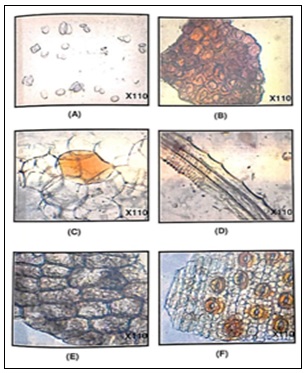
FIG. 1: POWDER STUDY OF STANDARD Talisadi Churna
TABLE 3: QUANTITATIVE MICROSCOPY OF Talisadi Churna
| Parameters | Talisadi Churna | ||
| STD | NAR | BDN | |
| Stone cell | |||
| Length
Breadth |
22.2 - 207.2 μ
18.5 - 70.3 μ |
18.5 - 207.2 μ
18.5 - 70.3 μ |
18.5 - 207.2 μ
18.5 - 70.3 μ |
| Phloem Fibre | |||
| Length
Breadth |
379.9-727.8μ
18.5 - 25.9 μ |
429.1-700.7 μ
18.5 - 25.9 μ |
371.8-715.1 μ
18.5 - 25.9 μ |
| No. of sclerenchyma cells per sq mm | 3720 cells | 3750 cells | 3800 cells |
(±SD); Standard deviation, Number of readings = 3)
TABLE 4: PHYSICAL PARAMETERS OF Talisadi Churna
| Quality Parameters | Talisadi Churna (% w/w ± SD) (n=3) | ||
| STD | NAR | BDN | |
| Ash value | |||
| Total ash
Acid insoluble ash Water soluble ash |
11.36 ± 0.42
9.69 ± 0.48 1.42 ± 0.09 |
11.92 ± 0.30
8.44 ± 0.18 1.35 ± 0.10 |
11.33 ± 0.47
9.27 ± 0.144 0.93 ± 0.09 |
| Extractive value | |||
| Water soluble extractive
Alcohol soluble extractive |
77.55 ± 0.65
2.62 ± 0.16 |
65.80 ± 0.29
6.59 ± 0.11 |
71.5 ± 1.17
4.76 ± 0.14 |
| Volatile oil content(% v/w) | 0.2 ± 0.02 | 0.2 ± 0.05 | 0.2 ± 0.02 |
Standard deviation (±SD); Number of readings (n) =3
TABLE 5: ESTIMATION OF PHYTOCONSTITUENTS OF Talisadi Churna
| Phytoconstituents | Talisadi Churna (% w/w ± SD) (n=3) | ||
| STD | NAR | BDN | |
| Alkaloids | 0.602 ±0.002 | 0.574 ±0.016 | 0.547 ±0.001 |
| Flavanoids | 15.65 ± 0.083 | 7.081 ±0.105 | 13.05 ± 0.075 |
| Phenolics | 16.2 ± 0.007 | 7.4 ± 0.006 | 13.2 ± 0.01 |
| Carbohydrates Sugar content
Starch |
12.06 ±0.602
0.2 ±0.01 |
11.26 ±0.380
0.19 +0.004 |
9.9±0.4
0.23 ± 0.006 |
| Tannins | 0.202 ± 0.007 | 0.274 ± 0.008 | 0.132 ±0.008 |
Standard deviation (±SD); Number of readings (n) =3
TABLE 6: ESTIMATION OF SODIUM AND POTASSIUM IONS IN Talisadi Churna
| Elements | Talisadichurna (% w/w ) | ||
| STD | NAR | BDN | |
| Sodium (Na+) | 0.425 | 0.514 | 0.335 |
| Potassium (K+) | 1.278 | 1.532 | 1.032 |
TABLE 7: FLUORESCENCE ANALYSIS OF Talisadi Churna
| Reagent | Wave length | Talisadi Churna | ||
| STD | NAR | BDN | ||
| Water | Visible | Yellow | Light Yellow | Brownish Yellow |
| Short UV | Green | Green | Green | |
| Long UV | Whitish green | Whitish green | Whitish green | |
| Methanol | Visible | Dark green | Yellowish green | Light green |
| Short UV | Green | Green | Green | |
| Long UV | Brownish Green | Brownish Green | Brownish Green | |
| Alcohol | Visible | Green | Green | Green |
| Short UV | Green | Green | Green | |
| Long UV | Green | Green | Green | |
| 1N HCl | Visible | Light Yellow | Yellow | Yellow |
| Short UV | Light Green | Green | Green | |
| Long UV | Yellowish green | Yellowish green | Yellowish green | |
| Methanolic NaOH | Visible | Yellowish green | Brownish Green | Brownish Green |
| Short UV | Green | Green | Green | |
| Long UV | Brownish Green | Brownish Green | Yellowish green | |
Visible wave length - 400-800nm, Short UV wave length - 254nm, Long UV wave length - 366nm
Comparative TLC Study of Talisadi Churna:
TLC of C. zeylanicum with Standard and Market Formulations: TLC of C. zeylanicum showed prominent spots at Rf 0.42 and 0.25 under short UV, which were also observed in standard and both marketed formulations, indicating the presence of similar phytoconstituents. Additional spots at lower Rf values (0.19 and 0.10) in formulations suggest the presence of other co-existing components Fig. 2.
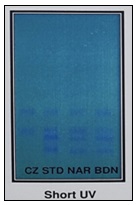
FIG. 2: TLC OF C. ZEYLANICUM AND TALISADI CHURNA
TLC of Z. officinale with Standard and Market Formulations: In Z. officinale, after derivatization with vanillin–H₂SO₄, characteristic spots at Rf 0.92, 0.68, 0.50, and 0.38 were observed in both standard and formulations, confirming the presence of gingerol-related compounds Fig. 3.
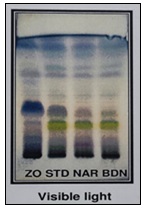
FIG. 3: TLC OF Z. OFFICINALE AND TALISADI CHURNA
TLC of E. cardomomum with Standard and Market Formulations: TLC profile of E. cardamomum exhibited multiple spots under both short and long UV. Common Rf values (0.58, 0.49, 0.31, and 0.27) in standard and formulations indicated good correlation, while minor variations suggest formulation complexity Fig. 4.
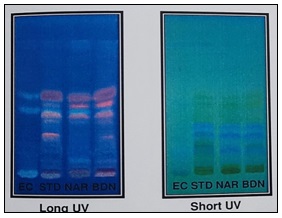
FIG. 4: TLC OF E. CARDOMOMUM MATON AND TALISADI CHURNA
TLC of T. wallichiana with Standard and Market Formulations: T. wallichiana showed spots at Rf0.58, 0.52, and 0.37 across crude drug, standard, and formulations under UV and after derivatization, confirming its presence Fig. 5.
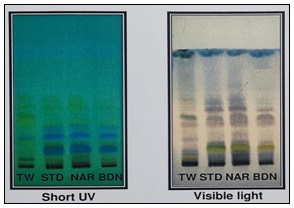
FIG. 5: TLC OF T. WALLICHIANAAND TALISADI CHURNA
TLC of P. longum and P. nigrum with Standard and Market Formulations: For P. longum and P. nigrum, major spots at Rf 0.77, 0.68, 0.59, and 0.55 were observed in all samples under short UV, indicating piperine-like constituents Fig. 6.
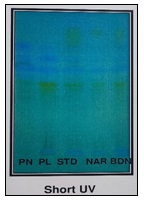
FIG. 6: TLC OF P. LONGUM, P. NIGRUM AND TALISADI CHURNA
HPTLC Study of Crude drugs, Standard and Market Formulations: Densitometric analysis confirmed the presence of piperine in all samples, with comparable peak areas, indicating uniform distribution of the bioactive marker as shown in Fig. 7.
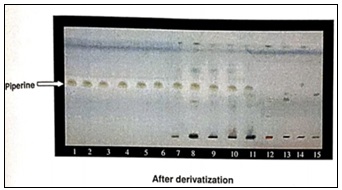
FIG. 7: CHROMATOGRAM OF PIPERINE AND TLC FINGERPRINTING OF TALISADI CHURNA
- Std piperine (1000 ng)
- Std piperine (2000 ng)
- Std piperine (3000 ng)
- Std piperine (4000 ng)
- Std piperine (5000 ng)
- Std piperine (6000 ng)
- longum
- nigrum
- STD formulation
- NAR formulation
- BDN formulation
- wallichiana
- zeylanicum
- officinale
- cardamomum
Calibration curve of Piperine: HPTLC analysis was performed using piperine as a marker compound. The calibration curve of piperine showed good linearity in the range of 1000–6000 ng/spot with a correlation coefficient (R² = 0.96), indicating reliable quantification Fig. 8.
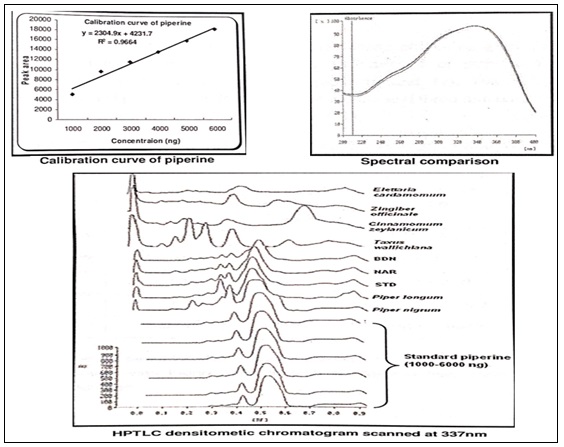
FIG. 8: HPTLC STUDY OF PIPERINE
Estimation of Piperine in P. longum, P. nigrum and all the three Formulations: The chromatographic profiles confirmed the presence of piperine in all samples without interference. Table 8 shows a decrease in piperine content was observed in marketed formulations compared to the standard formulation.
TABLE 8: ESTIMATION OF PIPERINE IN P. LONGUM, P. NIGRUM AND TALISADI
| Sample | Mean peak area (n=3) | Average amount of piperine (ng/spot) | Average %w/w of piperine ± SD | %C.V. |
| P. nigrum | 41789 | 16290 | 4.86 ± 0.05 | 0.01 |
| P. longum | 42116 | 16430 | 4.809 ± 0.02 | 0.02 |
| STD | 27191 | 9960 | 4.88 ± 0.01 | 0.02 |
| NAR | 25965 | 9429 | 4.456 ± 0.0023 | 0.04 |
| BDN | 22064 | 7730 | 3.92 ± 0.0015 | 0.03 |
(± SD); Standard deviation, Number of readings S=3
Validation of HPTLC Method: The developed HPTLC method was validated as per standard guidelines and showed acceptable linearity, precision, accuracy, and specificity. The method was found to be reliable and suitable for routine estimation of piperine Table 9.
TABLE 9: SUMMARY OF VALIDATION PARA-METERS
| Parameters | Results |
| Linearity | 0.96 |
| Precision (% C.V.) | |
| Repeatability of Measurement Repeatability of Application
Interday Intraday |
0.395
1.01 1.27-2.59% 0.84-1.38% |
| Range | 1000-6000 ng/spot |
| Limit of Detection | 55.42 ng/spot |
| Limit of Quantification | 516.19 ng/spot |
| Accuracy | 99.26-99.60% |
| Specificity | Specific |
CONCLUSION: The study established standardization of Talisadi Churna using pharmacognostical, physicochemical, phytochemical, TLC, and HPTLC analysis. Macroscopic and microscopic characters confirmed the identity of all ingredients in standard and marketed formulations. Physicochemical parameters and extractive values were comparable, indicating acceptable quality. Phytochemical screening revealed the presence of major bioactive constituents. TLC fingerprinting showed similar Rf values across crude drugs and formulations, confirming ingredient consistency. HPTLC analysis using piperine as a marker demonstrated good linearity and confirmed its presence in all samples with minor variation. These findings provide reliable parameters for quality control and authentication of Talisadi Churna.
ACKNOWLEDGEMENT: Nil
CONFLICT OF INTEREST: Nil
REFERENCES:
- Gupta P, Nagwansi D and Gupta SP: Comparative standardization of a polyherbalayurvedic formulation trikatuchurna. Journal of Chemical and Pharmaceutical Research 2015; 7: 191-196.
- Shukla S and Saraf S: Development of spectrophotometric fingerprinting method for talisadichurna. East and Central African J of Pharmaceutical Sciences 2009; 12: 52-54.
- Agarwal P, Vaishnav R and Ranawat MS: Evaluation of quality parameters of three different marketed brands of yogarajguggulu vati: A polyherbal formulation. Biomedical Journal of Scientific & Technical Research 2018; 6: 5355-5361.
- Kokate CK, Purohit AP and Gokhale SB: Pharmacognosy and Phytochemistry: Theory and Practical. Nirali Prakashan, First Edition 2022.
- Sutoyo S, Amaria, Sanjaya IGM, Hidayah R, Sari DP and Fadzlillah NA: Phytochemical screening, total flavonoid content and total phenolic content of ethanol extract of the Indonesian fern Selaginella plana. In: International Joint Conference on Science and Engineering (IJCSE 2021); Atlantis Press 2021.
- Ghadiyali SN, Patel N, Trivedi N and Desai H: Development of evaluation parameters for balchaturbhadra churna and comparison with market formulation. International Journal of Pharmaceutical Research & Allied Sciences 2012; 1: 75-84.
- Mehdinezhad N, Ghannadi A and Yegdaneh A: Phytochemical and biological evaluation of some Sargassum species from Persian Gulf. Research in Pharmaceutical Sciences 2016; 11: 243-249.
- Mechqoq H, Hourfane S, Yaagoubi MEI, Hamdaoui AEI, Msanda F and Almeida JRGda S: Phytochemical screening and in-vitro evaluation of the antioxidant and dermocosmetic activities of four Moroccan plants: Halimium antiatlanticum, Adenocarpus artemisiifolius, Pistacia lentiscus and Leonotis nepetifolia. Cosmetics 2022; 9: 94.
- Singh PK, Singh J, Medhi T and Kumar A: Phytochemical screening, quantification, FT-IR analysis and in-silico characterization of potential bio-active compounds identified in HR-LC/MS analysis of the polyherbal formulation from Northeast India. ACS Omega 2022; 7: 33067-33078.
- Shastry RA, Karur N, Habbu PV, Madagundi SD, Patil BS and Kulkarni VH: Pharmacognostical evaluation and in-vitro cytotoxic activity of alcoholic and aqueous extracts of corm of Amorphophallus paeoniifolius (Dennst). Rajiv Gandhi University of Health Sciences Journal of Pharmaceutical Sciences 2021; 11.
- Patel S, Kapadia N, Shah B and Shah M: Botanical identification and physicochemical investigation of leaf of Nili-Nirgundi (Justicia gendarussa). International Journal of Pharmaceutical Sciences Review and Research 2011; 10: 116-121.
- Sreevidya N and Mehrotra S: Spectrophotometric method for estimation of alkaloids precipitable with Dragendorff's reagent in plant materials. Journal of AOAC International 2003; 86: 1124-1127.
- Singleton VL: Colorimetry of total phenolics with phosphomolybdic-phosphotungstic acid reagents. Methods in Enzymology 1999; 299:152-178.
- Hodge JEand Hofreiter BT: Determination of reducing sugars and carbohydrates. In: Whistler RL and Wolfrom ML, Eds., Methods in Carbohydrate Chemistry, Academic Press 1962; 380-394.
How to cite this article:
Rathod S, Joshi H, Shah M and Modi K: Development of quality parameters of Talisadi Churna and its market formulations. Int J Pharmacognosy 2026; 13(9): 972-79. doi link: http://dx.doi.org/10.13040/IJPSR.0975-8232.IJP.13(9).972-79.
This Journal licensed under a Creative Commons Attribution-Non-commercial-Share Alike 3.0 Unported License.
Article Information
9
972-979
1292 KB
155
English
IJP
Sanskruti Rathod, Hetal Joshi, Mamta Shah and Karuna Modi *
Department of Pharmacognosy and Phytochemistry, L. M. College of Pharmacy, Ahmedabad, Gujarat, India.
karuna.modi@lmcp.ac.in
15 July 2026
24 August 2026
27 August 2026
10.13040/IJPSR.0975-8232.IJP.13(9).972-79
01 September 2026
 Download