


COMPARATIVE REVIEW ON FLAVONOID CONTENT IN KAITHA (FERONIA LIMONIA) AND BAEL (AEGLE MARMELOS)
HTML Full TextCOMPARATIVE REVIEW ON FLAVONOID CONTENT IN KAITHA (FERONIA LIMONIA) AND BAEL (AEGLE MARMELOS)
Aayushi R. Deshmukh *, Pranali S. Band, Shubham S. Gupta and Gulshan A. Gurunani
Department of Pharmaceutical Quality Assurance, Gurunanak College of Pharmacy, Nagpur, Maharashtra, India.
ABSTRACT: Background: For centuries, Feronia limonia (Wood Apple) and Aegle marmelos (Bael) have served as vital components of traditional medicine in the Indian subcontinent. Both members of the Rutaceae family are prized for their secondary metabolites, particularly flavonoids, which offer potent antioxidant, anti-inflammatory, and cardioprotective benefits. Objective: This review provides a comparative evaluation of the botanical characteristics, phytochemical diversity, and flavonoid concentrations of these two species to determine their relative therapeutic potential. Methods: The study synthesizes existing quantitative data, focusing on extraction efficiencies across various solvents and the biosynthetic pathways Shikimic, Mevalonic, and Malonic acid responsible for their bioactive profiles. Results: Analysis reveals that Aegle marmelos exhibits superior phytochemical diversity and higher flavonoid abundance, with maximum reported values reaching 135.17 mg QE/g in fruit extracts. Comparatively, Feronia limonia shows a maximum of 35.25 mg QCE/g. Discrepancies in content are primarily driven by the plant part utilized, solvent polarity, and fruit maturity stages. Conclusion: While both plants are significant sources of bioactive markers, Aegle marmelos demonstrates a more robust flavonoid profile. This comparative insight supports the optimization of extraction protocols for developing high-potency herbal formulations and nutraceuticals.
Keywords: Aegle marmelos, Feronia limonia, Flavonoids, Phytochemicals, Rutaceae
INTRODUCTION: Over the past 100 years, the development and mass production of chemically synthesized drugs have reformed health care in most parts of the word 1. Plants have always been a vital part of human life, not just for food and shelter but also for healing. Across cultures and medical traditions, people have relied on plants to treat illnesses for thousands of years. Even today, many medicines come from plant-based compounds.
Out of the many plant species in the world, a significant number have been used in traditional remedies, and countries like India play a major role in supplying medicinal plants globally. From easing physical pain to supporting mental well-being, plants continue to help us stay healthy and resilient 2.
Plants have been used for centuries in traditional medicine due to their rich phytochemical composition. Among these compounds, flavonoids are widely recognized for their health-promoting properties, including antioxidant, anti-inflammatory, and cardioprotective effects 3, 4. Plant, being main source of various medicine, plays an important and significant role in the health of both plant as well as human 5.
This medicinal importance of plants is primarily attributed to the diverse bioactive compounds they contain. Phytoconstituents (often called phytochemicals) are the natural bioactive chemical compounds found in plants.
Unlike "primary metabolites" (like sugar and protein) which the plant needs to grow, phytoconstituents are often "secondary metabolites" produced to protect the plant from pests, UV radiation, and disease 6. Phytoconstituents are not just random chemicals; they are highly organized molecules synthesized through specific metabolic pathways.
Most secondary metabolites originate from three main pathways:
- Mevalonic Acid Pathway: Leads to the creation of Terpenoids and Steroids.
- Shikimic Acid Pathway: The precursor to most Phenolics and Alkaloids.
- Malonic Acid Pathway: Primary source for Quinones and some Phenols.
Understanding these pathways allows scientists to "bio-engineer" plants or use microbes to produce high volumes of a specific medicine 7.
TABLE 1: MAJOR CLASSES OF SECONDARY METABOLITES 8, 9, 10
| Class | Key Characteristics | Common Examples |
| Alkaloids | Nitrogen-containing compounds; often have potent effects on the human nervous system. | Morphine, Caffeine, Nicotine, Quinine. |
| Flavonoids | Pigments responsible for the colors of fruits/flowers; powerful antioxidants. | Quercetin (onions), Anthocyanins (berries). |
| Terpenoids | Largest group; often responsible for plant fragrance and essential oils. | Menthol, Camphor, Taxol (anti-cancer). |
| Phenolics | Simple structures that protect against oxidative stress. | Resveratrol (grapes), Curcumin (turmeric). |
| Glycosides | Compounds linked to a sugar molecule; often affect heart or digestive function. | Digoxin (foxglove), Sennosides (senna). |
| Saponins | Soap-like compounds that foam in water; help lower cholesterol. | Found in Ginseng and Legumes. |
In this framework, Kaitha (Feronia limonia) and Bael (Aegle marmelos) stand out as two important medicinal fruit-bearing plants known for their diverse pharmacological properties and bioactive constituents, particularly flavonoids.
Feronia limonia: Wood apple is a thorny tree and most common underutilized fruit crop in India. It belongs to the family Rutaceae and is botanically known as Feronia limonia 11. This species is indigenous to the Indian subcontinent and is extensively found in India, Sri Lanka, Bangladesh, and certain areas of Southeast Asia. It flourishes in various agro-climatic conditions, especially in arid and semi-arid regions, and is often seen growing wild or semi-wild along roadsides, forest edges, and marginal lands 12. In India, it is known by various vernacular names such as 13:
| Language | Vernacular names |
| Assamese | Bal |
| Bengali | Koth bel |
| Gujarati | Kothu |
| Hindi | Kaitha |
| Kannada | Beladadhannu |
| Malayalam | Vilam kai |
| Marathi | Kavath |
| Oriya | Kaitha |
| Sanskrit | Kapitha |
| Tamil | Vilam pazham |
| Telugu | Vellagapandu |

FIG. 1: FERONIA LIMONIA RIPE FRUIT
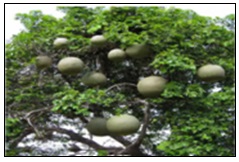
FIG. 2: FERONIA LIMONIA UNRIPE FRUIT
The tree is medium to large in size, grows slowly, is deciduous, and features sharp axillary spines. The leaves of F. limonia are arranged alternately, imparipinnate, and aromatic, usually consisting of 5 to 9 leaflets. Each leaflet is ovate to elliptic in shape, with either entire or slightly crenate edges, a glossy green upper surface, and a lighter-colored underside. When crushed, the leaves release a distinctive citrus-like scent due to the essential oils present, a characteristic common to the Rutaceae family. The morphology of the leaves is crucial for taxonomic identification and demonstrates the plant’s adaptation to dry environments through reduced transpiration and thicker leaf tissues 14. The fruit of Feronia limonia is round with a tough, woody outer shell. Inside, it contains a fragrant brown pulp that’s rich in carbohydrates, minerals, vitamins, and beneficial plant compounds. People have traditionally eaten the pulp fresh or used it to make drinks, chutneys, and herbal remedies.
Beyond the fruit, other parts of the plant like the leaves and bark are also valued in traditional medicine. They’ve been used to help with digestive problems, diarrhea, inflammation, and liver-related issues. In particular, extracts from the leaves are known for their antimicrobial, antioxidant, and anti-inflammatory effects, making the plant an important part of natural healing practices 15.
Aegle marmelos: Aegle marmelos (L.) Correa, popularly known as Bael, is a spiritually and medicinally revered tree belonging to the Rutaceae family and is considered one of the most important medicinal plants of the Indian subcontinent 16. Native to India, it is distributed across Southeast Asian countries, including Sri Lanka, Pakistan, Bangladesh, and Burma 17. The tree is highly resilient, thriving in diverse agro-climatic conditions from the foothills of the Himalayas to the dry deciduous forests of central and southern India, and is often found growing in wild or semi-wild states 18. In India, it is known by various vernacular names such as, the branches often feature sharp, straight, axillary spines, though cultivated varieties may have fewer 19. Unlike the 5–9 leaflets of the Wood Apple, Bael leaves are trifoliate (clusters of three). They are alternate and aromatic, with a pinkish-maroon hue when young that matures into a glossy dark green. When crushed, they emit a distinctive, slightly disagreeable medicinal odor. The flowers are greenish-white, sweet-scented, and grow in small clusters along young branchlets. The fruit is globose or pear-shaped with a smooth, woody shell that turns yellow or greenish-yellow upon ripening. Unlike the Wood Apple’s grainy brown pulp, Bael pulp is orange, aromatic, and pasty, containing 8–20 triangular segments filled with a sweet, resinous mucilage 19, 2, 20.
| Language | Vernacular names |
| Bengali | Bel |
| English | Bengal Quince, Golden Apple, Stone Apple |
| Hindi | Bel, Bael |
| Kannada | Bilva |
| Malayalam | Vilwam |
| Marathi | Bel |
| Gujrati | Bili |
| Tamil | Vilvam |
| Telugu | Maredu |
| Sanskrit | Bilva, Kapitha |

FIG. 3: AEGLE MARMELOS (L.) UNRIPE FRUIT
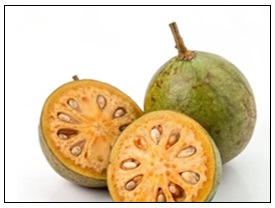
FIG. 4: AEGLE MARMELOS (L.) RIPE FRUIT
Flavonoids: Flavonoids represent a diverse class of polyphenolic secondary metabolites that are ubiquitous in the plant kingdom, particularly within the Rutaceae family, which includes Aegle marmelos (Bael) and Feronia limonia (Wood Apple) 21. These compounds are not only essential for the plant's physiological survival but also provide significant therapeutic value to humans 22.
Flavonoids are low-molecular-weight polyphenolic compounds characterized by a basic phenylchromane skeleton (C6-C3-C6) consisting of two benzene rings (A and B) linked by a three-carbon heterocyclic pyran or pyrone ring (C). They are naturally occurring pigments found in the nascent parts of plants, providing fragrance and taste to fruits and flowers while acting as key bioactive markers 22. Following is the tree diagram of classification of the Flavonoids 23:
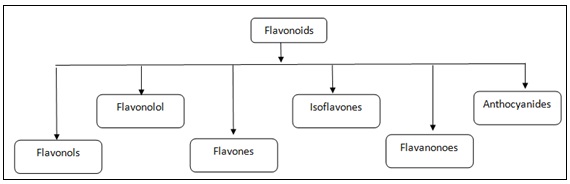
FIG. 5: CLASSIFICATION OF FLAVONOIDS
Flavonoids are biologically important plant polyphenols because they protect the plant and also contribute to many health-related effects in humans. In plants, they act as UV filters, pigments, signal molecules, and defense compounds, and they help the plant tolerate drought, heat, freezing, and other stresses by scavenging reactive oxygen species 24, 25.
Pharmacological Activities Linked to Flavonoids:
Antioxidant Protection: Flavonoids are best known for their antioxidant activity. They can directly neutralize free radicals, chelate metal ions that promote oxidation, inhibit enzymes that generate reactive oxygen species, and boost the body’s own antioxidant defenses. Their antioxidant strength depends on their chemical structure, especially the number and position of hydroxyl groups 24, 26.
Anti-inflammatory Effects: Flavonoids help reduce inflammation by lowering oxidative stress and by modulating enzymes and transcription factors involved in inflammatory signaling. They can also influence immune-cell activation and secretion, which is why they are linked to protection against chronic inflammatory conditions 24, 27.
Cardioprotective Role: Dietary flavonoids are associated with cardiovascular protection because they help prevent lipid oxidation, reduce inflammation, improve endothelial function, support vasodilation, and may reduce platelet aggregation. These actions are one reason flavonoid-rich foods such as fruits, tea, wine, and vegetables are often linked with lower cardiovascular risk 25, 27.
Anticancer Potential: Flavonoids are studied for anticancer activity because they can interfere with several steps in tumor development. Reported mechanisms include inhibition of carcinogen activation, induction of apoptosis, cell-cycle arrest, suppression of angiogenesis, and modulation of signaling pathways linked to proliferation and survival 28, 29.
Antimicrobial and Antiviral Activity: Many flavonoids also show antimicrobial activity. They can disrupt microbial membranes, inhibit biofilm formation, and interfere with nucleic acid synthesis, energy production, and protein synthesis; some also show antiviral effects 30, 31.
Neuroprotective and Anti-aging Relevance: Flavonoids are also linked to neuroprotection and anti-aging effects because oxidative stress and inflammation are major contributors to neuronal damage and cellular aging. Their ability to reduce oxidative injury and modulate signaling pathways gives them potential relevance in age-related and neurodegenerative disorders 32, 33.
Antidiabetic and Immunomodulatory Effects: Some flavonoids influence glucose metabolism, insulin signaling, and inflammatory pathways, which is why they are often discussed in relation to antidiabetic potential. Others modulate immune responses by affecting immune-cell activity and signaling cascades 34, 35, 36. Both plants are relevant to flavonoids because flavonoids are part of their phytochemical profile and help explain much of their medicinal value. In Feronia limonia (Limonia acidissima), flavonoids have been reported in the fruit, along with other bioactive constituents, which supports its traditional use and pharmacological interest. In Aegle marmelos, flavonoids are also identified as major phytochemicals in the fruit and other plant parts, and they are linked with antioxidant, antidiabetic, anticancer, antibacterial, antiviral, and hepatoprotective activities 37, 38.
TABLE 2: TAXONOMY, MORPHOLOGY, DISTRIBUTION
| Feature | Feronia limonia | Aegle marmelos |
| Taxonomy | The currently accepted name is Limonia acidissima L., and Feronia limonia (L.) Swingle is a synonym. It belongs to family Rutaceae and order Sapindales 39, 40 | The accepted name is Aegle marmelos (L.) Corrêa. It belongs to family Rutaceae and order Sapindales 41 |
| Morphology | A slow-growing, deciduous, erect tree with a few upward-reaching branches that bend outward near the top and end in drooping branchlets. It is usually about 9 m tall, has sharp spines, and bears alternate leaves that are leathery, dark green, and slightly lemon-scented when crushed. The fruit is round to oval with a hard woody rind and aromatic pulp 42 | A slow-growing, deciduous shrub or tree that can reach 10 to 15 m in height. It has a short trunk, a dense crown, and spines on older branches and basal suckers; the leaves are alternate and compound, usually with 3 to 5 oval pointed leaflets, and the mature leaves are aromatic when bruised. The tree produces fragrant flowers and a hard-shelled fruit with aromatic pulp 43, 44 |
| Distribution | Native to the Indian subcontinent and Andaman Islands, especially India, Pakistan, Bangladesh, Sri Lanka, Assam, and the Andaman Islands. It is also introduced in Cambodia, Fiji, Laos, Myanmar, and Vietnam 39 | Native to the Indian subcontinent, especially Assam, Bangladesh, India, Nepal, Pakistan, and the West Himalaya. It has also been introduced into many tropical regions, including Sri Lanka, Myanmar, Cambodia, Laos, Vietnam, China South-Central, and others 45 |
Phytochemical Composition:
Feronia limonia: Major phytochemicals reported in the literature are phenolics, flavonoids, alkaloids, saponins, and tannins, with phenolics repeatedly highlighted as a major fraction in the fruit pulp and unripe fruit extracts 46. The fruit pericarp has also been reported to contain coumarin-type constituents such as marmesin, psoralen, xanthotoxin, 2,6-dimethoxy-benzoquinone, and osthenol 46.
Aegle marmelos: Major phytochemicals reported across leaves, fruit, roots, and bark include alkaloids, flavonoids, phenolic acids such as protocatechuic, gallic, and ellagic acid, coumarins, tannins, terpenoids, glycosides, fatty acids, and essential oils 16, 37, 47.
Specific compounds reported include marmelosin, marmesin, imperatorin, aegelin, aegelenine, dictamine, fragrine, skimmianine, and other volatile constituents such as cineole, citral, citronellal, cuminaldehyde, and eugenol 48, 49.
Comparative Insight:
- Aegle marmelos shows richer documented phytochemical diversity because the reviewed literature reports more chemical classes across multiple plant parts, including coumarins, alkaloids, flavonoids, phenolic acids, tannins, terpenoids, glycosides, fatty acids, and volatile compounds 49.
- Feronia limonia is also phytochemically rich, but the retrieved reviews emphasize a narrower profile centered on phenolics, flavonoids, alkaloids, saponins, tannins, and some coumarin-related constituents 46.
- Overlapping groups between both plants are mainly phenolics, flavonoids, alkaloids, tannins, coumarin-type compounds, and saponins 48, 49.
Methods Used in Studies:
- In Feronia limonia, one quantitative study extracted unripe fruit using distilled water, ethanol, methanol, and acetone at 60%, 80%, and 100% concentrations for 24 and 48 h, then estimated flavonoids spectrophotometrically and reported them in quercetin equivalents 50.
- In Aegle marmelos, the common workflow is solvent extraction followed by Folin-Ciocalteu for total phenolics and the aluminum chloride colorimetric assay for total flavonoids, with quercetin used as the standard 51, 52.
- Several Aegle marmelos studies used methanolic or hydroalcoholic extracts and then quantified flavonoids by the same quercetin-based colorimetric approach 53.
Flavonoid Content in Feronia limonia
- The clearest numeric result in the retrieved studies is from the unripe fruit extract, where the highest flavonoid content was 35.25 mg QCE/g in 100% methanol extract 50.
- A stage-comparison study on wood apple measured total flavonoids at three fruit stages using spectrophotometry and reported that antioxidant activity was highest in the unripe stage, but the abstract does not give the stage-wise flavonoid numbers 54.
- Solvent also matters in wood apple: another study on Limonia acidissima fruit reported that flavonoid content was highest in methanol extract and lowest in chloroform extract, showing the same solvent-dependence pattern 55.
Flavonoid Content in Aegle marmelos:
- In methanolic extracts of fruit and leaves, total flavonoid content was 135.17 ± 2.02 mg QE/g for the fruit and 111.2 ± 3.67 mg QE/g for the leaves 56.
- In another leaf-focused study, total flavonoid content was 37.4 ± 2.65 µg quercetin equivalent/mg extract, which is the same as 37.4 mg QE/g 53.
- A comparative study of methanolic extracts from leaves, root, and stem bark reported total flavonoids ranging from 1.087 ± 0.002 to 8.248 ±0.029 mg/g, with leaves showing the strongest antioxidant profile in that study 56.
- In a seed study, total flavonoids ranged from 3.267 to 12.933 mg/g in the tested extracts, again using quercetin as the reference standard 57.
- A broader extraction study on bael-based plant foods reported flavonoid levels of 50.3 to 114.8 mg QE/g dried extract, which supports that Aegle marmelos extracts can be quite flavonoid-rich depending on the matrix and extraction protocol 58.
Comparative Reading:
- Based on the retrieved quantitative studies, Aegle marmelos shows the richer documented flavonoid profile, with reported values reaching 135.17 mg QE/g, whereas the clearest fruit value retrieved for Feronia limonia is 35.25 mg QCE/g 56, 50.
- The overlapping analytical pattern across both species is methanol-based extraction plus quercetin-equivalent reporting, which makes the flavonoid data broadly comparable at a conceptual level but not perfectly head-to-head because plant part, solvent strength, and extraction time differ across studies 50, 53, 56.
Comparative Evaluation: Using the reported quantitative studies, Aegle marmelos has the higher documented flavonoid content overall, with maxima up to 135.17 ± 2.02 mg QE/g in fruit extract, compared with the highest clearly reported Feronia limonia value of 35.25 mg QCE/g in unripe fruit methanol extract 56, 59.
This comparison is directionally reliable, but not perfectly standardized, because the studies report flavonoids in different matrices and units such as mg QE/g, mg QE/100 g fresh weight, mg CE/g dry weight, and mg rutin equivalents/g 56, 59, 60, 61.
TABLE 3: TABLE OF REPORTED FLAVONOID VALUES
| Species | Plant part or stage | Extraction / Assay | Reported flavonoid content | Reference |
| Feronia limonia | Unripe fruit | 100% methanol, 48 h; spectrophotometric QE assay | 35.25 mg QCE/g | [59] |
| Feronia limonia | Fruit during ripening | 80% methanol; AlCl3 colorimetric method | Flavonoid content did not differ remarkably across S1, S2, S3; slightly increased from S1 to S2 and remained unchanged at S3 | [60] |
| Aegle marmelos | Fruit extract | Methanolic extract; quercetin equivalent | 135.17 ± 2.02 mg QE/g | [59] |
| Aegle marmelos | Leaf extract | Methanolic extract; quercetin equivalent | 111.2 ± 3.67 mg QE/g | [59] |
| Aegle marmelos | Aqueous leaf extract | AlCl3 method; rutin standard | 16.36 mg rutin equivalent/g extract | [61] |
| Aegle marmelos | Leaves, root, stem bark | Methanolic extracts; quercetin equivalent | 1.087 ± 0.002 to 8.248 ± 0.029 mg/g | [62] |
| Aegle marmelos | Seeds | Aqueous and methanolic extracts; quercetin equivalent | 3.267 to 12.933 mg/g | [57] |
Why the Differences Occur:
Plant Parts Matters: In Aegle marmelos, fruit and leaf extracts can be much richer in flavonoids than root or stem bark, and the same plant can show strong part-wise variation in both flavonoid level and antioxidant activity 59, 62.
Solvent Polarity Matters: For Feronia limonia, methanol gave the highest flavonoid recovery among the tested solvents, and in bael-related studies methanolic extracts often outperformed ethanol for phytochemical recovery 59, 37. The aqueous leaf extract of A. marmelos still showed measurable flavonoids, but the method and solvent choice clearly influenced the final value 61.
Ripening or Maturity Stage Matters: In wood apple, total flavonoids changed only modestly during ripening, while phenolics and antioxidant traits shifted more clearly, suggesting that maturity affects the broader phytochemical profile but not always flavonoids dramatically 60. In bael, the review literature also reports variation in flavonoid-related compounds across maturity or processing conditions 37.
Reporting Units and Extraction Basis Differ: Some papers express content per gram of extract, others per 100 g fresh weight or dry weight, so numerical comparison across studies is approximate rather than strictly head-to-head 59, 60, 61.
Bottom-Line Interpretation/ Conclusion: Across the retrieved research and review papers, Aegle marmelos shows the higher reported flavonoid abundance overall, especially in fruit and leaf extracts, while Feronia limonia shows flavonoid-rich extracts but with a lower reported maximum in the accessible studies.
The main drivers of variation are plant part, extraction solvent, maturity stage, and reporting basis 59, 62.
ACKNOWLEDGEMENT: Nil
CONFLICT OF INTEREST: Nil
REFERENCES:
- Wachtel-Galor S and Benzie IFF: “Herbal medicine: an introduction to its history, usage, regulation, current trends, and research needs.” in Herbal Medicine Biomolecular and Clinical Aspects Ed., 2nd I. F. F. Benzie and S. Wachtel-Galor, Eds., Boca Raton (FL): CRC Press/Taylor & Francis, 2011. Accessed: Apr. 24, 2026. [Online]. Available: http://www.ncbi.nlm.nih.gov/books/NBK92773/
- Rasool SPG and Dehghan MH: “A comprehensive review on medicinal plant: Aegle marmelos (Linn.) Correa.” Int J Pharm Sci Res 2014; 5(12): 4980–4991.
- Evans WC: Trease and Evans pharmacognosy, 16th ed. Edinburgh New York: Saunders/Elsevier 2009.
- “Textbook of Pharmacognosy and Phytochemistry”.
- Department of Plant Pathology, College of Agriculture, University of Sargodha, Pakistan and F. U. Rehman, “Importance of Medicinal Plants in Human and Plant Pathology: A Review.” Int J Pharm Biomed Res 2021; 8(2): 1–11. doi: 10.18782/2394-3726.1110.
- Ranjha MMAN: “A Critical review on pulsed electric field: a novel technology for the extraction of phytoconstituents.” Molecules 2021; 26(16): 4893. doi: 10.3390/molecules26164893.
- Zhang QW, Lin LG and Ye WC: “Techniques for extraction and isolation of natural products: a comprehensive review.” Chin Med 2018; 13(1): 20. doi: 10.1186/s13020-018-0177-x.
- Kumar A: “Major Phytochemicals: Recent Advances in Health Benefits and Extraction Method.” Molecules 2023; 28(2): 887. doi: 10.3390/molecules28020887.
- Salam U: “Plant Metabolomics: An overview of the role of primary and secondary metabolites against different environmental stress factors.” Life 2023; 13(3): 706. doi: 10.3390/life13030706.
- Simsek M and Whitney K: “Examination of primary and secondary metabolites associated with a plant-based diet and their impact on human health.” Foods 2024; 13(7): 1020. doi: 10.3390/foods13071020.
- Shukla U, Lata R, Maji S, Razauddin and Meena RC: “Historical Background, Origin, Distribution & Present Status of Wood Apple.” J Adv Biol Biotechnol 2024; 27(10): 1457–1467. doi: 10.9734/jabb/2024/v27i101566.
- Ghosh SN, Banik AK, Banik BC, Bera B, Roy S and Kundu A: “Conservation, multiplication and utilization of wood apple (Feronia limonia) - a semi-wild fruit crop in West Bengal (India),” Acta Hortic 2012; 948: 279–283. doi: 10.17660/ActaHortic.2012.948.32.
- J. J: “Biochemical Evaluation of Diverse Wood Apple (Feronia limonia L.) Genotypes under Tamil Nadu Conditions.” Int J Plant Soil Sci 2025; 37(8): 354–361. doi: 10.9734/ijpss/2025/v37i85637.
- Singh AK, Singh S, Yadav V and Sharma BD: “Genetic variability in wood apple (Feronia limonia) from Gujarat.” Indian JAS 2016; 86: 11. doi: 10.56093/ijas.v86i11.62948.
- Yadav V: “Genetic diversity, quality traits, antioxidant properties, and nutrient composition of Feronia limonia accessions from a semi-arid region for breeding and quality improvement.” Sci Rep 2025; 15(1): 35352. doi: 10.1038/s41598-025-19356-1.
- Monika S, Thirumal M and Kumar P: “Phytochemical and Biological Review of Aegle marmelos” Future Sci OA 2023; 9(3): FSO849. doi: 10.2144/fsoa-2022-0068.
- Pullaiah T: Ed., Micropropagation of Medicinal Plants: Volume 2. Bentham Science Publishers 2024. doi: 10.2174/97898152383031240201.
- “Pushpakumara D, Marambe B, Weerakoon D, Bera AK, Tirimanne TS, Gamage MIP, Withanawasam MO and Wasinghe MR: Proceedings of 2nd International Conference on Agriculture TIIKM.”
- “Kawra M: Aegle marmelos: A medicinal wild aromatic tree. IRJPS 2022; 13: 025.
- Dwivedi J: “Phyto-pharmacological Potential of Aegle marmelos (L.) for Neurological Disorders: Progress and Prospects.” Recent Adv Food Nutr Agric 2024; 16(1): 12–30. doi: 10.2174/012772574X289517240222045916.
- Roy A: “Flavonoids a bioactive compound from medicinal plants and its therapeutic applications,” Bio Med Res Int 2022; 1: 5445291. doi: 10.1155/2022/5445291.
- Addi M, Elbouzidi A, Abid M, Tungmunnithum D, Elamrani A and Hano C: An overview of bioactive flavonoids from citrus fruits. Appl Sci 2021; 12(1): doi: 10.3390/app12010029.
- Burkard M, Leischner C, Lauer UM, Busch C, Venturelli S and Frank J: “Dietary flavonoids and modulation of natural killer cells: implications in malignant and viral diseases.” J Nutr Biochem 2017; 46: 1–12.
- Dias MC, Pinto DCGA and Silva AMS: “Plant flavonoids: chemical characteristics and biological activity.” Molecules 2021; 26(17): 5377. doi: 10.3390/molecules26175377.
- Panche AN, Diwan AD and Chandra SR: “Flavonoids: an overview.” JNS 2016; 5: 47. doi: 10.1017/jns.2016.41.
- Kumar S and Pandey AK: “Chemistry and biological activities of flavonoids: an overview.” Sci World J 2013; 1: 162750. doi: 10.1155/2013/162750.
- Jucá MM: “Flavonoids: biological activities and therapeutic potential.” Nat Prod Res 2020; 34(5): 692–705. doi: 10.1080/14786419.2018.1493588.
- Kopustinskiene DM, Jakstas V, Savickas A and Bernatoniene J: “Flavonoids as anticancer agents.” Nutrients 2020; 12(2): 457. doi: 10.3390/nu12020457.
- Imran M: “Luteolin, a flavonoid, as an anticancer agent: A review.” Biomed Pharmacother 2019; 112: 108612. doi: 10.1016/j.biopha.2019.108612.
- Wang M, Firrman J, Liu L and Yam K: “A Review on Flavonoid Apigenin: Dietary Intake, ADME, Antimicrobial Effects, and Interactions with Human Gut Microbiota.” BioMed Res Int 2019; 1–18. doi: 10.1155/2019/7010467.
- Dias MC, Pinto DCGA and Silva AMS: “Plant Flavonoids: Chemical Characteristics and Biological Activity.” Molecules 2021; 26(17): 5377. doi: 10.3390/molecules26175377.
- Spagnuolo C, Moccia S and Russo GL: “Anti-inflammatory effects of flavonoids in neurodegenerative disorders.” Eur J Med Chem 2018; 153: 105–115. doi: 10.1016/j.ejmech.2017.09.001.
- Calderon-Montano JM, Burgos-Moron E, Perez-Guerrero C and Lopez-Lazaro M: “A review on the dietary flavonoid kaempferol.” Mini-Rev Med Chem 2011; 11(4): 298–344. doi: 10.2174/138955711795305335.
- Vinayagam R and Xu B: “Antidiabetic properties of dietary flavonoids: a cellular mechanism review,” Nutr. Metab 2015; 12(1): 60. doi: 10.1186/s12986-015-0057-7.
- Shamsudin NF: “Flavonoids as antidiabetic and anti-inflammatory agents: a review on structural activity relationship-based studies and meta-analysis.” Int J Mol Sci 2022; 23(20): 12605. doi: 10.3390/ijms232012605.
- Bai L: “Antidiabetic potential of flavonoids from traditional chinese medicine: a review.” Am J Chin Med 2019; 47(5): 933–957. doi: 10.1142/S0192415X19500496.
- Sharma N: “Aegle marmelos (L.) Correa: an underutilized fruit with high nutraceutical values: a review.” Int J Mol Sci 2022; 23(18): 10889. doi: 10.3390/ijms231810889.
- Venthodika A, Chhikara N, Mann S, Garg MK, Sofi SA, and Panghal A: “Bioactive compounds of Aegle marmelos, medicinal values and its food APPLICATIONS: A critical review.” Phytother Res 2021; 35(4): 1887–1907. doi: 10.1002/ptr.6934.
- “https://powo.science.kew.org/taxon/urn:lsid:ipni.org:names:774113-1.”
- Yusnaini R: “Near-infrared spectroscopy (NIRS) as an integrated approach for rapid classification and bioactive quality evaluation of intact Feronia limoni.” IOP Conf Ser Earth Environ Sci 2021; 667(1): 012028. doi: 10.1088/1755-1315/667/1/012028.
- Pathirana CK: “Assessment of the elite accessions of bael [Aegle marmelos (L.) Corr.] in Sri Lanka based on morphometric, organoleptic, and elemental properties of the fruits and phylogenetic relationships.” Plos One 2020; 15(5): 0233609. doi: 10.1371/journal.pone.0233609.
- Jatav R, Gour R and Patel AK: “Feronia limonia novel plant: A review on history, geography, morphology, phytochemistry, pharmacology and traditional uses.” World J Pharm Pharm Sci 2023; 12: 755–764.
- Singh P, Sharma A, Gupta SK, Salgotra RK, Gupta V and Sharma M: “Morphology and pomological characterization of bael [Aegle marmelos (L.) Correa] genotypes for climate change mitigation under north-western Himalayas.” Front Plant Sci 2025; 16: 1496769. doi: 10.3389/fpls.2025.1496769.
- Singh AK: “Phenotypic variability and trait-specific selection in Aegle marmelos Correa genotypes based on morphological and quality traits.” PLOS One 2026; 21(4): 0347746. doi: 10.1371/journal.pone.0347746.
- Waheed M: “Where will threatened Aegle marmelos, a tree of the semi-arid region, go under climate change? implications for the reintroduction of the species.” Land 2023; 12(7): 1433, doi: 10.3390/land12071433.
- Win Min Oo MMK: “Pharmacological properties of Feronia limonia fruit pulp – A Review 2017. doi: 10.5281/ZENODO.2526042.
- Lomate KA, Murthy K, Adak VS and Shete RVV: “A review on phytochemical and pharmacological values of Aegle marmelos.” J Drug Deliv Ther 2021; 11(2): 162–166. doi: 10.22270/jddt.v11i2-S.4645.
- Lakshmi VJ and Syamala R: “A review on pharmacological effects of bilwa: Aegle marmelos (Rutaceae).” Am J Pharm Tech Res 2021; 11(2): 50–67.
- Mujeeb F, Bajpai P and Pathak N: “Phytochemical evaluation, antimicrobial activity, and determination of bioactive components from leaves of Aegle marmelos.” BioMed Res Int 2014; 1–11. doi: 10.1155/2014/497606.
- Ilaiyaraja N, Likhith KR, Sharath Babu GR and Khanum F: “Optimisation of extraction of bioactive compounds from Feronia limonia (wood apple) fruit using response surface methodology (RSM).” Food Chem 2015; 173: 348–354. doi: 10.1016/j.foodchem.2014.10.035.
- Sharma H and Joshi DC: “Technology for extraction of wood apple (Feronia limonia) juice,” presented at the 19th International Conference on Food Processing & Technology, Paris, France 2017.
- Shrestha DK: “Phytochemical screening, evaluation of antioxidant activity, total phenolic and flavonoid content of selected nepalese medicinal plants.” Butwal Campus J 2022; 5(1): 160–173. doi: 10.3126/bcj.v5i1.50195.
- Pandey AK and Pande P: “Evaluation of Phytochemicals, Anti-inflammatory and Antioxidant Potential of Aegle marmelos Leaves.” Adv Pharmacol Pharm 2023; 11(1): 66–77. doi: 10.13189/app.2023.110107.
- Srivastava R: “Influence of fruit stages on chemical compositions, phytochemicals, and antioxidant activity of wood apple (Feronia limonia (L.) Swingle).” Heliyon 2025; 11(3): 42223. doi: 10.1016/j.heliyon.2025.e42223.
- Priya Darsini DT, Maheshu V, Vishnupriya M, Nishaa S and Sasikumar JM: “Antioxidant potential and amino acid analysis of underutilized tropical fruit Limonia acidissima,” Free Radic Antioxid 2013; 2231253613000313. doi: 10.1016/j.fra.2013.08.001.
- Andleeb R: “Biological activities of methanolic extract of Aegle marmelos against HN protein of Newcastle disease virus.” Agronomy 2021; 11(9): 1784. doi: 10.3390/agronomy11091784.
- Sharma GN, Dubey SK, Sati N and Sanadya J: “Anti-inflammatory activity and total flavonoid content of Aegle marmelos” Int J Pharm Sci Drug Res 2018; 214–218. doi: 10.25004/IJPSDR.2011.030310.
- Adisakwattana S, Ruengsamran T, Kampa P and Sompong W: “In-vitro inhibitory effects of plant-based foods and their combinations on intestinal α-glucosidase and pancreatic α-amylase.” BMC Complement Altern Med 2012; 12(1): 110. doi: 10.1186/1472-6882-12-110.
- Barthwal R and Mahar R: “Exploring the significance, extraction, and characterization of plant-derived secondary metabolites in complex mixtures.” Metabolites 2024; 14(2): 119. doi: 10.3390/metabo14020119.
- Singh A: “Biochemical and metabolite dynamics during ripening of wood apple (Feronia limonia) fruits,” BMC Plant Biol 2026; 26(1): 523. doi: 10.1186/s12870-026-08242-1.
- Ahmad W: “Aegle marmelos leaf extract phytochemical analysis, cytotoxicity, in-vitro antioxidant and antidiabetic activities.” Plants 2021; 10(12): 2573. doi: 10.3390/plants10122573.
- Siddique NA, Mujeeb M, Najmi AK, Khan HN and Farooqi H: “Withdrawn: Evaluation of antioxidant activity, quantitative estimation of phenols and flavonoids in different parts of Aegle marmelos.” J Saudi Chem Soc 2010; 1319610310001213. doi: 10.1016/j.jscs.2010.10.005.
How to cite this article:
Deshmukh AR, Band PS, Gupta SS and Gurunani GA: Comparative review on flavonoid content in Kaitha (Feronia limonia) and Bael (Aegle marmelos). Int J Pharmacognosy 2026; 13(6): 544-52. doi link: http://dx.doi.org/10.13040/IJPSR.0975-8232.IJP.13(6).544-52.
This Journal licensed under a Creative Commons Attribution-Non-commercial-Share Alike 3.0 Unported License.
Article Information
3
544-552
776 KB
185
English
IJP
Aayushi R. Deshmukh *, Pranali S. Band, Shubham S. Gupta and Gulshan A. Gurunani
Department of Pharmaceutical Quality Assurance, Gurunanak College of Pharmacy, Nagpur, Maharashtra, India.
aayushideshmukh2@gmail.com
05 May 2026
14 May 2026
26 May 2026
10.13040/IJPSR.0975-8232.IJP.13(6).544-52
01 June 2026
 Download