


BIOACTIVITY-GUIDED EVALUATION OF BARLERIA GIBSONI DALZ. STEM EXTRACTS FOR α-AMYLASE INHIBITION AND GLUCOSE UPTAKE POTENTIAL
HTML Full TextBIOACTIVITY-GUIDED EVALUATION OF BARLERIA GIBSONI DALZ. STEM EXTRACTS FOR α-AMYLASE INHIBITION AND GLUCOSE UPTAKE POTENTIAL
Omkar V. Dhanawade, Firoj A. Tamboli *, Rutuja J. Patil, Shradha S. Mathpati, Smita M. Mali, Prathamesh Y. Khandare and Mandira S. More
Department of Pharmacognosy, Bharati Vidyapeeth College of Pharmacy, Near Chitranagari, Kolhapur, Maharashtra, India.
ABSTRACT: This experiment was conducted to determine in-vitro antidiabetic properties of Barleriagibsoni stem extracts based on the inhibition of α-amylase and uptake of glucose by yeast cell models. At varying concentrations, ethanol and aqueous extracts were evaluated and compared to the standard drug Metformin. The two extracts showed a concentration dependent rise in activity, but the ethanol extract always proved to have better inhibitory effects than the aqueous extract. The ethanol extract and the aqueous extract had 75.18 and 64.21% inhibition, respectively, in the glucose uptake assay, as compared to 87.10% inhibition of metformin. It is noteworthy that the ethanol extract had an activity of about 86% of the standard drug, and could be observed with a reasonable activity even at lower levels. The two extracts were moderate in the α-amylase inhibition assay, although the ethanol extract was more effective. Comparative analysis revealed that the ethanol extract was more effective in both assays implying that it is effective in extracting bioactive compounds like flavonoids, phenolics and alkaloids. Moreover, more pronounced action of the glucose uptake model in comparison with the one of alpha-amylase inhibition indicates a potential mechanism of increased utilization of peripheral glucose. Even though neither of the extracts outperformed the standard, the ethanol extract had similar efficacy, which means that it could be a promising natural adjunct in managing diabetes.
Keywords: Barleria gibsoni, Acanthaceae, Antidiabetic, Yeast cell, Amylase
INTRODUCTION: Diabetes mellitus is a long-term metabolic condition that is associated with long-term hyperglycemia caused by abnormalities in insulin secretion, insulin action or both. It is now a significant health issue worldwide, causing complications, including cardiovascular diseases, neuropathy, nephropathy, and retinopathy 1.
The rate of diabetes prevalence is rising at an alarming rate particularly in India, which is the reason why safer and more effective therapeutic agents should be developed. Inhibition of carbohydrate-hydrolyzing enzymes like α-amylase is one of the major strategies in the management of postprandial hyperglycemia.
The inhibition of this enzyme slows down the breakdown of starch to glucose, and helps to regulate the level of glucose in the blood. Synthetic drugs such as Metformin are quite common, but in the long term, they can cause side effects such as gastrointestinal disorders and lactic acidosis 2. Therefore, the use of plant-based alternatives is gaining interest. Bioactive compounds like flavonoids, alkaloids, tannins, phenolics commonly found in medicinal plants have a high antidiabetic effect 3. Barleria (genus, family Acanthaceae) is a genus with a variety of pharmacological effects. Certain species such as Barleria prionitis have been shown to have significant antidiabetic properties 4. Barleriagibsoni is a not well studied species with possible medicinal activities. Nevertheless, there is a lack of research on its antidiabetic effect, especially when it involves the use of stem extracts. Preliminary screening of antidiabetic activity is commonly done in vitro using models of α-amylase inhibition and glucose uptake by yeast cells. Such techniques assist in comprehending processes like inhibition of carbohydrates digestion and boosting of glucose metabolism 5. Consequently, this paper will compare the antidiabetic effect of ethanol and aqueous stem extracts of Barleria gibsoni in-vitro with metformin.
MATERIALS AND METHODS:
Collection and Identification of Plant Material: Barleria gibsoni plant material was identified by collecting the plant material of appropriate natural habitats in and around Kolhapur district, Maharashtra, India during the flowering season. The disease-free sections of the plant like leaves, stems and roots were taken and immersed in water to get rid of the dirt, dust and other contaminants. Identification and authentication of the specimen by the Botanical Survey of India, Pune were based on morphological characters with the standard floristic literature. The voucher specimen of the plant was made, labeled and stored in the herbarium of the same institution as a reference in future (BSI/WRC/Tech/2013/FAT 01 dated 27th December 2013). The plant materials were first authenticated and then thoroughly washed with distilled water, shade dried at room temperature and crushed in a mechanical grinder. The powder was kept in airtight bottles in good conditions, to be further extracted and used in experiments.
Extract Preparation: Barleria gibsoni stems were well washed with tap water to loosen up any clinging dirt and foreign materials and then left to dry at room temperature (35 -40 °C) and took 3-4 weeks to dry. The dry plant material was then coarse powdered using mechanical grinder.
The successive extraction of the powdered drug was done with water and ethanol using a Soxhlet apparatus until the drug was fully extracted 6-8.
Methods:
In-vitro Amylase Inhibitory Activity: The dinitrosalicylic acid (DNS) method was used to assess the inhibitory effect of ethanol and aqueous extracts of Barleria gibsoni on alpha-amylase with a few modifications. 0.5 percent 1 M phosphate buffer (pH 6.8) was added to prepare alpha-amylase enzyme. In brief, 500 µl of various concentrations of plant extracts (0-50 mg/ml) were incubated with 500 µl of phosphate buffer with 0.25 mg/ml of alpha amylase enzyme and pre-incubated at 25 °C. In the control, extract was substituted with buffer and in the standard, Acarbose was used as a reference drug. The pre-incubation in 1% starch solution in 0.1 M phosphate buffer (pH 6.8) was followed by the addition of 500 µl of the solution to each of the test tubes and the further incubation of the solution at 25°C during 10 minutes. The DNS reagent (dinitrosalicylic acid) was added to terminate the reaction with 1 ml of the solution. The test tubes were put in boiling water bath with 10 minutes and cooled to room temperature and then the absorbance was recorded at 540 nm via spectrophotometer. The standard formula was used to determine the percentage inhibition of the α-amylase activity 9-12.
Glucose Uptake by Yeast Cells: A standard method was used to perform the glucose uptake into the yeast cells with slight modifications. The yeast used in the commercial bakery was centrifuged at 3000 × g during 5 minutes using distilled water until the supernatant was clear. A 10 percent (v/v) suspension of yeast in distilled water was then made. Plant extracts of Barleria gibsoni (1 to 5 mg) were used to add different concentrations of glucose solution (5, 10 and 25 mM) to 1 mL. The mixtures were incubated at 37 o C after 10 minutes. This was carried out by placing 100 µL of yeast suspension, which was then vortexed, and then incubated at 37 °C in 60 minutes. The tubes were centrifuged (2500 × g) at the end of incubation (5 minutes) and the glucose level in the supernatant was measured spectrophotometrically. The standard drug used was Metformin. A previously defined method was used to calculate the percentage increase in the glucose uptake by the yeast cells 13-17.
RESULTS: Table 1-2 and Fig. 1-2 demonstrate the antidiabetic effect of stem extracts of Barleria gibsoni. The inhibition percentage of each extract rose as the concentration rose (20-100 µg/ml) which demonstrates strong antidiabetic properties. In-vitro amylase inhibitory activity and Glucose Uptake by Yeast Cells showed that Barleria gibsoni stem bark extracts had a significant antidiabetic activity.
TABLE 1: IN-VITRO AMYLASE INHIBITION BY STEM EXTRACT OF BARLERIA GIBSONI
| Sr. no. | Conc. (µg/ml) | % Inhibition | ||
| Standard (Metformin) | Ethanol extract of stem | Aqueous extract of stem | ||
| 1 | 20 | 55.16 ± 1.10 | 33.26 ± 2.16 | 39.26 ± 2.11 |
| 2 | 40 | 64.48 ± 2.11 | 40.26 ± 2.15 | 45.28 ± 2.14 |
| 3 | 60 | 67.47 ± 3.12 | 46.74 ± 2.11 | 47.57 ± 2.15 |
| 4 | 80 | 71.20 ± 2.15 | 50.56 ± 2.12 | 54.57 ± 2.16 |
| 5 | 100 | 73.15 ± 3.11 | 56.54 ± 2.14 | 55.59 ± 2.17 |
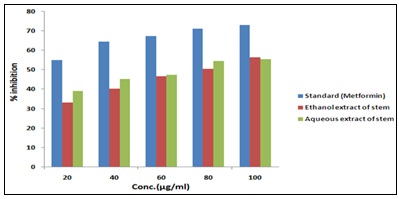
FIG. 1: IN-VITRO AMYLASE INHIBITION OF STEM EXTRACT OF BARLERIA GIBSONI
TABLE 2: EFFECT OF STEM EXTRACT OF BARLERIA GIBSONI IN GLUCOSE UPTAKE INHIBITION BY YEAST CELL
| Sr. no. | Conc. (µg/ml) | % Inhibition | ||
| Standard (Metformin) | Ethanol extract of stem | Aqueous extract of stem | ||
| 1 | 20 | 24.15 ± 2.11 | 26.18 ± 2.31 | 10.20 ± 2.33 |
| 2 | 40 | 55.54 ± 1.32 | 51.14 ± 2.38 | 39.13 ± 2.42 |
| 3 | 60 | 78.71 ± 3.33 | 64.26 ± 2.22 | 42.62 ± 2.20 |
| 4 | 80 | 81.19 ± 2.22 | 72.30 ± 2.15 | 52.30 ± 2.11 |
| 5 | 100 | 87.10 ± 3.13 | 75.18 ± 2.10 | 64.21 ± 2.10 |
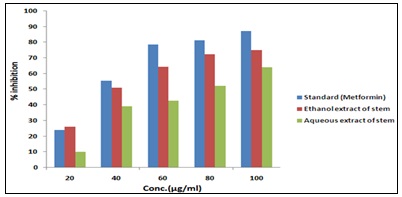
FIG. 2: EFFECT OF STEM EXTRACT OF BARLERIA GIBSONI IN GLUCOSE UPTAKE INHIBITION BY YEAST CELL
DISCUSSION: The current experiment revealed that there was a statistically significant dose-dependent glucose uptake inhibition by the stem extracts of Barleria gibsoni with the ethanol extract showing superior activity compared to the aqueous extract at all the concentrations tested. The ethanol extract exhibited 75.18% inhibition at 100 µg/ml with the aqueous extract having 64.21% and the standard drug Metformin having the highest inhibition (87.10%).
It is important to note that the ethanol extract demonstrated a promising antidiabetic potential with the approximate 86% of the same activity as the standard and the aqueous extract demonstrated less promising but relatively lower activity. Interestingly, in low concentration (20 µg/ml) the ethanol extract had a greater activity than the standard, indicating that it is a powerful bioactivity even with low doses. General comparison of extracts showed that ethanol extract performed better in both alpha-amylase inhibitory assay and glucose uptake assay, suggesting that ethanol is a better solvent to extract active phytoconstituents like flavonoids, phenolics and alkaloids. Moreover, in the comparison of the assays, the extracts showed intermediate inhibition in the alpha-amylase assay but higher activity in the glucose uptake assay indicating that their action might be more inclined towards the promotion of the peripheral glucose utilization and not the inhibition of carbohydrate digestion. Though both extracts were not better than the standard drug, the ethanol extract had a close parallel activity especially in glucose uptake model, which indicates its potential as a promising natural adjunct in the treatment of diabetes.
CONCLUSION: The results of the current research show that the stem extracts of Barleria gibsoni have great in-vitro antidiabetic effectiveness of which the ethanol extract has a higher effect than the aqueous extract in the alpha-amylase and glucose uptake tests. Ethanol extract showed high dose-dependent action and a high percentage of the effect of the standard drug Metformin especially in the glucose uptake model, implying its effectiveness in promoting glucose uptake in the periphery. Even though neither extract outperformed the standard, the relatively high activity of ethanol extract reveals the power of ethanol in extracting bioactive phytoconstituents including flavonoids, phenolics, and alkaloids. In general, the findings imply that the ethanol fraction of Barleria gibsoni stem extract can be a promising natural adjunct in the treatment of diabetes, but additional phytochemical characterization and in-vivo investigations are necessary to confirm the therapeutic potential of this product.
ACKNOWLEDGEMENT: Nil
Source of Funding: None.
CONFLICT OF INTEREST: None
REFERENCES:
- World Health Organization. Diabetes fact sheet 2023.
- Rang HP, Dale MM, Ritter JM and Flower RJ: Rang and Dale’s Pharmacology. Ed. 8th Elsevier 2016.
- Wallace HM, Fraser AV and Hughes A: Phytochemical screening and analysis. Methods Mol Biol 2003; 244: 1–20.
- Singh B, Bani S, Gupta DK, Chandan BK and Kaul A: Antidiabetic activity of Barleria prionitis in alloxan-induced diabetic rats. J of Ethnoph 2012; 139(2): 605–610.
- Kim YM, Jeong YK, Wang MH, Lee WY and Rhee HI: Inhibitory effect of pine extract on α-glucosidase activity and postprandial hyperglycemia. Nutrition Research and Practice 2005; 52(1): 224–227.
- World Health Organization. Quality control methods for medicinal plant materials. Geneva: WHO 2011.
- Harborne JB: Phytochemical methods: A guide to modern techniques of plant analysis 3rd ed. Chapman & Hall 1998.
- Trease GE & Evans WC: Pharmacognosy Ed. 16th Elsevier 2009.
- Bernfeld P: Amylases, α and β. In: Colowick SP, Kaplan NO, editors. Methods in Enzymology. New York: Academic Press 1955; 1: 149–158.
- Miller GL: Use of dinitrosalicylic acid reagent for determination of reducing sugar. Anal Chem 1959; 31(3): 426–428.
- Worthington V: Worthington enzyme manual. Freehold (NJ): Worthington Biochemical Corp 1993.
- Kim YM, Wang MH and Rhee HI: ‘α-glucosidase inhibitor from pine bark. Journal of Agricultural and Food Chemistry 2004; 52: 224–227.
- Firoj A. Tamboli and Harinath N: More, Evaluation of Anti ulcer and Antioxidant activity of Barleria gibsoni leaves Pharmacognosy Res 2016; 8(4): 226-230.
- Ou S and Kwok KC: Ferulic acid: pharmaceutical functions and preparation. JSFA 2004; 84: 1261–1269.
- Shinde J, Taldone T, Barletta M, Kunaparaju N, Hu B and Kumar S: α-amylase inhibitory activity of medicinal plants. Int J Pharm Sci Res 2008; 2: 85–90.
- Lazarow A and Palay SL: Studies on glucose absorption by yeast cells. J Biol Chem 1954.
- Firoj A. Tamboli and Harinath N: More, in-vitro screening of Antidiabetic activity and Anti-inflammatory activity of leaves extract of Barleria gibsoni Dalz. Research Journal of Pharmacy and Technology 2021; 14(3): 1289-1292.
How to cite this article:
Dhanawade OV, Tamboli FA, Patil RJ, Mathpati SS, Mali SM, Khandare PY and More MS: Bioactivity-guided evaluation of Barleria gibsoni Dalz. stem extracts for α-amylase inhibition and glucose uptake potential. Int J Pharmacognosy 2026; 13(6): 575-78. doi link: http://dx.doi.org/10.13040/IJPSR.0975-8232.IJP.13(6).575-78.
This Journal licensed under a Creative Commons Attribution-Non-commercial-Share Alike 3.0 Unported License.
Article Information
7
575-578
518 KB
193
English
IJP
Omkar V. Dhanawade, Firoj A. Tamboli *, Rutuja J. Patil, Shradha S. Mathpati, Smita M. Mali, Prathamesh Y. Khandare and Mandira S. More
Department of Pharmacognosy, Bharati Vidyapeeth College of Pharmacy, Near Chitranagari, Kolhapur, Maharashtra, India.
firoj.tamboli@bharatividyapeeth.edu
09 May 2026
21 May 2026
27 May 2026
10.13040/IJPSR.0975-8232.IJP.13(6).575-78
01 June 2026
 Download