



ASSESSMENT OF SEASONAL WATER QUALITY VARIATIONS USING PHYSICO-CHEMICAL PARAMETERS OF INDIRA GANDHI CANAL IN SARDARPURA, SURATGARH, RAJASTHAN
HTML Full TextASSESSMENT OF SEASONAL WATER QUALITY VARIATIONS USING PHYSICO-CHEMICAL PARAMETERS OF INDIRA GANDHI CANAL IN SARDARPURA, SURATGARH, RAJASTHAN
Jhanvi Parikh * and Suman Lata Tripathi
1-K-26, Pawan Puri, Bikaner, Rajasthan, India.
ABSTRACT: Water quality assessment is essential for evaluating the ecological health and suitability of freshwater resources. The present study investigated the seasonal variation in selected physico-chemical parameters of water from the study area during summer, monsoon, and winter seasons. Parameters including pH, dissolved oxygen (DO), total dissolved solids (TDS), electrical conductivity (EC), and other water quality indicators were analysed to understand seasonal fluctuations and pollution status. The results revealed significant seasonal variations among the measured parameters. Dissolved oxygen recorded its highest values during winter, indicating the inverse relationship between water temperature and oxygen solubility. In contrast, total dissolved solids and electrical conductivity were highest during summer due to increased evaporation and concentration of dissolved salts. The observed seasonal changes demonstrated a reciprocal relationship between DO and thermogenic conditions, TDS, and EC. Comparison with standard permissible limits indicated that several water quality parameters exceeded the recommended values, suggesting considerable deterioration in water quality. The findings reveal that the studied water bodies are under substantial pollution stress and may pose ecological as well as public health concerns if used without appropriate treatment. Continuous monitoring and implementation of effective pollution control and water management strategies are therefore recommended to improve and sustain the quality of these water resources.
Keywords: Physico-Chemical Parameters, Seasonal variations, Water quality, Pollution, Public health
INTRODUCTION: Water is one of the most valuable natural resources and is essential for sustaining life, maintaining ecological balance, and supporting agricultural, industrial, and domestic activities. In semi-arid regions, where freshwater resources are limited, monitoring water quality is particularly important for ensuring sustainable water management.
Seasonal variation is a major factor affecting the physicochemical characteristics of water bodies. During summer, high temperatures and increased evaporation reduce water volume and concentrate dissolved salts, resulting in elevated total dissolved solids (TDS), electrical conductivity (EC), hardness, and alkalinity.
Conversely, winter conditions favour greater dissolved oxygen (DO) concentrations because oxygen solubility increases as water temperature decreases. Monsoon rainfall may dilute certain dissolved constituents while simultaneously increasing turbidity and nutrient inputs through surface runoff. Therefore, understanding seasonal changes in water quality parameters provides valuable information regarding the ecological condition and pollution status of aquatic ecosystems.
Study Area: This study aimed to assess variations in water quality across space and time within the Indira Gandhi Canal in the semi-arid region of Rajasthan. Water samples were collected from Sardarpura, Suratgarh, during different seasons: summer, rainy, and winter during the period January 2024–July 2025.
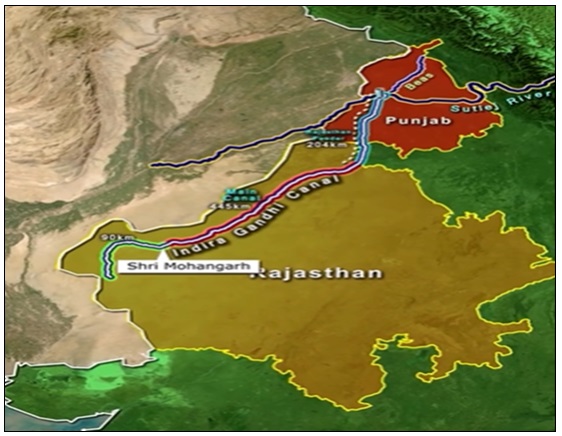
FIG. 1: MAP VIEW OF INDIRA GANDHI CANAL
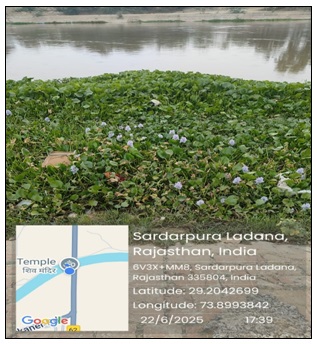
FIG. 2: SAMPLE SITE VIEW OF SARDARPURA (IGNP)
Objective:
- Survey of the study area for Collection and measurement of Physical status of water resources. To study the Physico-chemical analysis of different water bodies to find out suitability for agricultural purposes.
- To study the impact of changing climatic conditions on water in a specific study area.
- Conservation and management of water resources.
Review of Literature: Several researchers have reported that seasonal variation significantly influences the physicochemical characteristics of freshwater ecosystems.
Rivers play a vital role in providing water for agriculture, food production, manufacturing, human consumption, fish habitats, power production, and aquatic ecosystems. Canal water serves essential functions in navigation, irrigation, stormwater management, and drinking water production, among other uses Amer and Mohamed (2022); Sruthi, et al. (2023) 1, 2.
Rahman et al. (2021) 3 assessed seasonal physicochemical variations in the Turag River, Bangladesh, and reported significant seasonal differences in DO, EC, TDS, BOD, COD, alkalinity, and chloride concentration. Several parameters exceeded recommended standards, indicating severe anthropogenic pollution. The authors concluded that seasonal monitoring is essential for effective water quality assessment and pollution management. Singh and Saxena (2025) 4 studied seasonal variations in the Chambal River, Rajasthan, and demonstrated significant fluctuations in physicochemical parameters across different seasons. Their findings showed that correlation analysis is useful for understanding relationships among water quality parameters and identifying major pollution sources affecting river ecosystems. A recent narrative review by Radhika and Abdul Rahim (2026) 5 summarised seasonal water quality studies from freshwater ecosystems across India. The review concluded that dissolved oxygen generally reaches its maximum during winter because of lower water temperatures, whereas TDS and electrical conductivity become highest during the pre-monsoon or summer season due to evaporation and concentration of dissolved minerals. Monsoon rainfall usually dilutes dissolved ions but increases run-off related contaminants. Recent studies have also highlighted the usefulness of advanced analytical techniques in evaluating seasonal water quality. These approaches improve the prediction of water quality changes and assist policymakers in sustainable water resource management. Overall, previous studies consistently indicate that seasonal fluctuations strongly influence water quality, with summer characterized by increased dissolved solids and conductivity, while winter generally exhibits higher dissolved oxygen concentrations. Most investigations have reported deterioration of water quality in polluted water bodies where several physicochemical parameters exceed permissible limits. These findings support the need for continuous seasonal monitoring to evaluate pollution status and develop effective conservation and management strategies.
Rani, et al. (2023) 6 conducted studies on water logging, soil salinity, and alkalinity are significant challenges facing India's agricultural landscape, particularly in irrigated farming. The most effective way to improve agricultural output is through enhanced irrigation management combined with drainage methods. One efficient and cost-effective technique for reclaiming waterlogged land is bio-drainage. For rehabilitation, species such as Salvodora, Tamarix, Eucalyptus, and Prosopis juliflora are recommended for planting in affected areas. The bio-drainage system has proven effective in reducing waterlogged areas and soil salinity. Zhang, et. al. (2025) 7 explained changes that occur in water significantly affect fish behavior, which is a key indicator of their welfare and growth.
MATERIALS AND METHODS
Study Area and Sample Collection: Water samples were collected from the selected study site during three distinct seasons, namely summer, monsoon, and winter, to evaluate seasonal variations in physicochemical characteristics. We collected representative water samples in clean polyethene bottles following standard sampling procedures. The samples were transported to the laboratory under refrigerated conditions and analysed immediately to minimize changes in water quality.
Physicochemical Analysis: The analysed parameters included temperature, pH, electrical conductivity (EC), turbidity, dissolved oxygen (DO), total alkalinity (TA), total dissolved solids (TDS), total hardness (TH), sodium (Na⁺), calcium (Ca²⁺), and chloride (Cl⁻). Temperature, pH, EC, and TDS were measured using calibrated digital meters, whereas dissolved oxygen was estimated by the Winkler method. Total hardness, total alkalinity, calcium, and chloride were determined by standard titrimetric methods, while sodium was analysed using standard laboratory procedures.
Statistical Analysis: Each analysis was performed in triplicate, and the results were expressed as Mean ± Standard Error (SE). Seasonal variations among the analysed parameters were compared using descriptive statistics. Mean values and standard errors were calculated using Microsoft Excel to determine seasonal fluctuations and variability of water quality parameters. The observed values were compared with the permissible limits prescribed by the Bureau of Indian Standards (BIS 10500:2012).
RESULTS: The table below shows the physicochemical parameters of the non-saline water samples taken during the recent research period (January 2024–July 2025), together with their mean values and standard errors. Seasonal variation in physicochemical parameters showed clear changes in water quality throughout the study period.
TABLE 1: PHYSICO-CHEMICAL PARAMETERS OF THE WATER SAMPLES TAKEN FROM INDIRA GANDHI CANAL (SURATGARH)
| Parameters | Summer | Rainy | Winter |
| Temperature (°C) | 32.67±0.467 | 30±0.839 | 12±0.577 |
| pH | 7.79±0.099 | 7.81±0.119 | 8.25±0.224 |
| Electrical Conductivity (μS/cm) | 309.93±0.067 | 464.48±0.749 | 632.97±0.769 |
| Turbidity (NTU) | 24.24±0.464 | 19.67±0.882 | 17±0.577 |
| Dissolved Oxygen (mg/Lt) | 4.2±0.058 | 5.53±0.067 | 7.03±0.617 |
| Total Alkalinity (mg/Lt) | 206.83±0.203 | 99.33±0.882 | 105.02±0.214 |
| Total Dissolved Solids (mg/Lt) | 458.08±0.512 | 186.8±0.416 | 297.67±0.57 |
| Total Hardness (mg/Lt) | 257.29±0.245 | 199.67±0.24 | 115±0.577 |
| Na+ (mg/Lt) | 3.22±0.137 | 1.25±0.155 | 1.79±0.085 |
| Ca++ (mg/Lt) | 2.08±0.46 | 1.19±0.101 | 1.2±0.029 |
| Cl- (mg/Lt) | 100.83±0.348 | 55.73±0.311 | 68.72±0.451 |
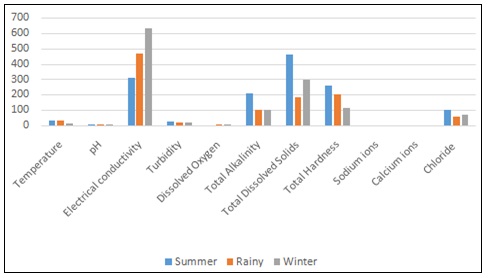
FIG. 3: SEASONAL VARIATIONS IN PHYSICO-CHEMICAL PARAMETERS OF INDIRA GANDHI CANAL SARDARPURA, IN SURATGARH (MEAN±STANDARD ERROR)
Water temperature varied from 12.0 ± 0.58°C during winter to 32.67 ± 0.47°C during summer, reflecting the influence of seasonal climatic conditions. Lower winter temperatures enhanced oxygen solubility, whereas elevated summer temperatures accelerated evaporation and concentration of dissolved minerals.
The pH remained slightly alkaline throughout the study (7.79–8.25), indicating the buffering effect of bicarbonates and carbonates commonly present in semi-arid water bodies. Although seasonal fluctuations were observed, pH remained within the acceptable range for drinking water.
Electrical conductivity exhibited marked seasonal variation. The highest EC (309.93 ± 0.07 μS/cm) occurred during summer and decreased to 170.0 ± 0.58 μS/cm during winter. Similarly, total dissolved solids were maximum in summer (458.08 ± 0.51 mg/L) and minimum during the rainy season (186.80 ± 0.42 mg/L). The increase in EC and TDS during summer can be attributed to intense evaporation, reduced water volume, and accumulation of dissolved ions. Rainfall during the monsoon diluted dissolved salts, thereby reducing conductivity and TDS. Similar seasonal behaviour has been reported for several Indian freshwater ecosystems.
Turbidity was highest during summer (24.24 ± 0.46 NTU) and lowest during winter (17.0 ± 0.58 NTU). Higher turbidity during summer may result from suspended particles, sediment disturbance, and increased anthropogenic activities.
Dissolved oxygen showed an opposite seasonal trend. The highest DO concentration (7.03 ± 0.62 mg/L) was observed during winter, whereas the lowest value (4.20 ± 0.06 mg/L) occurred during summer. This inverse relationship between temperature and dissolved oxygen is expected because oxygen solubility increases as water temperature decreases. Similar observations have been reported in freshwater ecosystems where winter conditions favour higher dissolved oxygen concentrations.
Total alkalinity showed the highest concentration in summer (206.83 ± 0.20 mg/L) and decreased considerably during winter (105.02 ± 0.21 mg/L), suggesting concentration of bicarbonates due to evaporation. Likewise, total hardness reached its maximum during summer (257.29 ± 0.25 mg/L) and minimum during winter (115 ± 0.58 mg/L). Elevated hardness indicates greater concentrations of calcium and magnesium salts during the dry season. Major ions also exhibited seasonal variations. Sodium concentration was highest in summer (3.22 ± 0.14 mg/L) and lowest during the rainy season (1.25 ± 0.16 mg/L). Chloride followed a similar pattern, with maximum values in summer (100.83 ± 0.35 mg/L) and minimum values during the rainy season (55.73 ± 0.31 mg/L). These observations indicate increased ionic concentration due to evaporation during summer and dilution during monsoon.
DISCUSSION: The seasonal pattern indicated that most dissolved constituents (EC, TDS, hardness, alkalinity, sodium, and chloride) increased during summer, while dissolved oxygen increased during winter. Comparison with recommended drinking water standards suggests deterioration of water quality in the dry season, indicating pollution stress and mineral enrichment that may reduce water suitability for domestic consumption without treatment.
Descriptive statistics indicated distinct seasonal variations in the analysed water quality parameters. Mean values were calculated from triplicate observations, and variability was expressed as standard error (Mean ± SE). Low standard error values for most parameters indicate good analytical precision and reproducibility.
Temperature showed a progressive decline from summer to winter, whereas dissolved oxygen displayed an inverse seasonal relationship, confirming the influence of temperature on oxygen solubility. Electrical conductivity and total dissolved solids exhibited similar seasonal trends, indicating a strong positive relationship between ionic concentration and dissolved solids. Total hardness, chloride, sodium, and alkalinity also followed comparable seasonal patterns, suggesting that mineral enrichment occurred primarily during the summer season due to evaporation and reduced dilution.
The observed seasonal variability demonstrates that climatic conditions significantly influence the physicochemical characteristics of the studied water body and highlights the importance of seasonal monitoring for accurate assessment of water quality.
CONCLUSION: The effect of seasonal changes on water quality of Indira Gandhi Canal in Sardarpura, Suratgarh was analysed in this study. It was found that water in this research area is polluted because of industrial waste from various industries. The present study provides baseline data for the conservation and monitoring of the Indira Gandhi Canal water quality. It was found that the Indira Gandhi Canal water has low suitability for drinking and irrigation purposes and limited usefulness for human and animal health. The present investigation revealed significant seasonal variations in the physicochemical characteristics of the studied water body. Higher temperatures during summer resulted in increased electrical conductivity, total dissolved solids, total hardness, alkalinity, sodium, and chloride concentrations due to evaporation and concentration of dissolved minerals. In contrast, dissolved oxygen reached its maximum during winter because lower temperatures enhanced oxygen solubility. The seasonal trends indicate a clear inverse relationship between dissolved oxygen and temperature, whereas electrical conductivity and total dissolved solids showed a positive association with increasing summer temperatures. Although pH remained slightly alkaline throughout the study period, several physicochemical parameters approached or exceeded desirable drinking water limits during summer, suggesting deterioration of water quality. Overall, the study demonstrates that seasonal climatic variations strongly influence water chemistry in the study area. Continuous seasonal monitoring, pollution control measures, and appropriate water management practices are recommended to improve water quality and ensure its sustainable utilisation for domestic, agricultural, and ecological purposes.
Conservation Method: Phytoremediation has been used for many years, it is still considered a relatively new technology. Water hyacinth (Eichhornia crassipes), water lettuce (Pistia stratiotes), and Duckweed (Lemnaminor) are common accumulator plants for remediating polluted water bodies. These plants could help reduce the pollution levels in the area where pollution level increases during summer.
ACKNOWLEDGEMENT: Nil
CONFLICT OF INTEREST: Nil
REFERENCES:
- Amer AS & Mohamed WS: Assessment of Ismailia Canal for irrigation purposes by water quality indices. Environmental Monitoring and Assessment 2022; 194(12): 862.
- Sruthi KV, Navaneeth A & Harikumar PS: Assessment of water quality and ecosystem health of a canal system during the lockdown period. Sustainable Water Resources Management 2023; 9(1): 1-11.
- Rahman MM, Rahman MS and Islam MS: Seasonal variation of physicochemical properties and water quality assessment of the Turag River, Bangladesh. Environmental Challenges 2021; 5: 100210.
- Singh KP & Saxena A: Seasonal variations and correlation analysis of water quality parameters in the Chambal River, Rajasthan, India. Water Environment Research 2025; 97(2): 70035.
- Radhika R & Rahim SA: Seasonal Variations in the Physico-Chemical Characteristics of Freshwaters of India: A Narrative Review. Asian Journal of Research in Zoology 2026; 9(2): 158-173.
- Rani S, Prasad AS, Mann A, Jagmohan AM & Awasthi AK: Emerging Issues and Problems of Soil Salinity and Water Logging: A Case Study of Indira Gandhi Canal, Rajasthan. Knowledgeable Research A Multidisciplinary Journal 2023; 1(07): 1-17.
- Zhang K, Ye Z, Qi M, Cai W, Saraiva JL, Wen Y & Zhao J: Water quality impact on fish behavior: a review from an aquaculture perspective. Reviews in Aquaculture 2025; 17(1): 12985.
How to cite this article:
Parikh J and Tripathi SL: Assessment of seasonal water quality variations using physico-chemical parameters of Indira Gandhi Canal in Sardarpura, Suratgarh, Rajasthan. Int J Pharmacognosy 2026; 13(10): 1045-50. doi link: http://dx.doi.org/10.13040/IJPSR.0975-8232.IJP.13(10).1045-50.
This Journal licensed under a Creative Commons Attribution-Non-commercial-Share Alike 3.0 Unported License.
 Download