


A COMPREHENSIVE REVIEW OF MIRABILIS JALAPA L.: PHYTOCHEMISTRY, PHARMACOLOGICAL ACTIVITIES, AND THERAPEUTIC POTENTIAL
HTML Full TextA COMPREHENSIVE REVIEW OF MIRABILIS JALAPA L.: PHYTOCHEMISTRY, PHARMACOLOGICAL ACTIVITIES, AND THERAPEUTIC POTENTIAL
Vinay Kumar *, Pankaj Kumar Shankhdhar, Pushpendra Kannojia and Rohit Kumar Bijauliya
BIU College of Pharmacy, Bareilly International University, Rohilkhand Medical College and Hospital Campus, Pilibhit Bypass road, Bareilly, Uttar Pradesh, India.
ABSTRACT: Mirabilis jalapa L., commonly known as the Four O' Clock plant, is a perennial herb belonging to the family Nyctaginaceae. Besides its ornamental importance, the plant has been extensively utilized in traditional medicine for the treatment of inflammation, infections, wounds, diabetes, and various other ailments. The present review summarizes the botanical characteristics, taxonomy, geographical distribution, traditional uses, phytochemical constituents, and pharmacological activities of M. jalapa. Phytochemical investigations have revealed the presence of diverse bioactive compounds, including flavonoids, alkaloids, triterpenes, sterols, glycosides, proteins, peptides, and betalain pigments distributed throughout different plant parts. Experimental studies have demonstrated a wide range of biological activities such as antibacterial, antioxidant, anti-inflammatory, antidiabetic, antiviral, antiasthmatic, antinociceptive, wound-healing, antispasmodic, anticancer, antifungal, anthelmintic, and hepatoprotective effects. These pharmacological properties support many of its traditional medicinal applications. The accumulated evidence suggests that M. jalapa represents a valuable source of natural therapeutic agents and warrants further investigations to isolate active constituents, elucidate mechanisms of action, and validate its efficacy and safety through clinical studies.
Keywords: Mirabilis jalapa, Nyctaginaceae, Phytochemistry, Pharmacological Activities, Medicinal plant
INTRODUCTION: For millennia, people have utilised plants as a kind of traditional medicine. India contributes 15–20% of the 20,000 medicinal plants classified by the WHO worldwide. Eighty percent of the world's nations rely on medicinal herbs, according to the WHO 1, 2. Research on medicinal plants has drawn a lot of attention because it highlights the many unidentified therapeutic benefits, particularly those derived from plants, which require assessment using contemporary scientific methods like chemical analysis, pharmacological research, pharmacokinetic and pharmacodynamic studies, and clinical trials 3, 4.
The perennial decorative and therapeutic herb Mirabilis jalapa is a member of the Nyctaginaceae family 5. The plant's blossoms often open in the late afternoon, earning it the nickname "Four o'clock plant." It is extensively grown for its fragrant and vividly coloured blooms 6. In addition to its aesthetic appeal, the plant has long been utilised in many medical systems to treat wounds, diabetes, inflammation, infections, and digestive issues. Important bioactive substances with a variety of pharmacological characteristics may be found in the plant's roots, leaves, flowers, and seeds, among other sections 7, 8. 9.
Taxonomy: Mirabilis jalapa belongs to the kingdom Plantae and is classified under the division Magnoliophyta. It is placed in the class Magnoliopsida and belongs to the order Caryophyllales. The plant is a member of the family Nyctaginaceae.
Its genus is Mirabilis, and the scientific name of the species is Mirabilis jalapa L 9.
Common Names: Mirabilis jalapa is known by different common names in various languages and regions. In English, it is commonly called Four o’clock plant or Marvel of Peru. In Hindi, it is known as Gulabbas, while in Sanskrit it is referred to as Krishnakeli. The plant is called Andhi Mandarai in Tamil, Chandrakanta in Telugu, Naalu Mani Poo in Malayalam, and Sanje Mallige in Kannada 10.
Habitat and Geographical Distribution: Originally from tropical America, particularly Peru, Mirabilis jalapa is now found in many tropical and subtropical parts of the world 11. Gardens, roadsides, wastelands, grasslands, and farmed fields are typical habitats for the plant. It grows best on rich, well-drained soils in full sun and thrives in warm climates with moderate rainfall. Because of its decorative and therapeutic value, the plant is widely grown in India, China, Africa, Southeast Asia, Europe, and the Americas 12. It readily adjusts to various climatic conditions and can withstand drought conditions.
Botanical Description:
Habit: Bushy, perennial herb growing up to about 1 meter in height.
Stem: Thick, branched, swollen at the nodes, and green to reddish in color.
Leaves: The leaves are simple, ovate to heart-shaped, and arranged alternately on the stems. They have a smooth texture and can vary in size.
Flowers: Funnel-shaped and fragrant. Found in various colors such as pink, yellow, red, white, and purple. Different colored flowers may occur on the same plant. Flowers usually bloom in the late afternoon or evening, giving rise to the common name "Four O’ Clock Plant."
Fruits/Seeds: Produce small, spherical, black seeds enclosed within a hard seed coat.
Roots: The roots are tuberous and fleshy, and they have traditionally been utilised for medicinal purposes. They are often picked for their purgative effects 13, 14, 15.
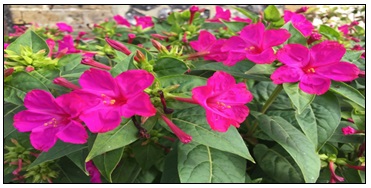
FIG. 1: MIRABILIS JALAPA PLANT
Traditional Uses: Mirabilis jalapa is widely used in traditional medicine across many regions for the treatment of various ailments.
Antiviral Activity: It has long been known that the plant possesses antiviral qualities.
Anticancer Potential: In conventional medicine, it is also acknowledged for its possible anticancer action 13.
Anti-Inflammatory Effect: The leaves are frequently used to treat inflammatory diseases and lessen inflammation.
Purgative and Diuretic Qualities: The plant's various components are used as a purgative (to treat constipation) and diuretic (to encourage urine flow).
Wound Healing (Vulnerary): The plant's leaf juice is historically administered as a vulnerary to aid in the healing of wounds.
Uses of the Roots: Traditionally used to cure dropsy (oedema), the roots are said to have aphrodisiac, diuretic, and purgative qualities.
Abscess Treatment: Traditionally, abscesses are treated using a decoction made by crushing and boiling the leaves 14–18.
Phytochemistry: Numerous phytoconstituents, including as alkaloids, flavonoids, phenolic compounds, tannins, glycosides, saponins, terpenoids, steroids, carbohydrates, proteins, and vital minerals, are found in various regions of Mirabilis jalapa.
The plant's many pharmacological and medicinal qualities are caused by these bioactive substances.
TABLE 1: PHYTOCONSTITUENTS PRESENT IN DIFFERENT PARTS OF PLANT MIRABILIS JALAPA
| Plant part | Phytochemical constituents | Reference |
| Aerial Parts | Triterpenes, Flavonoids | [19] |
| Roots | Resin (3%), Trigonelline, Oxymethylanthraquinone, Carbohydrates (yielding galactose and arabinose) | [20–22] |
| Astragaloside-II, Astragaloside-IV, Astragaloside-VI, Flazin | [23] | |
| 4′-Hydroxy-2,3-dihydroflavone-7-β-D-glucopyranoside, Gingerglycolipid-A, 3,4-Dihydroxybenzaldehyde, p-Hydroxybenzaldehyde, β-Sitosterol | [24] | |
| Daucosterol | [25] | |
| Virucidal proteins | [26] | |
| Stigmasterol, β-Sitosterol | [27] | |
| Linear D-Glucan (1→3 and 1→4 linkages) | [28] | |
| Ribosome-inactivating protein (RIP) | [29] | |
| Mirabijalone A, B, C, D | [30] | |
| 9-O-Methyl-4-hydroxyboeravinone-B, Boeravinone-C, Boeravinone-F | [31, 32] | |
| 1,2,3,4-Tetrahydro-1-methylisoquinoline-7,8-di-diol | [33] | |
| Boeravinone, (2,5-di-oxo-imidazoline-4-yl)-urea, Glycerinmonoeicosate, β-Sitosterol | [34] | |
| Leaves | Quercetin | [35] |
| C-Glycosyl flavonoid | [36] | |
| Tricosan-12-one, n-Hexacosanal, β-Sitosterol, Tetracosanoic acid | [37] | |
| Tartaric acid, Citric acid, Leucine, Valine, Tryptophan, Alanine, Glycine | [37] | |
| D-Pinitol (O-methyl inositol) | [38, 39] | |
| N-trans-Feruloyl-4′-O-methyldopamine | [40] | |
| Stems | Alkaloids, Carbohydrates, Tannins, Unsaturated hydrocarbons, Flavonoids | [41] |
| Seeds | 8-Hydroxy-octadeca-cis-11,14-dienoic acid | [42] |
| Arginine, Glycine, Histidine, Threonine, Tyrosine, Aspartic acid, Glutamic acid | [43] | |
| D-Glucan (38 glycosyl units) | [43] | |
| β-Sitosterol, β-Amyrin | [44] | |
| β-Sitosterol-D-glucoside, β-Amyrin-3-O-α-L-rhamnosyl-O-β-D-glucoside | [45] | |
| Antimicrobial peptides (Mj-AMP-1 and Mj-AMP-2) | [46] | |
| Flowers | Miraxanthins I–III, Miraxanthin IV | [47] |
| Indicaxanthin, Vulgoxanthin I | [48] | |
| Betaxanthins | [49] | |
| Callus | Plant virus inhibitor | [50] |
| Increased MAP production under KH₂PO₄ supplementation | [51] | |
| Isoflavone, Dehydrorotenoid, Rotenoid | [52] |
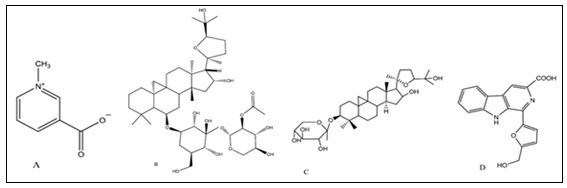
FIG. 2: STRUCTURES OF COMPOUNDS FROM A-D. A) TRIGONELLINE; B) ASTRAGALOSIDE-II; C) ASTRAGALOSIDE-IV; D FLAZIN
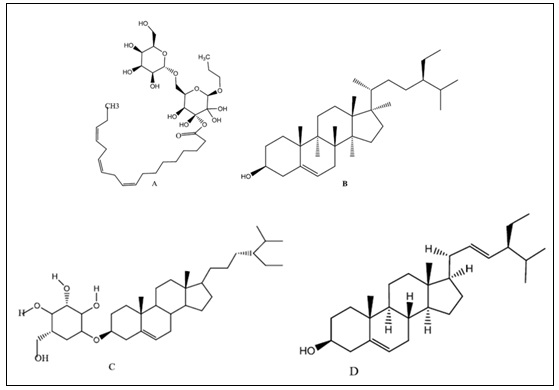
FIG. 3: STRUCTURES OF COMPOUNDS FROM A-D. A) GINGERGLYCOLIPID-A; B) 3,4-DIHYDROXYBENZALDEHYDE; C) DAUCOSTEROL; D) STIGMASTEROL
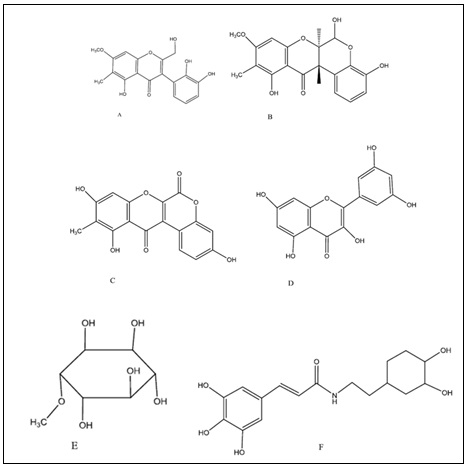
FIG. 4: STRUCTURES OF COMPOUNDS A-F. A) ROTENOIDS MIRABIJALONE A, B, C; B) BOERVINONE-C; C) 1,2,3,4-TETERAHYDRO-1-METHYLISOQUIONOLINE-7,8-DI-DIOL; D FLAVONOIDS QUERCETIN; E) O-METHYL INOSITOL; F) POLYPHENOLIC AMIDE N-TRANS-FERULOYL-4'-O-METHYLDOPAMINE
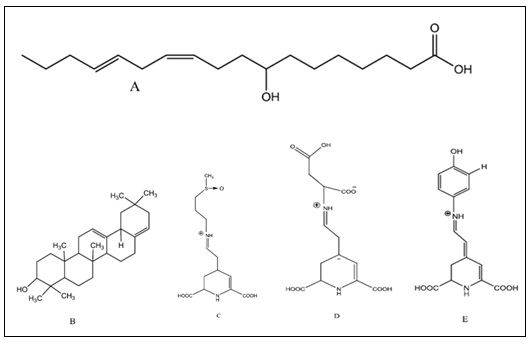
FIG. 5: STRUCTURES OF COMPOUNDS A-E. A) 8-HYDROXY-OCTADECA-CIS-11,14-DIENOIC ACID; B) Β-SITOSTEROL, Β-AMYRIN; C-E) MIRAXANTHINS I-III
Pharmacological Activity: Mirabilis jalapa is widely used in both traditional and modern medicine due to its wide range of pharmacological activities, which include anti-inflammatory, antioxidant, antimicrobial, antiviral, antitumor, analgesic, hepatoprotective, and antidiabetic activity.
TABLE 2: PHARMACOLOGICAL ACTIVITIES OF
| Pharmacological Activity | Plant Part / Extract Used | Key Findings | Ref. |
| Antibacterial Activity | Ethanolic leaf extract | Effective against both Gram-positive and Gram-negative bacteria; activity confirmed by cup plate and disc diffusion methods using streptomycin as standard. | [53] |
| Antioxidant Activity | Acetone, ethyl acetate, petroleum ether, and ethanolic leaf extracts; methanol bark extract | Ethanolic leaf extract showed highest antioxidant potential in FRAP assay. Methanol bark extract showed DPPH radical scavenging activity (IC₅₀ = 598.02 μg/ml). | [54,55] |
| Anti-inflammatory Activity | Total alcoholic extract and petroleum ether fraction of leaves; aqueous leaf extract | Significant inhibition of inflammation in carrageenan-induced paw edema and cotton pellet granuloma models; reduced fibroblast proliferation and collagen synthesis. | [56,57] |
| Antidiabetic Activity | Ethanolic root extract | Reduced serum glucose, triglycerides, urea, creatinine, total cholesterol, LDL, and glucose-6-phosphatase activity; increased insulin, HDL, protein, liver and muscle glycogen levels. Useful in Type II diabetes management. | [58] |
| Antiviral Activity | Leaf extract, root proteins, suspension cultures | Active against HSV-I, VSV, and Tobacco Mosaic Virus (TMV); contains ribosome-inactivating proteins (RIPs) and MAP (Mirabilis Antiviral Protein). | [58,59] |
| Antiasthmatic Activity | Ethanol and acetone root extracts | Demonstrated antiasthmatic activity in guinea pig tracheal chain preparation and clonidine-induced mast cell degranulation models. | [60] |
| Antinociceptive Activity | Whole plant extracts | Exhibited analgesic and pain-relieving activity in mice, supporting traditional use in painful conditions. | [61] |
| Dermatological (Wound Healing) Activity | Ethanolic leaf extract (1000 mg/kg bw) | Enhanced wound contraction, wound-breaking strength, dry tissue weight, and hydroxyproline content in diabetic wound models. | [62] |
| Antispasmodic Activity | Flower extract | Inhibited gut smooth muscle contraction (IC₅₀ = 18 ± 0.7 μg/ml) and stimulated rabbit aortic muscle contraction (EC₅₀ = 11.60 ± 0.26 μg/ml). | [63] |
| Anticancer Activity | Mirabilis jalapa proteins | Cytotoxic against T47D, SiHa, MCF-7, A549, and HCT-116 cancer cell lines; exhibited strong apoptotic activity with lower toxicity toward normal cells. | [64] |
| Antifungal Activity | Methanol extract; isolated phenolic compounds | Active against Aspergillus niger, Fusarium solani, Fusarium oxysporum, Fusarium granulation, and Candida albicans; inhibited growth of Daedaleaflavida. | [65] |
| Anthelmintic Activity | Methanolic extract of aerial parts and roots | Showed dose-dependent anthelmintic activity effective against parasitic worm infections. | [66] |
| Antitubercular / Hepatoprotective Activity | Leaf extract | Protected against hepatotoxicity induced by antitubercular drugs. | [67] |
CONCLUSION: Mirabilis jalapa L. is an important medicinal and ornamental plant with a long history of traditional use. Scientific studies have confirmed the presence of numerous phytoconstituents, including flavonoids, alkaloids, sterols, glycosides, proteins, and beta lain pigments, which contribute to its diverse pharmacological activities. Various extracts and isolated compounds have demonstrated antibacterial, antioxidant, anti-inflammatory, antidiabetic, antiviral, anticancer, antifungal, wound-healing, and other therapeutic properties.
These findings validate many of its ethnomedicinal applications and highlight its potential as a source of novel bioactive molecules. However, further research focusing on standardization, toxicity evaluation, pharmacokinetics, molecular mechanisms, and well-designed clinical trials is required to establish its therapeutic efficacy and safety. Overall, M. jalapa holds significant promise for the development of plant-based pharmaceutical and nutraceutical products.
ACKNOWLEDGEMENT: I express my sincere gratitude to Dr. Pankaj Kumar Shankhdhar, Associate Professor and Dr. Pushpendra Kannojia, Principal, BIU College of Pharmacy, Bareilly International University, Bareilly, Uttar Pradesh, India, for their invaluable guidance, constant encouragement, constructive suggestions, and unwavering support throughout the completion of this work.
Their expertise, motivation, and academic mentorship have been instrumental in shaping this study. I gratefully acknowledge the contribution of everyone who directly or indirectly supported me in the successful completion of this work.
CONFLICT OF INTEREST: Nil
REFERENCES:
- Gupta R and Chadha KL: Medicinal and aromatic plants in India. In: Gupta R, Chadha KL, editors. Advances in horticulture: medicinal and aromatic plants. New Delhi: Malhotra Publishing House 1995; 44.
- Bijauliya RK, Alok S, Jain SK, Singh VK, Singh D and Singh M: Herbal and allopathic medicine for kidney, gallbladder and urinary stones: A review. Int J Pharm Sci Res 2017; 8(5): 1935-52.
- Pareek SK: Medicinal plants in India: Present status and future prospects. In: Prospects of medicinal plants. New Delhi: Indian Society for Plant Genetic Resources NBPGR Campus 1996; 14.
- Al-Snafi AE, Talab TA, Jabbar WM and Alqahtani AM: Chemical constituents and pharmacological activities of Mirabilis jalapa- A review. International Journal of Biological and Pharmaceutical Sciences Archive 2021; 01(02): 034–045
- Bijauliya RK, Jain SK, Alok S, Dixit VK, Singh VK and Singh M: Macroscopical, microscopical and physico-chemical studies on leaves of Dalbergia sissoo Linn. (Fabaceae). Int J Pharm Sci Res 2017; 8(4): 1865-73.doi: 10.13040/IJPSR.0975-8232.8(4).1865-73.
- Sundaran M, Baraneedharan, Boopathi, Alagappan, Premanand and Mohsin: Studies on anti-oxidant potency and in-vitro anti-bacterial efficacy of Mirabilis jalapa on enteric pathogens. International Journal of Genetic Engineering and Biotechnology 2010; 1(3): 193-198.
- Walker C, Gabriela T, Rossato M, Franciscato C, Pereira M., Ferreira J and Manfron M: Anti-nociceptive activity of Mirabilis jalapa in mice. Journal of Ethnopharmacology 2008; 120(2): 169-175.
- Wang XH and Dai JT: Anti-oxidant activities of Mirabilis jalapa L. seed epicarp extract. Advanced Materials Research 2012; 550-553: 1768-1772.
- Yang SW, Ubillas R, McAlpine J, Stafford A, Ecker DM, Talbot MK and Rogers B: Three phenolic compounds from a manipulated plant cell culture, Mirabilis jalapa. J Nat Prod 2001; 46: 313-317.
- Zachariah SM, Aleykutty NA, Viswanad V, Jacob S, Prabhakar V: In-vitro antioxid antpotential of methanolic extracts of Mirabilis jalapa. Free Radicals and Antioxidants 2011; 1(3): 82-86.
- Zachariah SM, Viswanad V, Aleykutty NA, Jaykar B and Halima OA: Free- radicalscavenging and anti-bacterial activity of Mirabilis jalapa using in-vitro models. Asian Journal of Pharmaceutical and Clinical Research 2012; 5(3): 155-119.
- Zhou JY, Zhou SW, Zeng SY, Zhou JY, Jiang MJ and Yan H: Hypoglycemic andhypolipidemic effects of etanolic extract of Mirabilis jalapa L. root on normal and diabetic mice. Evidence Based Complementary and Alternative Medicine 2012; (2012): 1-9.
- Walker CI, Trevisan G, Mateus FR, Carina F, Maria EP, Juliano F and Melânia PM: Antinociceptive activity of Mirabilis jalapa in mice. J Ethno Pharmacol 2008; 120: 169-175.
- Chetty KM, Sivagi K and Rao KT: Flowering plants of (Chittoor district, Andra Pradesh, India). Student Offset Printers Trupati 2008; 286.
- Khurian JC: Plants that heals. 5th ed., Vol. 1, Oriental Watchman Publishing House, Pune 2003; 214-215.
- Watt JM and Breyer-brendwijk MG: The medicinal and poisnous plants of South Africa. E and S. Livingstone, London 1962; 801.
- Sharma HK, Chhangte L and Dolui AK: Traditional medicinal plants in Mizoram, India. Fitoterapia 2001; 72:146-61.
- Kusamba C, Byamana K and Mbuyi WM: Antibacterial activity of Mirabilis jalapa seed powder. J Ethnopharmacol 1991; 35(2): 197-199.
- Siddiqui S, Siddqui BS, Adil Q and Begum S: Constituents of Mirabilis jalapa. Fitopterapia 1990; 61: 471.
- The Merck Index, An encyclopedia of chemicals, drugs and biologicals, Thirteen edition (Merck Research Laboratories 2001; 9770.
- The wealth of India, Raw materials. Publication & information Directorate, CSIR, New Delhi 1998; 6: 392-393.
- Watt JM and Breyer-brendwijk MG: The Medicinal and Poisnous Plants of South Africa. E. and S. Livingstone London 1962; 801.
- Shaaban M, Schroder D, Shaaban KA, Helmke E, Wollny IG, Dobler IW and Laatsch H: Flazin, Perlolyrin and other β Carbolines from marine derived bacteria. Rev Latimamer Puim 2007; 35(3): 58-67.
- The Merck Index, An encyclopedia of chemicals, drugs and biologicals, Thirteen edition (Merck Research Laboratories 2001; 8627.
- Lai GF, Luo SD, Cao JX and Wang YF: Studies on chemical constituents from roots of Mirabilis jalapa. Zhongguo Zhong Yao Za Zhi 2008; 33(1): 426.
- Kubo S, Ikida T, Takanami Y and Mikami Y: Jpn. Kokai Tokyo Koho 1986; 60: 243, 100 (85243100).
- The Merck Index, An encyclopedia of chemicals, drugs and biologicals, Thirteen edition (Merck Research Laboratories 2001; 8893.
- Gordana S, Tovam P and Ante T: Acta Pharma. Jugosl 1988; 38(3): 255-57.
- Ray B, Ghosal S, Pradyot K, Thakur S and Majumdar S: Carbohydr Res 1988; 176(2): 327-321.
- Worgricky NS, Ng TB, Chan SH, Dong TX and Yeung HW: Biochem Int 1992; 28(4): 585-93.
- Reynaud J, Guilet D, Terreux R, Lussignol M and Walchshofer N: Isoflavonoids in non-leguminous families - an update. Nat Prod Rep 2005; 22: 504-515.
- Kadota S, Lami N, Tezuka Y and Kikuchi T: Chem Pharm Bull 1988; 36: 2289-92.
- Wang XH and Dai JT: Anti-oxidant activities of Mirabilis jalapa L. seed epicarp extract. Advanced Materials Research 2012; 550-553: 1768-1772.
- Wei Y, Yang XS and Hao XJ: Studies on chemical constituents from roots of Mirabilis jalapa. Zhongguo Zhongyaozazhi 2003; 28(12): 1151-1152.
- The Merck Index, An encyclopedia of chemicals, drugs and biologicals, Thirteen edition (Merck Research Laboratories 2001; 8122.
- Richardson M: Flavonols and C-Glycosylflavonoids of the caryophllales. Biochemical Systematics and Ecology 1978; 6: 283-86.
- Begum S, Adil Q, Siddiqui B and Siddiqui S: Enzym. Chem. Commun 1996; 27(18): 295-97.
- The Merck Index, An encyclopedia of chemicals, drugs and biologicals, Thirteen edition (Merck Research Laboratories 2001; 5001.
- Bieleski RL: Pinitol is a major carbohydrate in leaves of some coastal plants indigenous to New Zealand. New Zealand J of Botany 1994; 32: 73-78.
- Michalet S, Cartier G, David B, Mariotte A, Dijoux-franca M, Kaatz GW, Stavri M and Gibbons S: N-Caffeoylphenalkylamide derivatives as bacterial efflux pump inhibitors. Bio-organic and Medicinal Chemistry Letters 2007; 17: 1755-58.
- Devi Sk, Sunny M, Janaipriya N, Nagamani S, Babu TS and Vinupriya S: Pharmacognostical analysis of leaf extracts of Mirabilis jalapa against some human pathogenic bacteria. South Asian Journal of Biological Science 2011; 1(1): 1-6.
- Ahmed MS, Rauf A, Mustafa J and Osman MS: Phytochemistry 1984; 23(10): 2247-49.
- Shishodia M, Jethmalani S and Karuna P: Bull. Pure Appl Sci 1983; 11(9): 193-96.
- The Merck Index, An encyclopedia of chemicals, drugs and biologicals, Thirteen edition (Merck Research Laboratories 2001; 623.
- Saxena VK and Gupta HM: Nat Acad Sci Lett 1986; 9(5): 135.
- Cammue PAB, Debolle FCM, Terras RGF, Proost P, Van SD, B. Vanderleyden J and Brockaert FW: J Biol Chem 1992; 267(4): 2228-33.
- Saxena VK: Phytochemistry 1985; 6(11): 171-74.
- Drunkler DA, Fett R and Luiz MTB: Avaliacao Da Estabilidade De Betlains Em Extrato De Beterrata (Beta vulgaris L.) COM αֿ, β e γ CICLODEXTRINAS. B.CEPPA, Curitiba 2006; 24(1): 259-276.
- Encarnación RD, Virgen M and Ochoa N: Anti-microbial activity of medicinal plants from Baja California Sur (MÉXICO). Pharmaceutical Biology 1998; 36(1): 33-43.
- Ikida T, Kuko S, Takanami Y and Mikami Y: Kokai Tokyo Koho JP 1986; (05, 790 [8605, 790] C1.C12 P1/100): 11 Jan.
- Ikida T, Niino K, Kataoka J and Matsumoto T: Agric Biol Chem 1988; 25(16): 1383-88.
- Yang SW, Ubillas R, McAlpine J, Stafford A, Ecker DM, Talbot MK and Rogers B: Three phenloiccomoponds from a manipulated plant cell culture, Mirabilis jalapa. J Nat Prod 2001; 46: 313-317.
- Ceela Swetha, Chandragiri Bhavani Shankar, Dabbi Sravanthi, Dandaboina Pooja, Vasudha Bakshi and Narender Boggula: Assessment of phytochemical evaluation and antibacterial activity of Mirabilis jalapa-An in-vitro design. J Pharm Adv Res 2021; 4(8): 1353-1359.
- Hajji M, Jarraya R, Lassoued I, Masmoudi O, Damak M and Nasri M: GC/MS and LC/MS analysis, and antioxidant and antimicrobial activities of various solvent extracts from Mirabilis jalapa tubers. Process Biochemistry 2010; 45: 1486-1493.
- Subin MZ, Aleykutty NA, Vidya V, Sonu J and Visakh P: In-vitro Antioxidant Potential of Methanolic Extracts of Mirabilis jalapa Linn. Free Radicals and Antioxidants 2011; 1(4): 82-86.
- Manjit S, Vijendra K, Ishpinder S, Vinod G and Ajudhia NK: Anti-inflammatory activity of aqueous extract of Mirabilis jalapa Linn. Leaves. Pharmacog Res 2010; l2(6): 364-367.
- Nath LR, Manjunath KP, Savadi RV and Akki KS: Anti-inflammatory activity of Mirabilis jalapa Linn. Leaves. J Basic Clin Pharm 2010; 1(2): 93-96.
- Liya FI, Yasmin F, Chowdhury NS, Charu TK and Fatema IB: Mirabilis jalapa: A review of ethno and pharmacological activities. AMPR 2021; 9(1): 1-10.
- Vivanco JM: Antiviral and Antiviroid Activity of MAP-Containing Extracts from Mirabilis jalapa Roots. Plant Dis 1999; 83: 1116-1121.
- Maxia A, Sanna C, Salve B, Kasture A and Kasture S: Inhibition of histamine mediated responses by Mirabilis jalapa: confirming traditional claims made about antiallergic and antiasthmatic activity. Natural Product Research 2010; 24(18): 1681-1686.
- Walker CI, Trevisan G, Rossato MF, Franciscato C, Pereira ME, Ferreira J and Manfron MP: Antinociceptive activity of Mirabilis jalapa in mice. J Ethnopharmacol 2008; 120(2): 169-175.
- Muhsina CP and Thamaraiselvi B: Antimicrobial finish for cotton fabric from Mirabilis jalapa leaf extract. IOSR Journal of Environmental Science, Toxicology and Food Technology 2017; 11(11): 13-17.
- Aoki K, Cortés AR, RamírezMdel C, Gómez-Hernández M and López-Muñoz FJ: Pharmacological study of antispasmodic activity of Mirabilis jalapa Linn flowers. J Ethnopharmacol 2008; 116(1): 96-101.
- Zullies I, Kawati S and Sismindari: Cytotoxicity against tumor cell lines of a ribosome - inactivating protein (RIP) like protein isolated from leaves of Mirabilis jalapa L. Malays J Pharm Sci 2006; 4(1): 31-41.
- Kakad SL, Dhembare AJ and Ruchita C: Evaluation of antifungal activities of some selected plant species against fungal pathogen. J Microbiol Biotechnol Res 2015; 5(1): 24-27.
- Zachariah SM, Vidya V, Aleykutty NA, Jaykar B and Halima OA: Free radical scavenging and antibacterial activity of Mirabilis jalapa linn using in-vitro models. Asian J Pharm Clin Res 2012; 5(3): 115-120.
- Jyothi B, Akshmi SM and Anitha K: Protective effect of Mirabilis jalapa leaves on anti-tubercular drugs induced hepatotoxicity. Asian J Plant Sci Res 2013; 6(3): 221-224.
How to cite this article:
Kumar V, Shankhdhar PK, Kannojia P and Bijauliya RK: A comprehensive review of Mirabilis jalapa L.: phytochemistry, pharmacological activities, and therapeutic potential. Int J Pharmacognosy 2026; 13(9): 935-42. doi link: http://dx.doi.org/10.13040/IJPSR.0975-8232.IJP.13(9).935-42.
This Journal licensed under a Creative Commons Attribution-Non-commercial-Share Alike 3.0 Unported License.
Article Information
4
935-942
1108 KB
145
English
IJP
Vinay Kumar *, Pankaj Kumar Shankhdhar, Pushpendra Kannojia and Rohit Kumar Bijauliya
BIU College of Pharmacy, Bareilly International University, Rohilkhand Medical College and Hospital Campus, Pilibhit Bypass road, Bareilly, Uttar Pradesh, India.
vinayrajpoot5533@gmail.com
21 July 2026
25 August 2026
27 August 2026
10.13040/IJPSR.0975-8232.IJP.13(9).935-42
01 September 2026
 Download