


STANDARDIZATION OF SARAL VIRECHAN CHURNA AND SWADISTHA VIRECHAN CHURNA
HTML Full TextSTANDARDIZATION OF SARAL VIRECHAN CHURNA AND SWADISTHA VIRECHAN CHURNA
Hardik Luhar, Yuvraj Singh Rathore, Sanskruti Rathod, Nisarg Purohit, Mamta Shah and Karuna Modi *
Department of Pharmacognosy and Phytochemistry, L. M. College of Pharmacy, Ahmedabad, Gujarat, India.
ABSTRACT: Saral virechan churna and Swadishtha virechan churna are polyherbal formulation primarily used in constipation. Saral virechan contains liquorice, fennel, himaj, pepper, ginger, sindhavmithu, sakar and suddha sulphur, while Swadishtha virechan contains liquorice, fennel, senna, sakar and suddha sulphur. The present study was carried out to establish quality parameters of Saral virechan and Swadistha virechan churna by undertaking extensive studies of them. Morphological and microscopical studies of churna along with evaluation of physicochemical parameters were carried out. Saral virechan churna is fibrous, brownish green in colour, pungent with aromatic odour, whereas Swadishtha virechan churna is fibrous, green, sweet and aromatic. Powder study of Saral virechan churna showed starch grains, parenchyma, fragment of vittae, endocarp, stone cells and xylem vessels, while fragment of vittae, warty trichomes, endocarp, epicarp, lignified and non-lignified fibers, cluster of calcium oxalate found in Swadistha virechan churna. Phytochemical screening indicated presence of alkaloids, flavonoids, sterols and triterpenoids, phenolics, tannins, saponins and carbohydrates in both the formulations and additionally anthraquinone glycosides in Saral virechan churna. The content of gallic acid was found to be 1.12+0.00702% w/w in Saral virechan churna while glycyrrhetinic acid in Saral virechan churna and Swadistha virechan churna was found around 0.39+0.00702% w/w by HPTLC method. GC MS analysis of volatile oil from both churna revealed presence of various terpenes. The standardization parameters developed using marker analysis would serve as a useful tool for quality evaluation of both the formulations.
Keywords: HPTLC, GC-MS, Saral Virechan Churna, Swadishtha Virechan Churna, Standardization
INTRODUCTION: Nature provides essential remedies through plants, forming the basis of Ayurveda. According to Ayurveda, imbalance in Dosha, Dhatus, and Malas causes disease, and treatment aims to restore balance, improve vitality, and strengthen immunity.
Formulations like Swadishta virechan churna and Saral virechan churna are used for constipation, liver, and stomach disorders, as well as blood purification and piles.
The major components of the Saral virechan churna are liquorice (Glycyrrhiza glabra), fennel (Foeniculum vulgare), long pepper (Piper longum), ginger (Zingiber officinale), chebulic myrobalan (Terminalia chebula), sugar, and salt. Swadishta virechan churna is made up of liquorice, fennel, senna (Cassia angustifolia), sugar, and purified sulphur. The present study was performed to establish quality parameters of Saral virechan churna and Swadishta virechan churna by comprehensive pharmacognostical, phytochemical, and chromatographic analysis, ensuring scientific validation of traditional herbal formulations 1-3.
TABLE 1: SARAL VIRECHAN CHURNA
| Crude drugs | Part used | Quantity in parts |
| Suddha gandhaka | - | 1 |
| Variyali | Fruits | 1 |
| Yastimadhu | Roots | 1 |
| Shunth | Rhizomes | 1 |
| Long pepper | Fruits | 1 |
| Himaj | Fruits | 2 |
| Sharkara | - | 8 |
| Shindhavsalt | - | 1 |
| Total | 16 |
TABLE 2: SWADISHTA VIRECHAN CHURNA
| Crude drugs | Part used | Quantity in parts |
| Suddha gandhaka | - | 1 |
| Variyali | Fruits | 1 |
| Yastimadhu | Roots | 1 |
| Sonamukhi | Leaves | 3 |
| Sharkara | Sharkara | 6 |
| Total | 12 |
MATERIALS AND METHODS:
Collection and Authentication of Plant Material: Dried plant materials for all constituent drugs of both Saral virechan churna (SVC) and Swadistha virechan churna (SWVC) were procured from the local market (M/s Lalubhai Vrajlai Gandhi, Ahmedabad, India). The crude drugs were authentically identified based on their organoleptic (color, odor, taste) and microscopical characteristics, with reference to standard pharmacognistical literature. The crude drugs and their parts used are given in Table 1 and Table 2.
Formulation of Standard Churnas: The standard formulations were prepared as per traditional Ayurvedic texts 4, 5. The individual crude drugs were powdered separately to a 40 mesh size. The powders were then mixed in the proportions specified in Table 1 and Table 2 to ensure homogeneity. The final mixtures were stored in airtight, light-resistant containers at room temperature until further analysis.
Pharmacognostical Studies: Pharmacognostical evaluation of the churnas included morphological, organoleptic, and microscopical study. The powdered crude drugs and final formulations were examined for macroscopic characteristics such as color, odor, taste, and texture. For microscopical analysis, using a compound microscope at 10X and 45X magnifications to identify key diagnostic features. Physicochemical parameters were also determined, including total ash, acid-insoluble ash, and water-soluble ash using standard methods. Extractive values were evaluated using water and 90% ethanol by, while volatile oil content was determined by hydro distillation using a Clevenger apparatus and expressed as % v/w 6, 7.
Preliminary phytochemical screening was carried out to identify major constituents such as alkaloids, flavonoids, saponins, carbohydrates, sterols, phenolics, tannins, coumarins, and anthraquinone glycosides using standard qualitative tests. Alkaloids were detected by Dragendorff’s test, flavonoids by Shinoda and fluorescence tests, and saponins by the froth test. Carbohydrates were confirmed by Molisch’s and Fehling’s tests, while sterols and triterpenoids were identified using Liebermann-Burchard and Salkowski reactions. Phenolics were detected using FeCl₃ and Folin-Ciocalteu, while tannins by gelatin and lead acetate tests. Coumarins and anthraquinone glycosides were analyzed using specific chemical reactions such as ammonia test and Borntrager’s test respectively. These studies confirmed the presence or absence of various phytoconstituents in the formulations 8-12.
High-Performance Thin-Layer Chromatography (HPTLC) Analysis: A CAMAG (Muttenz, Switzerland) HPTLC system equipped with a Linomat V automatic sample applicator, a Hamilton syringe (100 µl), twin-trough glass chambers (20x10 cm), a TLC Scanner 3, and WINCATS 4 integration software were used. Accurately weighed reference standard gallic acid and glycyrrhetinic acid were dissolved in HPLC-grade methanol in a volumetric flask to obtain a stock solution of 1 mg/ml. 10 g of accurately weighed churna was exhaustively extracted with distilled water. The aqueous extract was concentrated and hydrolyzed by refluxing with 10 ml of 2N sulfuric acid. The hydrolysate was neutralized and then extracted thrice with chloroform. The combined chloroform extracts were evaporated to dryness, and the weight of the residue was recorded. 10 mg of this residue was dissolved in 1 ml of chloroform to obtain the test solution. Graded volumes (0.8, 1.0, 1.3, 1.5, 1.7, and 1.9 µl) of the standard gallic acid solution (1 mg/ml) were applied in triplicate on a pre-coated silica gel 60 F₂₅₄ TLC plate (E. Merck, Darmstadt, Germany; 20x20 cm, 0.2 mm thickness) using the Linomat V applicator to get concentration 0.8 to 1.9 µg/spot for calibration cuve. Standard glycyrrhetinic acid (1 mg/ml) was applied in the range of 0.8, 1.0, 1.3, and 1.5 µl, resulting in a concentration of 0.8 to 1.5 µg/spot. The plate was developed in a twin-trough chamber pre-saturated for 45 minutes with the mobile phase toluene: ethyl acetate: formic acid: ethanol (3:3:0.8:0.4) at room temperature (25 ± 2°C).
The developed plate was dried and derivatized by dipping in a 2% w/v ferric chloride solution in methanol, followed by heating at 105°C for 10 minutes for gallic acid and was scanned densitometrically at 270 nm using a deuterium lamp. For glycyrrhetinic acid, the developed plate was dried and derivatized by dipping in a 0.5% anisaldehyde reagent, followed by heating at 105°C for 10 minutes and scanning at 550 nm. The peak areas were recorded. The method is also validated for linearity, precision, repeatability of measurement, repeatability of sample application, accuracy, limit of detection, limit of quantification and specificity as per ICH guidelines Q2(R1).
Gas Chromatography-Mass Spectrometry (GC-MS) Analysis: The volatile oil obtained from the hydrodistillation of the churnas was diluted with HPLC-grade methanol to prepare a 10% (v/v) solution. Instrument used is Shimadzu GCMS-QP2010 Plus system (Kyoto, Japan) fitted with column Rtx®-5ms fused silica capillary column (30 m length, 0.25 mm i.d., 0.25 µm film thickness). Carrier Gas used was helium (99.999% purity) at a constant linear velocity of 1.22 ml/min. Injector Temperature and volume were 230°Ca and 0.1 µl in split mode (split ratio 25:1) respectively. Conditions for mass spectrometer are ion source temperature: 200°C; interface temperature: 250°C; electron impact (EI) ionization mode at 70 eV and mass scan range: 40-600 m/z. The constituents of the volatile oil were identified by comparing their mass fragmentation patterns with those stored in the National Institute of Standards and Technology (NIST) and Wiley mass spectral libraries. The relative concentration of each compound was expressed as a percentage based on the peak area in the total ion chromatogram (TIC).
RESULTS AND DISCUSSION: Morphological and microscopical studies of saralvirechan and swadistha virechan churna along with evaluation of physicochemical parameters were carried out.
Powder study of saral virechan churna Fig. 1 showed starch grains, parenchyma, fragment of vittae, endocarp, stone cells and xylem vessels, while fragment of vittae, warty trichomes, endocarp, epicarp, lignified and non-lignified fibers, and cluster of calcium oxalate found in swadistha virechan churna Fig. 2.
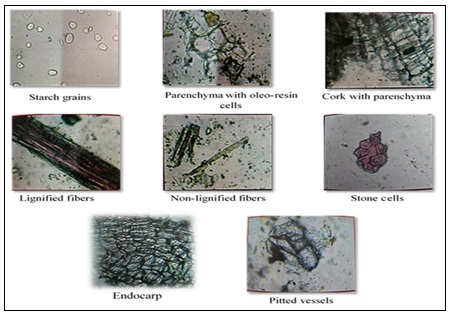
FIG. 1: POWDER MICROSCOPY OF SARAL VIRECHAN CHURNA
TABLE 3: PHYSICO-CHEMICAL PARAMETERS
| Quality Parameters | Formulations (% w/w ± S.D.) | |
| Saral | Swadistha | |
| Ash value | ||
| Total ash | 9.9 ± 0.05 | 10.17 ± 0.038 |
| Acid insoluble ash | 1.8 ± 0.061 | 1.45 ± 0.101 |
| Water soluble ash | 4.6 ± 0.060 | 8.7 ± 0.092 |
| Sulphated ash | 3.25 ± 0.52 | - |
| Extractive value | ||
| Water soluble extractive | 16.58 ± 0.15 | 15.2 ± 0.115 |
| Alcohol soluble extractive | 2.62 ± 0.065 | 1.28 ± 0.035 |
| Volatile oil content (%w/w) | 1.5 ± 0.43 | 1.3 ± 0.55 |
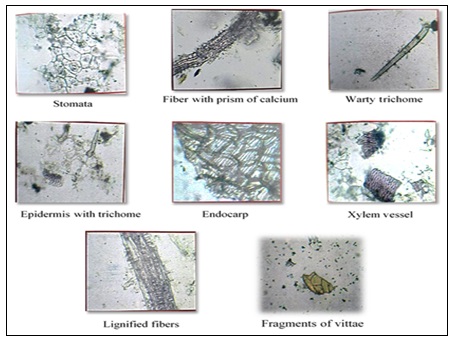
FIG. 2: POWDER MICROSCOPY OF SWADISTHA VIRECHAN
Phytochemical screening indicated presence of alkaloids, flavonoids, sterols and triterpenoids, phenolics, tannins, saponins and carbohydrates in saral and swadistha virechan churna and additionally anthraquinone glycosides in saral virechan churna.
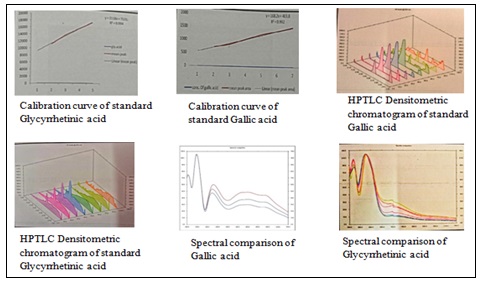
FIG. 3: CALIBRATION CURVE, DENSITOMETRIC CHROMATOGRAM AND UV SPECTRA OF SARAL AND SWADISTHA VIRECHAN CHURNAS
The content of gallic acid was found to be 1.12+0.00702% w/w in saral virechan churna while glycyrrhetinic acid in saral virechan churna and swadistha virechan churna was found around 0.39+0.00702 by HPTLC method.
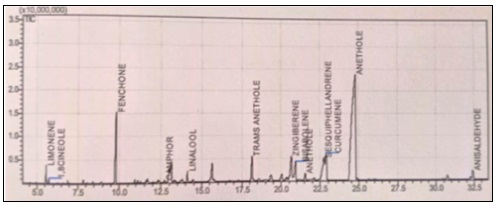
FIG. 4: GC-MS CHROMATOGRAPH OF SARAL VIRECHAN CHURAN
GC MS of volatile oil from saral virechan churna indicated presence of beta pinene (0.15%), limonene (0.15%), camphor (0.29%), linalool (1.13%), bisabolene (4.24%), sesquphellandrene (7.50%), curcumene (5.65%), anethole (59.81%), zingiberene (5.85%), cineole (0.40%), fenchone (7.77%), anethole (4.02%), zingiberene (5.85%), anethole (59.81%), anisaldehyde (1.88%) while swadishta virechan churnas had limonene (0.42%), 1,8 cineole (0.23%), anethole (81.27%), anise alcohol (4.63%) and anisaldehyde (1.23%).
CONCLUSION: This thorough study effectively tackles the pressing need for scientific standardization of two key Ayurvedic laxative formulations: Saral virechan churna (SVC) and Swadistha virechan churna (SWVC). By employing a systematic, multi-analytical approach, we have established a clear quality profile that validates these traditional remedies as evidence-based phytomedicine.
The pharmacognostical evaluation of both the individual raw materials and the final formulations has laid down a solid foundation for authenticating ingredients and spotting any adulteration. The physicochemical standards evaluated are ash values, extractive values, and volatile oil content etc. act as vital, reproducible benchmarks for assessing purity, inorganic content, and the presence of extractable matter, which is essential for maintaining consistency across batches. Phytochemical screening has unveiled a diverse array of bioactive constituents, such as alkaloids, flavonoids, saponins, and tannins, all of which contribute to the therapeutic effects of the churnas. A particularly noteworthy finding was the unique presence of anthraquinone glycosides in SWVC, which directly relates to its stronger laxative effect compared to SVC, providing a chemical rationale for its traditional use. The establishment and validation of a precise, accurate, and specific HPTLC method for the simultaneous quantification of marker compounds gallic acid (1.12% w/w in SVC) and glycyrrhetinic acid (0.39% w/w in both) marks a significant leap forward. This method serves as a powerful tool for the quantitative standardization of these polyherbal matrices, ensuring consistent levels of therapeutically relevant constituents.
Additionally, GC-MS analysis has shed light on the volatile fraction, pinpointing anethole and fenchone as the primary aromatic components. This volatile fingerprint not only confirms the presence of key aromatic ingredients like fennel but also connects the formulation's carminative and spasmolytic properties to specific chemical entities.
ACKNOWLEDGEMENT: Nil
CONFLICT OF INTEREST:The authors declare no conflicts of interest.
REFERENCES:
- Patwardhan BA and Hooper MB: Ayurveda and future drug development. International Journal of Alternative and Complementary Medicine 1992; 10: 9-11.
- Kalia AN: A Textbook of Industrial Pharmacognosy. CBS Publishers and Distributors, First Edition 2005; 3-4.
- Agarwal A: Critical issues in quality control of herbal products Pharma Times 2005; 37(6): 9-11.
- Vaid GKT: Vaidak Chikitsasar. (Uttarardh) 1936; 2: 146.
- Vaid GKT: Vaidak Chikitsasar. (Purvardh) 1936; 1: 208.
- Anonymous: The Ayurvedic Pharmacopoeia of India. Ministry of Health and Family welfare, First Edition 2001; 190-191.
- Anonymous: The Ayurvedic Pharmacopoeia of India. Ministry of Health and Family Welfare, First Edition 2001; 152-153.
- Sim SK: Medicinal Plant Alkaloids. University of Toronto Press 1969; 9.
- Geissman A: Modern Methods of Plant Analysis. Springer Verlag 1955: 471.
- Geissman A: Modern Methods of Plant Analysis. Springer Verlag 1955: 473.
- Anonymous: WHO Guidelines. AITBS Publishers and Distributors, First Edition 2002; 46.
- Robinson T: The Organic Constituents of Higher Plants: Their Chemistry and Interrelationships Burgess Publishing Company 1964; 64.
How to cite this article:
Luhar H, Rathore YS, Rathod S, Purohit N, Shah M and Modi K: Standardization of saral virechan churna and swadistha virechan churna. Int J Pharmacognosy 2026; 13(5): 486-91. doi link: http://dx.doi.org/10.13040/IJPSR.0975-8232.IJP.13(5).486-91.
This Journal licensed under a Creative Commons Attribution-Non-commercial-Share Alike 3.0 Unported License.
Article Information
13
486-491
1224 KB
146
English
IJP
Hardik Luhar, Yuvraj Singh Rathore, Sanskruti Rathod, Nisarg Purohit, Mamta Shah and Karuna Modi *
Department of Pharmacognosy and Phytochemistry, L. M. College of Pharmacy, Ahmedabad, Gujarat, India.
karuna.modi@lmcp.ac.in
15 April 2026
04 May 2026
12 May 2026
10.13040/IJPSR.0975-8232.IJP.13(5).486-91
15 May 2026
 Download