


PHARMACOLOGICAL EVALUATION OF THE METHANOLIC EXTRACT OF MORINDA CITRIFOLIA FRUIT FOR ANTI ASTHMATIC, ANTI OXIDANT AND ANTI- INFLAMMATORY ACTIVITIES
HTML Full TextPHARMACOLOGICAL EVALUATION OF THE METHANOLIC EXTRACT OF MORINDA CITRIFOLIA FRUIT FOR ANTI ASTHMATIC, ANTI OXIDANT AND ANTI- INFLAMMATORY ACTIVITIES
Sravanthika Burramsetty *, Asiya Begum and Rama Rao Nadendla
Department of Pharmacology, Chalapathi Institute of Pharmaceutical Sciences, Lam, Guntur, Andhra Pradesh, India.
ABSTRACT: Asthma is a chronic respiratory disorder characterized by airway inflammation, bronchoconstriction, and excessive mucus production. This study evaluated the anti-asthmatic, antioxidant, and anti-inflammatory potential of the methanolic fruit extract of Morinda citrifolia (noni), a medicinal plant widely used in traditional herbal medicine. Dried fruits were shade-dried, powdered, and extracted with methanol using a Soxhlet apparatus. The extract was investigated using in-vivo models including histamine aerosol-induced bronchoconstriction, milk-induced leukocytosis, and eosinophilia to assess anti-asthmatic activity. Antioxidant activity was determined by hydrogen peroxide scavenging and reducing power assays, while anti-inflammatory activity was evaluated through protein denaturation inhibition and red blood cell membrane stabilization methods. The extract was administered at doses of 200 mg/kg and 400 mg/kg. Results demonstrated significant bronchodilatory activity with reduced leukocyte and eosinophil counts, indicating notable anti-asthmatic effects. The extract also exhibited considerable free radical scavenging capacity and membrane stabilizing activity, confirming its antioxidant and anti-inflammatory properties. These pharmacological activities may be attributed to the presence of bioactive phytoconstituents such as flavonoids, alkaloids, glycosides, saponins, and tannins. The findings support the traditional use of Morinda citrifolia and suggest its potential as a natural therapeutic agent for asthma and inflammatory disorders.
Keywords: Asthma, Morinda citrifolia, Anti-asthmatic, Antioxidant, Anti-inflammatory, Phyto-chemicals
INTRODUCTION: Asthma is a chronic inflammatory disorder of the airways, characterized by reversible airflow obstruction, bronchial hyper responsiveness, mucus overproduction, and recurrent episodes of wheezing, coughing, and shortness of breath 1, 2.
Its pathophysiology involves complex interactions between genetic susceptibility and environmental triggers such as allergens, pollutants, and infections 3. Immune cells, particularly eosinophils, mast cells, and T-helper 2 (Th2) lymphocytes, mediate airway inflammation and contribute to structural changes in the airways, a phenomenon known as airway remodeling 1, 3.
Inflammation is a protective biological response to harmful stimuli such as pathogens, tissue injury, or irritants. While acute inflammation is essential for defense and repair, chronic inflammation can result in tissue damage and exacerbate diseases like asthma 4. In the asthmatic airway, persistent inflammation causes edema, epithelial injury, and heightened airway sensitivity, worsening disease severity 3.
Oxidative stress arises from an imbalance between reactive oxygen species (ROS) production and the body’s antioxidant defences 5. Excess ROS can damage lipids, proteins, and DNA, and activate pro-inflammatory signaling pathways 6. In asthma, oxidative stress amplifies airway inflammation, enhances mucus secretion, and contributes to bronchial hyperreactivity, thus playing a key role in disease progression 5. Morinda citrifolia (Rubiaceae), commonly known as Noniwidely used in traditional medicine for its antibacterial, antitumor, anti-inflammatory, analgesic properties 7. The plant is rich in flavonoids, glycosides, alkaloids, saponins, and tannins.
Therefore, the present study aimed to evaluate the anti-asthmatic, antioxidant and anti-inflammatory activities of the methanolic fruit extract of Morinda citrifolia using validated behavioural models.
Plant Profile:
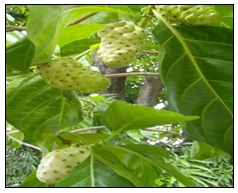
FIG. 1: FRUIT OF MORINDA CITRIFOLIA
Morinda citrifolia L (family: Rubiaceae), commonly known as Noni or Togaru, is a small evergreen shrub or small tree typically 3-10 m tall; stems are glabrous and often quadrangular found growing in open coastal regions at sea level and in forest areas up to about 1300 feet above sea level. It founds throughout the tropics. Its native ranges include Southeast Asia and Australasia, from where it was spread by Polynesian voyagers. It is now cultivated and naturalized in many tropical regions 8. It has a long history of use in traditional medicinal systems. Various parts of the plant, including fruits and leaves, are traditionally employed for their therapeutic benefits, particularly in anti-inflammatory and oxidative stress–related conditions 9.
Phytochemical studies have demonstrated that Morinda citrifolia contains a diverse range of bioactive constituents such as flavonoids, cardiac glycoside, protein, steroids, tannins phenolic compounds, alkaloids, glycosides. These compounds are known to possess significant antioxidant activity, contributing to free radical scavenging and protection against oxidative damage 7. Extracts of Morinda citrifolia have shown strong anti asthematic potential in standard in-vivo assays, including Histamine aerosol induced bronchoconstriction and Milk induced leukocytosis and eosinophilia methods 10 and antioxidant potential activity by in-vitro assays Hydrogen peroxide scavenging activity and reducing power assay and anti-inflammatory potential by protein denaturation and red blood cell membrane stabilization method 11.
MATERIAL AND METHODS:
Selection and Authentication of Plant Material: Dried fruits of Morinda citrifolia were collected and authenticated by Dr. P. Satyanarayana Raju, Department of Botany and Microbiology, Acharya Nagarjuna University, Guntur.
Preparation of Methanolic Extract: The fruits were shade dried, powdered, and subjected to Soxhlet extraction using methanol as solvent. The extract was concentrated under reduced pressure using a rotary evaporator and stored at 4 °C until further use 12.
Experiment in Animals: Healthy Wistar rats (150-250 gm) were procured and maintained under standard laboratory conditions (12 h light/dark cycle, 25 ± 2 °C, and ad libitum access to food and water). The study protocol was approved by the Institutional Animal Ethics Committee (IAEC) and conducted in accordance with CCSEA guidelines.
Drugs & Chemicals used: The drugs used within this research are prednisolone, Dexamethasone, Histamine, ascorbic acid, Diclofenac sodium. Plant extract was suspended in methanol and administered orally. Prednisolone was dissolved in normal saline and administered orally.
All chemicals and reagents used in the study were of analytical grade. Standard drugs used includes prednisolone, dexamethasone (for anti-asthmatic activity) and ascorbic acid (for antioxidant assays) and diclofenac sodium (for anti-inflammatory assays).
Drug Treatment:
- Animals were divided into four groups (n=4 per group):
- Group I: Control (vehicle, 0.5% CMC)
- Group II: Standard (Prednisolone, 10 mg/kg, p.o.)
- Group III: Methanolic fruit extract of Morinda citrifolia(200 mg/kg, p.o.)
- Group IV: Methanolic fruit extract of Morinda citrifolia(400 mg/kg, p.o.)
Experiment Methodology:
Histamine Aerosol Induced Bronchoconstriction in Rats: This test was performed to evaluate anti-asthmatic activity. Each animal was placed in the histamine chamber and exposed to 0.2% histamine aerosol. The pre convulsion time (PCT) the time of aerosol exposure to start dyspnoea (PCD) was recorded and the animals were removed from the chamber and positioned in fresh air for recover. Rats were then allowed to recover from dyspnoea for 2 days. After that animals were allotted to groups, one group will serve as control and receive carboxy methyl cellulose and two groups receive plant extract of different doses 200 and 400 mg/kg and one group receive standard drug – prednisolone. After receiving the drugs, all animals were again exposed to histamine aerosol in chamber, one hour, four hours and 24 hours to determine pre convulsive time (PCT) following established protocols for performing activity 13, 14.
Percentage protection was calculated using the formula.
Percentage protection = (Eta-Etb) / Eta × 100
Where Eta is the pre convulsion time after administration of drug and Etb is the pre convulsion time before administration of drug.
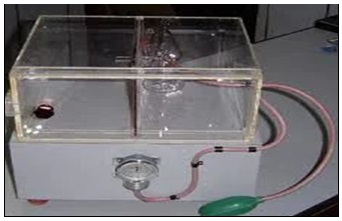
FIG. 2: HISTAMINE AEROSOL CHAMBER
Milk Induced Leukocytosis and Eosinophilia: This test was conducted as another validated method for assessing anti-asthmatic activity. Rats were divided into 4 groups. Blood samples were collected from retro-orbital plexus. First group served as control and receive carboxy methyl cellulose solution, and group 2 & 3 receives plant extract of 200 mg/kg and 400 mg/kg and group 4 receives dexamethasone of 50 mg/kg. All the groups injected boiled and cooled milk (4 ml/kg) 30 min after treatments. Total leukocytes and eosinophils count was done in each group before administration of test compound and 24 hours after milk injection. Difference in total leukocytes and eosinophile count before and after 24-hour drug administration was calculated 15, 16.
In-vitro Assessment of Antioxidant Activity:
Hydrogen Peroxide (H₂O₂) Scavenging Assay: This assay evaluates the ability of the plant extract to neutralize hydrogen peroxide, which is a reactive oxygen species capable of causing cellular damage.
A 40 mM hydrogen peroxide solution was prepared using phosphate buffer (pH 7.4). Different concentrations of the plant extract (100, 200, 300, 400and 500 µg/mL) were prepared in distilled water. To each test tube, 0.6 mL of hydrogen peroxide solution was added and incubated for 10 minutes at room temperature.
After incubation, the absorbance was measured at 230 nm using a UV–Visiblespectrophotometer. A blank containing only phosphate buffer was used for baseline correction. Ascorbic acid was used as the standard antioxidant reference.
Formula used for Hydrogen Peroxide (H₂O₂) Scavenging Assay:
%H2O2Scavenging Activity = (Ac-As) / Ac × 100
Where, Ac = Absorbance of control (hydrogen peroxide without extract), As= Absorbance of sample (hydrogen peroxide + extract)
All experiments were carried out in triplicate, and results were expressed as Mean ± SEM.
Reducing Power Assay: The Reducing power assay measures the ability of the extract to donate electrons to break free radicals.
Different concentrations of the plant extract (100, 200, 300, 400 and 500 µg/mL) were prepared. 1 mL of extract solution was mixed with 2.5 mL of phosphate buffer (0.2M, PH 6.6) and 2.5 ml of potassium ferricyanide, then the mixture was incubated at 50℃ for 20 minutes.
A portion of (2.5 ml) trichloroacetic acid (15%) was added to mixture which was centrifuged at 3000 rpm for 10 minutes. Finally, 2.5 ml of supernatant solution was mixed with 2.5 ml of distilled water and 0.5 ml ferric chloride (0.1%) and absorbance was measured at 700 nm in UV- visible.
In-vitro Assessment of Anti-Inflammatory Activity:
Protein Denaturation Assay: The assay measures the ability of extract to prevent heat-induced disruption of proteins like bovine serum albumin (BSA). A solution of 0.2% of bovine serum albumin (BSA) was prepared in tris buffer saline and pH was adjusted to 6.8 using glacial acetic acid. Plant extract of different concentrations (50, 100, 200, 400 µg/mL) was prepared using methanol as solvent. 50µl of plant extract was transformed to test tubes using micropipette. 5 ml of 0.2% w/v of BSA was added to test tubes. The control consists of 5 ml of 0.2% w/v of BSA solution and 5 µl alcohol. The test tubes were heated at 72℃ for 5 min and then cooled for 10 min. The absorbance of this solution was determined using UV-visible at 660nm. Diclofenac sodium was used as standard and treated similarly for determination of absorbance.
Percentage of inhibition of denaturation = (Absorbance of control - Absorbance of extract) / (Absorbance of control) × 100
Red Blood Cell Membrane Stabilization Method:
Preparation of Red Blood Cell Suspension (RBCS Suspension): The fresh whole rat blood (5 ml) was collected from marginal ear vein to syringes containing sodium citrate to prevent clotting. The tubes were centrifuged at 3000 rpm for 10 minutes and were washed 3 times with equal volume of normal saline. The volume of blood was measured and reconstituted as 10% v/v suspension with normal saline.
Membrane Stabilization Test by Hypotonicity Induced Haemolysis: The Reaction mixture consists of 1 ml of plant extract of different concentration (100, 200, 300, 400 µg/mL) in normal saline and 0.5 ml of 10% RBC suspension, 1 ml of 0.2 M phosphate buffer, 1 ml hypo saline were incubated at 37℃ for 30 minutes and centrifuged at 3000 rpm for 20 minutes and the haemoglobin content of the supernatant solution was estimated spectrophotometrically at 560 nm. Diclofenac sodium was used as standard and a control was prepared without extract.
% Haemolysis = (Optical density of test sample) / (Optical density of control) × 100
% Protection =100 - % Haemolysis
RESULTS AND DISCUSSION:
Histamine Aerosol Induced Bronchoconstriction in Rats:
TABLE 1: % PROTECTION OF MORINDA CITRIFOLIA FRUIT EXTRACT AGAINST HISTAMINE INDUCED BRONCHOCONSTRICTION
| Group | %protection | ||
| 1 hour | 4 hours | 24 hours | |
| Control (carboxy methyl cellulose) | 10.9 | 12.3 | 11.4 |
| Morinda citrifolia methanolic extract (200mg/kg) | 43.2 | 57.2 | 40.2 |
| Morinda citrifolia methanolic extract (400mg/kg) | 48 | 60.79 | 44.3 |
| Standard (Prednisolone) | 69.76 | 78.3 | 50.1 |
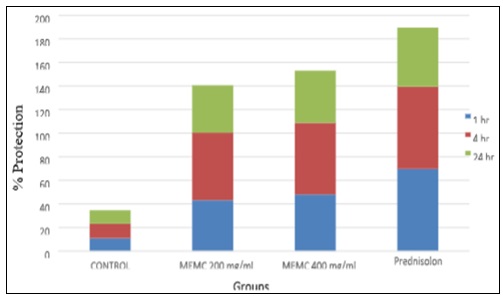
FIG 3: % PROTECTION OF MORINDA CITRIFOLIA FRUIT EXTRACT AGAINST HISTAMINE INDUCED BRONCHOCONSTRICTION
Milk Induced Leukocytosis and Eosinophilia:
TABLE 2: EFFECT OF MORINDA CITRIFOLIA FRUITS EXTRACT ON MILK INDUCED LEUKOCYTOSIS
| Groups | Difference in no of leukocytes before and after treatment (Cu.mm) |
| Control (Carboxy methyl cellulose) | 4100±9 |
| Morinda citrifolia methanolic extract (200 mg/kg) | 2580±8* |
| Morinda citrifolia methanolic extract (400 mg/kg) | 1280±12** |
| Standard (Dexamethasone (50 mg/kg) | 600±10 |
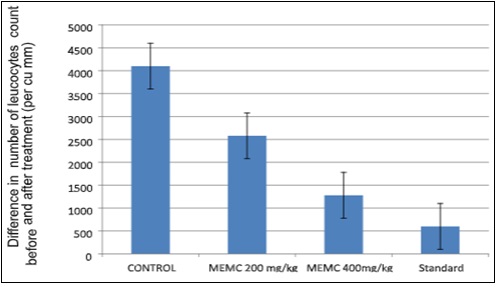
FIG. 4: EFFECT OF MORINDA CITRIFOLIA FRUITS EXTRACT ON MILK INDUCED LEUKOCYTOSIS
TABLE 3: EFFECT OF MORINDA CITRIFOLIA FRUITS EXTRACT ON MILK INDUCED EOSINOPHILS
| Groups | Difference in no of eosinophilic count before and after treatment (Cu.mm) |
| Control (Carboxy methyl cellulose) | 118±1.414 |
| Morinda citrifolia methanolic extract (200 mg/kg) | 82±1.2* |
| Morinda citrifolia methanolic extract (400 mg/kg) | 53±1.434** |
| Standard (Dexamethasone (50 mg/kg)) | 38±1.13** |
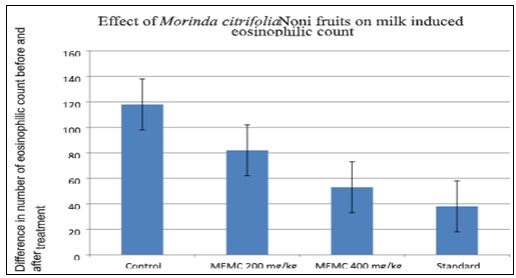
FIG. 5: EFFECT OF MORINDA CITRIFOLIA FRUITS EXTRACT ON MILK INDUCED EOSINOPHILS
Antioxidant Activity:
Hydrogen Peroxide (H₂O₂) Scavenging Assay:
TABLE 4: EFFECT OF MORINDA CITRIFIOLIA FRUIT EXTRACTON HYDROGEN PEROXIDE SCAVENGING
| Sl. no. | Concentration(µg/ml) | Absorbance [A] | % inhibition |
| 1 | 100 | 0.632±0.0005 | 17.16 |
| 2 | 200 | 0.539±0.0052 | 29.5 |
| 3 | 300 | 0.474±0.0056 | 38.04 |
| 4 | 400 | 0.414±0.0005 | 46 |
| 5 | 500 | 0.357±0.0032 | 53.3 |
| 6 | Ascorbic acid (100 µg/ml) | 0.256±0.056 | 60.23 |
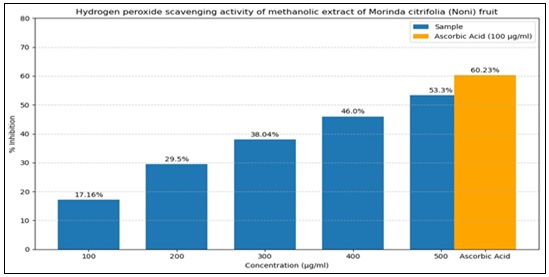
FIG. 6: EFFECT OF MORINDA CITRIFIOLIA FRUIT EXTRACT ON HYDROGEN PEROXIDE SCAVENGING
Reducing Power Assay:
TABLE 5: EFFECT OF MORINDA CITRIFIOLIA FRUIT EXTRACT ON REDUCING POWER ACTIVITY
| Sl. no. | Concentration (µg/ml) | Absorbance [A] |
| 1 | 100 | 0.782±0.32 |
| 2 | 200 | 0.891±0.21 |
| 3 | 300 | 1.3±0.35 |
| 4 | 400 | 1.4±0.42 |
| 5 | 500 | 1.56±0.82 |
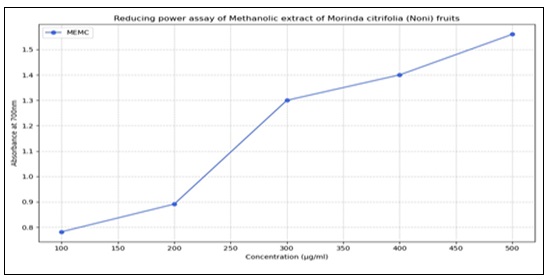
FIG. 7: EFFECT OF MORINDA CITRIFIOLIA FRUIT EXTRACT ON REDUCING POWER ACTIVITY
Anti-Inflammatory Activity:
Protein Denaturation Assay:
TABLE 6: EFFECT OF METHANOLIC EXTRACT MORINDA CITRIFIOLIA FRUIT ON PROTEIN DENATURATION
| Sl. no. | Concentration (µg/ml) | Absorbance [A] | % inhibition |
| 1 | 50 | 1.28±0.05 | 14 |
| 2 | 100 | 0.578±0.03 | 61.6 |
| 3 | 200 | 0.382±0.002 | 74.63 |
| 4 | 250 | 0.189±0.01 | 87.4 |
| 5 | 400 | 0.172±0.002 | 88.57 |
| 6 | Diclofenac sodium (100µg/ml) | 0.165±0.005 | 89.43 |
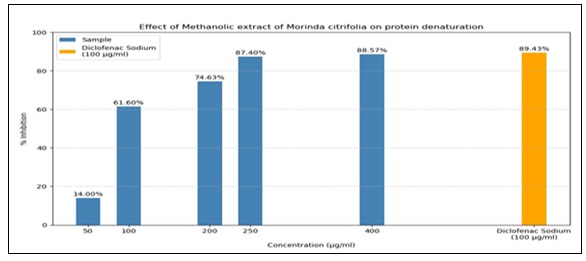
FIG. 8: EFFECT OF METHANOLIC EXTRACT OF MORINDA CITRIFIOLIA FRUIT ON PROTEIN DENATURATION
Red Blood Cell Membrane Stabilization Method:
TABLE 7: EFFECT OF MORINDA CITRIFOLIA FRUIT EXTRACT ON HYPOTONICITY INDUCED RBC MEMBRANE STABILIZATION
| Sl. no | Concentration (μg/ml) | Absorbance[A] | % Protection | % Haemolysis |
| 1 | 100 | 0.61±0.03 | 41.4 | 58.6 |
| 2 | 200 | 0.58±0.002 | 44.3 | 55.7 |
| 3 | 250 | 0.382±0.004 | 63.3 | 36.7 |
| 4 | 300 | 0.36±0.009 | 65.3 | 34.7 |
| 5 | 400 | 0.32±0.007 | 69.82 | 30.18 |
| 6 | Diclofenac sodium (100 μg/ml) | 0.34±0.008 | 66.75 | 33.25 |
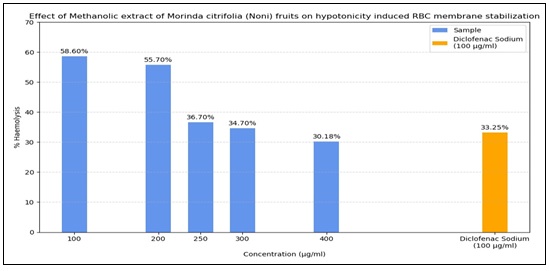
FIG. 9: EFFECT OF MORINDA CITRIFOLIA FRUIT EXTRACT ON HYPOTONICITY INDUCED RBC MEMBRANE STABILIZATION
DISCUSSION: The findings of the present study provide evidence that methanolic fruit extract of Morinda citrifolia possesses significant anti asthmatic, antioxidant and anti-inflammatory potential. These activities can be correlated with the phytochemical profile of the plant, particularly phenolic compounds and flavonoids, glycosides, steroids, alkaloids which exert both neuroprotective and free radical scavenging effects.
The phenolic compounds and flavonoids are secondary metabolites in plants having antioxidant activity. They have wide range of biological activities as cardio protection, cell proliferation and anti-aging.
However, further studies are necessary to isolate the active compounds, elucidate the precise mechanisms of action, and evaluate the extract for asthma. Toxicological studies are also required to ensure the safety of long-term use.
Statistical Analysis: All results were expressed as mean ± SEM (n = 4). Statistical analysis was performed using one-way ANOVA followed by Tukey’s post hoc test. A p-value < 0.05 was considered statistically significant.
CONCLUSION: The methanolic fruit extract of Morinda citrifolia exhibits significant antioxidant and anti-asthmatic and anti-inflammatory activities in validated animal models. These properties suggest therapeutic potential in asthma disorders. Further studies are needed to isolate active constituents and elucidate underlying mechanisms.
Ethical Approval: After receiving approval from the Institutional Animal Ethics Committee (IAEC) of the Chalapathi Institute of Pharmaceutical Sciences, Guntur, all studies were carried out. The protocol of the experiment was approved by the Institutional animal ethics committee (03/IAEC/CLPT/2024-25). All animal experimental procedures were in compliance with the rules of the committee for the supervision and regulation of animal experiments (CCSEA), ministry of social justice and empowerment, Government of India.
ACKNOWLEDGEMENTS: The authors are deeply grateful to Chalapathi Institute of Pharmaceutical Sciences for providing facilities to research guide Asiya Begum and Nadendla Rama Rao for their great support.
CONFLICT OF INTEREST: Nil
REFERENCES:
- Barnes PJ: Immunology of asthma and chronic obstructive pulmonary disease. Nat Rev Immunol 2008; 8(3): 183-192.
- Global Initiative for Asthma (GINA). Global Strategy for Asthma Management and Prevention 2024.
- Fahy JV: Type 2 inflammation in asthma-present in most, absent in many. Nat Rev Immunol 2015; 15(1): 57-65.
- Ruslan Medzhitov R: Origin and physiological roles of inflammation. Nature 2008; 454(7203): 428-435.
- Mittal M, Siddiqui MR, Tran K, Reddy SP and Malik AB: Reactive oxygen species in inflammation and tissue injury. Antioxid Redox Signal 2014; 20(7): 1126-1167.
- Reuter S, Gupta SC, Chaturvedi MM and Aggarwal BB: Oxidative stress, inflammation, and cancer: How are they linked? Free Radic Biol Med 2010; 49(11): 1603-1616.
- Mohammad Ali, Mruthunjaya Kenganora and Santhepete Nanjundaiah Manjula: Health Benfits of Morinda citrifolia (Noni) Pharmacognosy Journal 2016; 8(4): 321-334.
- Allen WH and London C: Some information on the Ethnobotanical properties of Noni (Morinda citrifolia) In: the useful plants of India 1873.
- Sri Rezeki, Sunnati and Nadia Vidirachmilla: The Effect of Noni Leaves Extract (Morinda citrifolia L) on Wound Healing Percentage of Traumatic Ulcer in Oral Mucosa of Wistar Rats by in-vivo.
- Jacobsen EA, Taranova AG, Lee NA and Lee JJ: Eosinophils: singularly destructive effector cells or purveyors of immunoregulation? J Allergy Clin Immunol 2007; 119(6): 1313-1320.
- Sangita Chandra, Protapadiya Dey and Sanjib Bhattacharya: Preliminary in-vitro assessment of anti-inflammatory property of Mikania scandens flower extract. Journal of Advanced Pharmacy Education and Research 2012; 2(1); 25-31.
- Wang MY, West BJ, Jensen CJ, Nowicki D, SU C and Palu AK: Morinda citrifolia (Noni): a literature review and recent advances in Noni research. Acta Pharmacol Sin 2002; 23(12): 1127-1141.
- Kulkarni SK: Handbook of Experimental Pharmacology, Ed 3rd New Delhi: Vallabh Prakashan 2005.
- Ghosh MN: Fundamentals of Experimental Pharmacology, 5th ed. Kolkata: Scientific Book Agency 2011.
- Kshirsagar AD, Mohite R, Aggrawal AS and Suralkar UR: Effect of corilagin on milk-induced leukocytosis and eosinophilia in mice. Int J Green Pharm 2010; 4(2): 124-128.
- Bhalke RD: Effect of Abrus precatorius leaves on milk-induced leukocytosis and eosinophilia. Asian Pac J Trop Biomed 2011.
- Ali M, Kenganora M & Manjula SN: Health benefits of Morinda citrifolia (Noni): A review. Pharmacognosy Journal 2016; 8(4): 321-334.
- Potterat O & Hamburger M: Morinda citrifolia (Noni) fruit-Phytochemistry, pharmacology, safety. Planta Medica 2015; 81(7): 575-585.
- Deng S, West BJ & Jensen CJ: A quantitative comparision of phytochemical components in global noni fruits and their commercial products. Food Chemistry 2018; 221, 623-628.
- Harborne JB: Phytochemical Methods: A Guide to Modern Techniques of Plant Analysis. 3rd ed. London: Chapman & Hall 1998.
- International Journal of Pharmacology. Milk-induced leukocytosis model description.
- Ruch RJ, Cheng SJ and Klaunig JE: Prevention of cytotoxicity and inhibition of intercellular communication by antioxidant catechins isolated from Chinese green tea. Carcinogenesis 1989; 10(6): 1003-1008.
- Oyaizu M: Studies on products of browning reactions: antioxidative activities of products of browning reaction prepared from glucosamine. JPN J Nutr 1986; 44(6): 307-315.
- Brett J. West, Jensen CJ and Westendorf J: Noni Juice is not hepatotoxic. World J Gastroenterol 2006; 12(22): 3616-3619.
- Su BN, Pawlus AD, Jung HA, Keller WJ, McLaughlin JL and Kinghorn AD: Chemical constituents of the fruits of Morinda citrifolia and their antioxidant activity. J Nat Prod 2005; 68(4): 592-595.
- Shinde UA, Phadke AS, Nair AM, Mungantiwar AA, Dikshit VJ and Saraf VO: Membrane stabilizing activity-a possible mechanism of action for anti-inflammatory activity. Fitoterapia 1999; 70(3): 251-257.
- A. Winter, Risley EA and Nuss GW: Carrageenin-induced edema in hind paw of the rat as an assay for anti-inflammatory drugs. Proc Soc Exp Biol Med 1962; 111: 544-547.
- Halliwell B and Gutteridge JMC: Free Radicals in Biology and Medicine. Ed 4th Oxford: Oxford University Press; 2007.
- Campos DC, Costa AS, Luz PB, Soares PM, Alencar NM & Oliveira HD: Morinda citrifolialipid transfer protein 1 exhibits anti-inflammatory activity by modulation of pro-and anti-inflammatory cytokines. International Journal of Biological Macromolecules 2017; 103: 1121-1129.
- Palu AK, Kim AH, West BJ, Deng S, Jensen J & White L: The effects of noni (Morinda citrifolia) fruit juice on antioxidant status and inflammation biomarks. Journal of Medicinal Food 2017; 11(2): 147-152.
How to cite this article:
Burramsetty S, Begum A and Nadendla RR: Pharmacological evaluation of the methanolic extract of Morinda citrifolia fruit for anti asthmatic, anti oxidant and anti- inflammatory activities. Int J Pharmacognosy 2026; 13(7): 696-04. doi link: http://dx.doi.org/10.13040/IJPSR.0975-8232.IJP.13(7).696-04.
This Journal licensed under a Creative Commons Attribution-Non-commercial-Share Alike 3.0 Unported License.
Article Information
9
696-704
967 KB
181
English
IJP
Sravanthika Burramsetty *, Asiya Begum and Rama Rao Nadendla
Department of Pharmacology, Chalapathi Institute of Pharmaceutical Sciences, Lam, Guntur, Andhra Pradesh, India.
sravanthika2002@gmail.com
28 May 2026
23 June 2026
29 June 2026
10.13040/IJPSR.0975-8232.IJP.13(7).696-04
01 July 2026
 Download