


MILLETS: HISTORY AND DEMAND OF THE TIME
HTML Full TextMILLETS: HISTORY AND DEMAND OF THE TIME
Rahul Pant * and Pankaj Prakash Verma
College of Pharmacy, SR Group of Institutions, Jhansi, Uttar Pradesh, India.
ABSTRACT: Millets are ancient small-seeded cereal crops that have sustained human populations for thousands of years, particularly in the arid and semi-arid regions of Asia and Africa. This review highlights the historical importance, domestication, cultural relevance, agro-biodiversity, nutritional value, and contemporary significance of millets and pseudo-millets in food systems. Millets are recognized for their drought tolerance, climate resilience, and suitability for low-input agricultural systems, making them valuable crops under changing environmental conditions. The review also discusses their superior nutritional profile, including dietary fibre, essential minerals, bioactive compounds, and low glycemic index, which support their role in addressing malnutrition, hidden hunger, and lifestyle-related disorders. In addition, the article examines the applications of millets in food technology and nutraceutical product development, such as bakery products, fermented foods, gluten-free formulations, dietary supplements, and fortified foods. Policy support, value-chain development, and renewed global attention, especially during the International Year of Millets 2023, have further strengthened the relevance of these crops. Overall, the review emphasizes that millets represent not only a link to traditional agriculture and culture but also a promising pathway toward sustainable, nutritious, and climate-resilient food systems.
Keywords: Millets, Pseudo-millets, Nutraceuticals, Finger millet (Ragi), Pearl millet (Bajra), Sorghum (Jowar)
INTRODUCTION:
History and Traditional Uses: Millets are small-seeded, drought-resistant cereal crops of the grass family. They are grown in African and Asian countries for thousands of years. They are some of the oldest domesticated crops 6.
Among the important domesticated millets are Pennisetum glaucum (pearl millet), Eleusine coracana (finger millet), Setaria italica (foxtail millet), and Panicum miliaceum (proso millet). Being drought-resistant crops, millets are of prime importance in the drylands of the Afro-Asian countries with marginal or low rainfall, even when crops like wheat and rice are not easy 1.
Archaeobotanical evidence revealed that millets were significant ancient cereals of early Indus Valley Civilization (3000–1500 BCE), and these were also extensively grown across the Yellow River Basin of China during the Neolithic period 7.
Finger millet and barnyard millet (Echinochloa spp.) were found to make significant contributions to regional agriculture before the advent of rice and wheat farming in the Indian sub-continent. Millet was found to spread extensively across East and West Africa too, where pearl millet and sorghum acted as major food cereals underpinning regional complexity 13.
Millet was found to play an important role in regional systems of food production and social life in West Africa, where pearl millet is argued to have acted as a major food cereal for greater than 4,000 years 8. Similarly, archaeological evidence found from Mediterranean and European Bronze Age regions revealed that millets had become ubiquitous throughout regions of Africa and Asia and had become significant food cereals 2.
From a botanical and agronomic point of view, millets appear well-suited for cultivation in low-input conditions and environments where stress is rife. For instance, many types of millet show high water-use efficiency, high-temperature tolerance, and short growth periods, allowing them to go through reproduction even under uncertain rainfall patterns.
It is certain, therefore, that it is such physiological capabilities that could also have enabled our ancestral farming populations to provide stable supplies of foodstuffs despite climatic in certainties.
Indeed, it is asserted by more contemporary studies on the comparative physiology of different types of food crops, such as those conducted by Hegde et al. (2023) 5, that it is possible for these types of food crops, such as millets, to continue yielding stable harvests even in stressful conditions of drought and high environmental temperatures, such as in competitiveness with cereals such as rice, wheat, and maize.
Millets also have cultural significance beyond their role as staple grains. In many societies, they form part of ritual life, seasonal festivals, and regional cuisines. For instance, finger millet in Karnataka and Tamil Nadu is processed into a variety of foods porridges, fermented products, sweets, beverages, among others and forms a kind of cultural narrative around health, vitality, and longevity 10. In parts of both West and East Africa, sorghum and pearl millet are staples in everyday and ceremonial foods and act as markers of cultural identity while providing significant dietary energy and micronutrients 16.
Nutritionally millets can often be distinguished from major cereals with respect to their content of dietary fibers as well as a variety of micronutrients, besides providing some contributions to important amino acids and B vitamins. Millets also provide some significant contributions to essential minerals like iron, calcium, and magnesium 22.
All of these factors explain why millets have typically acted as staple foods of communities where such micronutrient deficiencies already exist. Recent research focused on investigating the nutritional value of millets has further underlined developing millet-based diets to “treat the crisis of hidden hunger,” for deficiencies of iron and calcium being persistent public health issues 14.
The Green Revolution of the 1960s and 1970s transformed India's cropping pattern by promoting high-yielding wheat and rice varieties. While this transformation enhanced national calorie security, this also was constituted by a significant decline in millet cultivation and consumption, alongside a decline in agrobiodiversity and dietary diversity in general remind us.
Policy incentives further calcified this trend: procurement systems and public distribution mechanisms were largely oriented around rice and wheat, thereby eclipsing market visibility and farm-level incentives for millet crops that had long been produced by smallholders in India's vast rainfed areas.
More recently, millets have again entered policy and public discourses because of their climate resilience, nutritional value, and cultural resonance. To be sure, India's celebration of 2018 as the National Year of Millets and its leadership in the process that ultimately led the United Nations General Assembly to declare 2023 the International Year of Millets reflect this renewed positioning of millets in contemporary food-system strategies 2, 4.
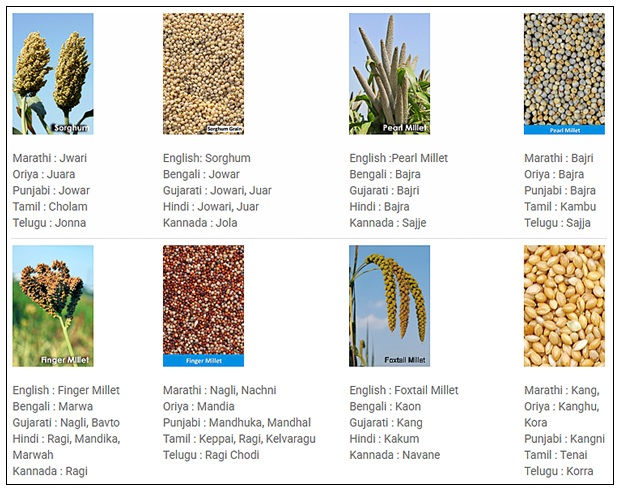
FIG. 1: DIFFERENT TYPE OF MILLETS USED IN INDIA
Millets in Historical Agriculture and Human Diets:
Domestication and Spread: Millets are among the earliest domesticated crops in the world. Archaeobotanical studies have traced evidence of foxtail and proso millet cultivation to China's Yellow River basin as early as 6000 BP. This underlines their importance regarding the origins of agriculture. Similarly, in the Indian subcontinent, millets such as finger millet, barnyard millet, and little millet appear in archaeological contexts that predate the widespread cultivation of rice. This suggests a deep history in South Asian agro-ecosystems. For example, pearl millet was domesticated in the West African Sahel and became a staple for Neolithic pastoralist and farming communities.
Cultural Embeddedness: Historical studies prove that millets were not just sources of food but also played an important role in shaping culture and religious activities. Research on ancient Telugu and Karnataka cultures indicates that finger millet, also called ragi, was related to rites and seasonal celebrations. This points to the fact that there is an important link between agriculture and culture. In Africa, pearl millet continues to be an important part of cultural practices and has influenced marriage and seasonal celebrations. This has been documented in the literature on culture and food history 16.
Millets and Agrobiodiversity:
Genetic Diversity: Millets possess a remarkable level of genetic diversity that has significant impacts on breeding adaptive traits. Recent genomic studies on finger millet and pearl millet reveal a considerable amount of allelic diversity associated with drought tolerance and micronutrient content 20. These studies emphasize the need to retain traditional landraces, usually preserved by smallholder farming communities, for future crop resilience.
Agroecological Roles: Studies about agroecological systems indicate that using millets aids in crop diversification. Diversification stores up crops and minimizes pests in rain-fed farming systems 5. Mixed cropping systems of legumes and millets have been proven to enhance fertility and reduce erosion in dry land farming, both in India and East Africa.
Nutritional Value and Human Health:
Macronutrients and Micronutrients: Nutritional studies show that many nutritional studies confirm the nutritional potential of millets as they are rich in nutrients and also a source of calories. For example, iron and zinc concentrations are much higher in pearl millets than in other cereal grains. They can be used to reduce the risk of anemia 12, 20, 22. Finger millets are very rich in plant-available calcium. The nutritional intervention studies also show the potential for the management of diabetes through millets because they can improve glycemic index levels.
TABLE 1: NUTRITIVE VALUES OF DIFFERENT TYPE OF MILLETS
| Millet (common name) | Protein
(g/100g) |
Fiber (g/100g) | Minerals (g/100g) | Iron
(mg/100g) |
Calcium
(mg/100g) |
| Barnyard millet | 11.2 | 10.1 | 4.4 | 15.2 | 11 |
| Brown top millet | 11.5 | 12.5 | 4.2 | 0.65 | 0.01 |
| Finger millet (Ragi) | 7.3 | 3.6 | 2.7 | 3.9 | 344 |
| Foxtail millet | 12.3 | 8 | 3.3 | 2.8 | 31 |
| Kodo millet | 8.3 | 9 | 2.6 | 0.5 | 27 |
| Little millet | 7.7 | 7.6 | 1.5 | 9.3 | 17 |
| Pearl millet (Bajra) | 10.6 | 1.3 | 2.3 | 16.9 | 38 |
| Proso millet | 12.5 | 2.2 | 1.9 | 0.8 | 14 |
| Sorghum (Jowar) | 10 | 4 | 1.6 | 2.6 | 54 |
Source: https://www.millets.res.in/millets_info.php
Functional Properties: In addition to basic nutrition, there is now emerging research on millet-based bioactive compounds, polyphenols, dietary fiber fractions, and antioxidants, which have beneficial efficacy for heart and gastrointestinal well-being 14, 21. These beneficial attributes show potential for developing health-focused food products.
Food Distribution, Value Chains, and Policy:
Market Integration: Though millets have linkages for local demand, their linkages at the national or global value chain level are less prominent compared to rice and wheat. A study conducted on Indian public distribution systems (PDS) found that adding millets to public distribution systems will increase food security 11. A study carried out on markets for millets in Africa found the need to enhance post-harvest management, from clean threshing to storage, to enhance the value chain for millets and minimize loss of millets.
Policy Support: Other studies are specific to specific policies, revealing the role of such policies in enhancing production and consumption of millet. For instance, studies on Millet Mission and its purchase policies adopted by India during its International Year of Millets (2023) can provide lessons for other countries on how to promote MMs in national food systems 2. These studies also link MMs to national nutrition targets, diversity of agriculture, and response measures to climate change.
Millets and Pseudo Millets in the Daily Diet: Millets and pseudo millets are becoming widely known for their nutritional value. The use of millets has become widely recognized, especially for their nutritional value in our food products. These millets were traditionally cultivated in Asia and Africa, but they have gained acceptance in relation to their role in food science and technology.
Definition and Classification:
True Millets: Millets are small-seeded grasses cultivated for fodder and food. More commonly, they are found in arid and semi-arid regions. Common varieties include pearl millet, or Pennisetum glaucum; finger millet or Eleusine coracana; foxtail millet or Setaria italica; and little millet or Panicum sumatrense. These grains are categorized as true cereals.
Pseudo Millets: Pseudo millets have similar uses and nutritional values, although these crops do not belong to the family Poaceae (grass family). The common pseudo millets used are amaranth, buckwheat, and quinoa. They have been called pseudo-cereals because of their use and composition, which is similar to that of cereals.
Nutritional and Functional Properties: They are rich in nutrients, gluten-free, and good sources of dietary fiber; they also contain minerals, including iron, calcium, and magnesium. In addition, this millet and pseudo millet crops contain essential amino acids and bioactive compounds, including polyphenols and flavonoids. For example, finger millet contains a significant amount of calcium, amounting to as much as 344 mg/100g. Pseudo millets, such as quinoa, contain a balanced amino acid profile and a high concentration of the amino acid lysine 24.
These kinds of grains also have low glycemic indices, making them ideal for consumption by those suffering from diabetes and heart-related conditions. They also contain antioxidants that assist in protecting against chronic diseases, mainly by controlling inflammation and oxidative stress 23.
Applications in Food Technology: The millets and pseudo millets form the base for preparation of different functional and health foods like:
Bakery Products: Composite flours from finger millet, foxtail millet, and quinoa make bread, cookies, and muffins more nutritious.
Fermented Foods: Millets are good substrates for various traditional and novel fermented products, such as dosa, idli, and probiotic beverages.
Extruded Snacks: Their starch composition helps with puffing and texturization, thereby making it appropriate for ready-to-eat products.
Gluten-free Products: Pseudo millets like amaranth and buckwheat play a crucial role in gluten-free recipes.
Applications of Millets in Nutraceutical Products: Due to the growing demand for functional foods/nutraceuticals, millets have gained attention as a key option to improve healthy foods since they possess strong bioactive compounds, are gluten-free, and can be transformed using various processes. These qualities make millets critical inputs for the development of value-added nutraceuticals to manage metabolic disorders.
Functional Flours & Mixes: Composite flours containing millet are marketed as diabetic baking products, protein-enriching flours, and high-fiber-containing flours.
Examples: Finger millet flour blends for low glycemic index rotis or porridges, multigrain blends, etc.
Fermented Nutraceutical Beverages: Fermented drinks prepared from millets involve the use of probiotic cultures like Lactobacillus. These products may be non-dairy probiotic drinks, functional smoothies, and millet-based symbiotic drinks, as discussed in Anukiruthika et al. (2020)
Dietary Supplements and Capsules: Extracts with high amounts of polyphenols, peptides, and resistant starch are processed into supplements. Finger millet-based polyphenolic capsule preparations have proven effective in managing blood glucose levels and lipid profiles.
High-Fiber Snack Bars and Biscuits: Nutraceutical snacks utilise millets, which increase satiety and decrease cholesterol levels. They are used in protein bars, meal replacement cookies, and anti-diabetic snacks containing millet, legume, and herbal mixtures.
Ready-to-Drink (RTD) Products: Pearl millet and sorghum grains are used as ingredients in RTD forms of energy drinks, which are used as supplements due to their slow-digesting carbohydrates and electrolyte content.
Nutraceutical Porridges and Infant Formulas: Fortified millet porridge is being developed for nutritional supplements for infants, the elderly, and for clinical nutrition by virtue of its high bioavailability of calcium, iron, and protein.
CONCLUSION: Traditionally, millets were an integral part of central as well as traditional agriculture systems. Today, they once again find an important place as an integral part of a robust and diverse food system. Being able to thrive in challenging climatic conditions, as well as being good from a nutritional as well as cultural point of view, makes millets an important part of modern food security and public health. The biological diversity of millets makes them an important tool in the development of climate-resilient as well as nutrient-rich food varieties, which would become even more important in the face of environmental challenges. In terms of food technology, millets as well as pseudo millets find an important place as part of potential foods and supplements with positive implications for health. Similarly, policies and interventions like India’s Millet Mission and global support during the UN-designated International Year of Millets (2023) speak to the rising awareness about these crops. Moving further and ensuring these crops are integrated into value chains and ensuring better procurement mechanisms, as well as enhanced awareness and knowledge regarding processing techniques and nutrient as well as consumer acceptance, would also enhance the contribution these crops make to sustainable and consumer-centric nutrition. In all these respects, the introduction and reintroduction of millets and pseudo-millets to our food plate do not just signal a trip back into our past. Rather, it speaks to a highly sustainable food future.
ACKNOWLEDGEMENT: Nil
CONFLICT OF INTEREST: Nil
REFERENCES:
- Dwivedi SL: Millets: Genetic and Genomic Resources. Annual Review of Plant Biology 2021.
- FAO, IFAD, UNICEF, WFP & WHO: The State of Food Security and Nutrition in the World 2023. FAO Report 2023.
- Fuller DQ: The Spread of Agriculture into Europe. Current Anthropology 2018.
- Government of India. National Year of Millets Policy Report 2018.
- Hegde SG: Climate Resilience Traits in Millets. Plant Physiology 2023.
- Kumar A: Millets for Sustainable Futures. Journal of Cereal Science 2020.
- Li X: Archaeobotanical Evidence of Millet Domestication. Nature Ecology & Evolution 2022.
- Massawe FJ: Millets in Africa: Nutritional and Cultural Contexts. Food Security 2016.
- Muralikrishna G: Millets in Value Chains. Food Policy 2022.
- Patil H: Cultural Significance of Finger Millet in South India. Journal of Ethnobotany 2021.
- Rao S & Mishra A: Millets and India’s Food Policy. Agricultural Systems 2020.
- Saleh AS: Nutritional Profile of Millets. Food Science & Nutrition 2020.
- Seetharam A: Millet Agriculture in Africa and Asia. Crop Science 2019.
- Shobana S: Millets and Micronutrient Deficiencies. Journal of Nutrition 2022.
- Smith P: Climate Smart Crops and Food Security. Environmental Research Letters 2024.
- Taylor JRN & Qamar M: Traditional Foods and Food Culture in Africa. Journal of African Food Studies 2022.
- Velu G: Policy Dimensions for Millets Scale up. World Development 2021.
- Sharma S: Millets in Ayurveda: A Traditional Viewpoint. Journal of Traditional Medicine 2022.
- Patil R & Sawant V: Ayurvedic and Functional Properties of Minor Millets. AYU Journal 2023.
- Gupta P & Bhandari A: Therapeutic Classification of Millets in Classical Ayurvedic Texts. Journal of Ayurveda and Holistic Health 2023.
- Shobana S & Malleshi N: Nutritional and Functional Roles of Millets. Journal of Food Science and Nutrition 2022.
- Saleh ASM: Millet Grains: Nutritional Quality, Processing, and Potential Health Benefits. Food Reviews International 2020.
- Devi PB, Vijayabharathi R, Sathyabama S, Malleshi NG & Priyadarisini VB: Health benefits of finger millet (Eleusine coracana L.) polyphenols and dietary fibre: a review. Journal of Food Science and Technology 2014; 51(6): 1021–1040. https://doi.org/10.1007/s13197-011-0584-9
- Rai KN, Gupta SK & Radhika K: Millets: Climate-resilient and nutritious foods for combating hunger and malnutrition. Indian Journal of Genetics and Plant Breeding 2021; 81(2): 119–127.
- Srivastava S, Singh N & Mishra A: Millets in gluten-free baking: A review. Trends in Food Science & Technology 2020; 97: 289–303.
How to cite this article:
Pant R and Verma PP: Millets: history and demand of the time. Int J Pharmacognosy 2026; 13(2): 74-79. doi link: http://dx.doi.org/10.13040/IJPSR.0975-8232.IJP.13(2).74-79.
This Journal licensed under a Creative Commons Attribution-Non-commercial-Share Alike 3.0 Unported License.
Article Information
3
74-79
754 KB
233
English
IJP
Rahul Pant * and Pankaj Prakash Verma
College of Pharmacy, SR Group of Institutions, Jhansi, Uttar Pradesh, India.
rahulpant18@gmail.com
27 December 2025
28 January 2026
29 January 2026
10.13040/IJPSR.0975-8232.IJP.13(2).74-79
28 February 2026
 Download