



FORMULATION AND EVALUATION OF HERBAL MOSQUITO REPELLENT CREAM
HTML Full TextFORMULATION AND EVALUATION OF HERBAL MOSQUITO REPELLENT CREAM
Rathod Durga, Pote Fatteshwar *, Dukare Gayatri, Pandey Harshdeep and Ghulaxe Chetan
P. R. Patil Institute of Pharmacy, Talegaon, Ashti, Wardha, Maharashtra, India.
ABSTRACT: Herbal mosquito repellents are natural products designed to repel mosquitoes and other biting insects. They are made from plant-based ingredients, including essential oils, herbs, and other botanical extracts. Mosquito-borne diseases, including malaria, dengue, and Zika, constitute a formidable global health challenge, resulting in approximately 750,000 fatalities annually. This study aims to address this issue by formulating a plant-based mosquito repellent that prioritizes human safety and environmental sustainability. Citronella oil, thuja oil, lemongrass oil, rosemery oil renowned for its distinctive aroma, owes its insect-repellent properties to a combination of key constituents, including citronellal, eugenol, geraniol, and limonene. We used steam distillation and Clavanger apparatus for the extraction of oils. Three formulations, F1, F5 and F6, were developed with varying concentrations of these oils along with other excipients such as Bees wax, Glycerine, Cetyl alcohol, and Distilled water. The preparation involved separate heating and mixing of oil and water phases, followed by their combination to form a consistent cream. The study highlights the potential of natural oils in creating effective and skin-friendly mosquito repellent products. The prepared cream was evaluated for physicochemical parameters, stability, skin irritation, and mosquito repellent activity. The formulation showed good spreadability, skin compatibility, and effective mosquito repellency for up to 3–4 hours.
Keywords: Repellent activity, Cymbopogon nardus, Spreadability, Lemongrass oil, Skin-friendly
INTRODUCTION: Herbal mosquito repellents are natural products designed to repel mosquitoes and other biting insects. They are made from plant-based ingredients, including essential oils, herbs, and other botanical extracts. Mosquito-borne diseases, including malaria, dengue, and Zika, constitute a formidable global health challenge, resulting in approximately 750,000 fatalities annually. The expanding geographical range of mosquito species, exacerbated by climate change, is anticipated to further escalate the incidence of these diseases 1.
Mosquitoes are particularly attracted to humans due to carbon dioxide and lactic acid emissions, which are detected by specialized chemoreceptors located on the insect's antennae 2. This study aims to address this issue by formulating a plant-based mosquito repellent that prioritizes human safety and environmental sustainability. Citronella oil, Thuja oil, Lemongrass oil, renowned for its distinctive aroma, owes its insect-repellent properties to a combination of key constituents, including citronellal, eugenol, geraniol, and limonene 3.
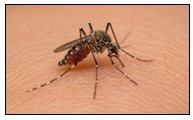
FIG. 1: REPRESENTATIVE IMAGE OF MOSQUITO
Citronella Oil: It is obtained by steam distillation from the fresh leaves of Cymbopogon nardus (Linn.) Rendle, family-Graminae. It is probably indigenous to Shri Lanka and cultivated in Myanmar, Malaysia, Indonesia, Fiji and Sri Lanka. In India, it is cultivated in Kerala. It is tall perennial, throwing dense fascicles of leaves from a short rhizome. The plant is quite stoul, erect, about 1.75 metres in height 4. The leaves are linear and tapering, upto 60-70 cm long, glabrous green and lower ribs are red in colour. Flowers are atheate panicles, 30-50 cm long and nodding. The grass has pleasant aromatic smell. It is cultivated by vegetative propagation from slips or even by sowing seeds. It needs to be irrigated regularly during winter and summer. The crop is ready for harvesting after eight months of growth. It can be harvested several times with regular intervals. About 20 tonnes of grass can be obtained in a hectare. The grass contains 0.4 to 0.5 per cent of volatile oil, with an average yield of 90 kg of oil per hectare. The oil is pale-greenish yellow in colour with pungent taste. It is insoluble in water, soluble in 80 per cent alcohol (1:10) and also in fixed oils 5.
Lemongrass Oil: The lemon grass oil is a volatile oil obtained by steam distillation from the leaves and parts of the plants Cymbopogon flexuous or Cymbopogon citratis, etc. belonging to family Graminae. It contains not less than 75 per cent of aldehyde calculated as citral. It is indigenous to India and found wild, as well as, cultivated throughout India 6.
It occurs in West Africa, Guatemala and East Africa. In India, it is grown in Kerala, Tamil Nadu, Karnataka, and Maharashtra. The West Indian lemon grass oil is derived from Cymbopogon citrates. This is mainly collected from plants grown in Gujarat, Maharashtra and Punjab. India produces about 900 tonnes oil per year. There is stiff competition from Guatemala in the trade of oil. Indian export of lemon-grass oil during 1995-96 & 96-97 was to the tune of 180 & 234 lakhs respectively 8.
Thuja Oil: The essential oil of Thuja orientalis, obtained from the leaves and branchlets was used as an anti-rheumatic, astringent, diuretically, emmenagogue, expectorant, insect repellent, rub-facing, stimulant and vermifuge substance 9. It belongs to Family Cupressaceae.
The main components of essential oil of Thuja were found to be α-humulene, α-pinene, sabinene limoneme, α-terpinolene, α-terpinyl acetate and cedrol. Thuja oil consists of thujone, which has theoretically poisonous characteristics and was premeditated for its antagonistic receptor GABA (с-amino butyric acid). Thuja's essential oil toxicity kills larvae that might have infested the organization due to the presence of thujone. Biochemical ingredients of Thuja orientalis like flavonoids and terpenoids have shown the natural accomplishments 10.
The oil of Thuja herbs compels the 5α-reductase activities. Thuja oil is added to creams and lotions to repel mosquitoes due to its insect-repelling properties. Thuja oil is used in ointments for treating wits, skin tags, and other skin issues. Thuja oil is used in diffusers for its fresh, woody scent and potential respiratory benefits 11.
Rosemary Oil: It is the volatile oil obtained from fresh flowering tops of the plant Rosmarinus officinalise family Labiatae. India Rosemary is indigenous to South Europe and South Asia. It is cultivated in Mediterranean basin and India 12. Rosemary is an evergreen plant Fig. 1 about 2 metres in height. It bears blue coloured racemes. The leaves of the plant are about 2.5 cm tall. It is cultivated in gardens and on slopes. Its cultivation is found successful on light calcarious soil. It is cultivated by sowing the seeds or with slips. After flowering, the plants are cut about 10 cm above the ground and steam distilled 13.
TABLE 1: COMPARATIVE PROFILE OF CITRONELLA OIL, LEMONGRASS OIL, AND THUJA OIL USED IN THE FORMULATION
| Feature | Citronella Oil | Lemon Grass Oil | Thuja Oil |
| Botanical Source | Cymbopogon nardus | Cymbopogon flexuosus | Thuja occidentalis |
| Mechanism of Action | Disrupts cell membrane permeability and potential. | Penetrates microbial cell membranes. | Penetrates and disrupts cell membranes. |
| Anti-inflammatory14 | Inhibits COX and LOX pathways; reduces prostaglandins. | Suppresses COX-2 and LOX pathways. | Inhibits inflammatory mediators like leukotrienes. |
| Microbial Impact15 | Leads to loss of intracellular ions and proteins. | Causes leakage of ions (Na, K) and cell death | Causes leakage of intracellular content and cell death. |
| Antioxidant16 | Scavenges reactive oxygen species (ROS). Inhibit lipid peroxidation. | Scavenges free radicals.
Prevent lipid peroxidation. |
Scavenges free radicals and prevents lipid peroxidation. |
| Insect Repellent17,18 | Nervous system distruption citronella interacts with octopamine receptors (in insects) | Acts on octopamine receptors. Cause Nervous system distruption. Leads to paralysis and insect death. | Neuro sensory interference. Thuja is a neuroactive monoterpenes. Cause sensory irritation. |
The aim of the study is to address issue by formulating a plant-based mosquito repellent that prioritizes human safety and environmental sustainability. To formulate a stable herbal mosquito repellent cream using natural essential oils such as: Cymbopogon nardus (Citronella oil) Cymbopogon citratus (Lemongrass oil) Thuja occidentalis (Thuja oil) Salvia rosmarinus (Rosemary oil).
To develop a safe and skin-friendly formulation using suitable emulsifying agents and excipients. To assess mosquito repellent activity of the formulation against common mosquito species under laboratory conditions. To ensure safety and non-irritancy through skin irritation testing.
METHODS AND MATERIALS:
Material:
- Citronella Oil (extracted in lab)
- Lemongrass Oil (extracted in lab)
- Thuja Oil 19 (ordered from amazon.com)
- Rosemary Oil 20 (issue from lab)
Excipients:
- Beeswax
- Cetyl Alcohol
- Liquid Paraffin
- Methyl Paraben
- Citric Acid
- Distilled Water
Extractions Method of Plant Material: The Clevenger apparatus is designed for volatile oil extraction via hydrodistillation, using a round-bottom flask, condenser, and graduated trap to separate essential oils from plant matter by density. It operates by boiling plant material in water, condensing the vapor, and collecting the oil, which floats on the water and returns to the flask 19. Place the fresh or dried citronella leaves and lemongrass leaves (e.g., 100g–110g) into a 500mltow different round-bottom flask. Add distilled water to the flask (typically 200–250 mL), ensuring the material is fully immersed to avoid scorching. Connect the flask to the Clevenger trap and attach a condenser on top. Secure all joints with clips to prevent vapor leaks. Heat the mixture using a heating mantle. Steam carries the volatile compounds into the condenser, where they liquefy and drop into the trap. The mixture in the trap separates into a water layer and a lighter or heavier oil layer. The water continuously flows back into the flask. Continue distillation for 1–3 hours or until no more oil collects in the graduation tube 21, 22.
Citronella Leaves: 100 g plant material (citronella leaves). 500ml distilled water.
Experimental Procedure: Time 3 to 4 hour. Oil obtained 0.5 – 1ml (approx.)
TABLE 2: YIELD OF CITRONELLA OIL OBTAINED FROM DIFFERENT QUANTITIES OF LEAVES
| Leaves used | Oil obtained |
| 100 g | 0.5 -1.2 g |
| 500 g | 2.5 -6 g |
| 1 kg | 5 -12 g |
Lemongrass Leaves: 100g plant material (Lemongrass leaves). 500ml distilled water
Experimental Procedure: Time 3 to 4 hour. Oil obtained 0.8 – 1.5ml (approx.)
TABLE 3: YIELD OF LEMONGRASS OIL OBTAINED FROM DIFFERENT QUANTITIES OF LEAVES
| Leaves used | Oil obtained |
| 100 g | 0.8 – 1.5g |
| 500 g | 4 – 7.5g |
| 1 kg | 8-15g |
Formulation Process 23:
Oil Phase Preparation: Take bees wax, cetyl alcohol, methyl paraben and liquid paraffin in a beaker.
Heat at ~70 C until completely melted.
Aqueous Phase Preparation: Take a purified water in another beaker. Heat to same temperature.
Emulsification: Add oil phase slowly into aqueous phase. Stir continuously until uniform cream forms.
TABLE 4: COMPOSITION OF DIFFERENT CREAM FORMULATIONS (C1–C7) FOR OPTIMIZATION OF HERBAL MOSQUITO REPELLENT CREAM
| Formulation | Propertise | C1 | C2 | C3 | C4 | C5 | C6 | & 7 |
| Bees Wax | Thinking agent | 7.5 | 10 | 12 | 6 | 5 | 7 | 5.5 |
| Cetyl Alcohol (g) | emulsifier | 2.5 | 3 | 3 | 2 | 1.5 | 2.5 | 2 |
| Liquid Paraffin (ml) | Work as emollient | 25 | 22 | 20 | 27 | 23 | 30 | 24 |
| Methyl paraben (ml) | preservative | 4.0 | 3.4 | 3.0 | 4.5 | 4.3 | 4.2 | 4.6 |
| Water (ml) | Aqueous phase | 15 | 12 | 10 | 18 | 20 | 12 | 22 |
TABLE 5: FORMULATIONS OF SINGLE-OIL CREAMS
| Citronella | Lemongrass | Thuja | |||
| Ingredients | Quantity | Ingredients | Quantity | Ingredients | Quantity |
| Citronella oil | 22 drops | Lemongrass oil | 12 drops | Thuja oil | 3 drops |
| Bees wax | 7g | Bees wax | 7g | Bees wax | 7g |
| Cetyl alcohol | 2.5g | Cetyl alcohol | 2.5g | Cetyl alcohol | 2.5g |
| Liquid paraffine | 30ml | Liquid paraffine | 30ml | Liquid paraffine | 30ml |
| methylparaben | 4.2ml | methylparaben | 4.2ml | methylparaben | 4.2ml |
| Distilled water | 12ml | Distilled water | 12ml | Distilled water | 12ml |
TABLE 6: FORMULATIONS OF TWO-OIL COMBINATION CREAMS
| Citronella + Lemon | Lemongrass + Thuja | Citronella + Thuja | |||
| Ingredient | Quantity | Ingredient | Quantity | Ingredient | Quantity |
| Citronella oil | 22 drops | Lemongrass oil | 12 drops | Citronella oil | 22 drops |
| Lemongrass oil | 12 drops | Thuja oil | 3 drops | Thuja oil | 3 drops |
| Rosemary | 5 drops | Rosemary | 5 drops | Rosemary | 5 drops |
| Bees wax | 7g | Bees wax | 7g | Bees wax | 7g |
| Cetyl alcohol | 2.5g | Cetyl alcohol | 2.5g | Cetyl alcohol | 2.5g |
| Liquid paraffine | 30ml | Liquid paraffine | 30ml | Liquid paraffine | 30ml |
| methylparaben | 4.2ml | methylparaben | 4.2ml | methylparaben | 4.2ml |
| Distilled water | 12ml | Distilled water | 12ml | Distilled water | 12ml |
TABLE 7: FORMULATION OF FOUR-OIL COMBINATION CREAM
| Citronella + Lemongrass + Thuja | |
| Ingredient | Quantity |
| Citronella oil | 8 drops |
| Lemongrass oil | 6 drops |
| Thuja oil | 3 drops |
| Rosemary | 5 drops |
| Bees wax | 7g |
| Cetyl alcohol | 2.5g |
| Liquid paraffine | 30ml |
| methylparaben | 4.2ml |
| Distilled water | 12ml |
All of the above tables are formulated according to C6 optimise batch formula.
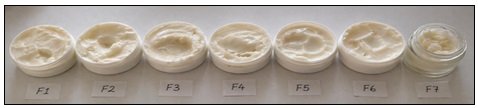
FIG. 2: DIFFERENT FORMULATIONS OF HERBAL MOSQUITO REPELLENT CREAM
Evaluation Parameter:
- Organoleptic Properties
- PH determination
- Spreadability
- Washability test
- Microbial study
- Anti-oxidant
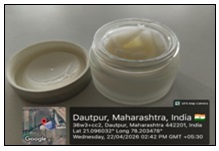
FIG. 3: PREPARED HERBAL MOSQUITO REPELLENT CREAM
TABLE 8: ORGANOLEPTIC PROPERTIES OF THE CREAM FORMULATIONS
| Sr. no | Texture | Spreadability | Greasiness | Stability |
| F1 | Creamy, soft | Good | Good | Good |
| F2 | Thick | Low | Low | Low |
| F3 | Hard /solid like | Poor | Poor | Moderate |
| F4 | Hard | Poor | Poor | Low |
| F5 | Smoothy/creamy | Good | Good | Good |
| F6 | Smooth/good | Good | Good | Very good |
| F7 | Smooth | Good | Good | Good |
pH Determination: A definite amount of cream (100mg) was weighed,dilutedin100ml distilled water, and mixed well. The pH of the cream was recorded using Digital pH Meter (Mettler Toledo). pH evaluation was carried out for all experimental formulations. The measurement was carried out in triplicate 24.
TABLE 9: pH OBSERVATIONS OF DIFFERENT CREAM FORMULATIONS
| Cream name | pH reading | Mean | ±SD | ||
| 1 | 2 | 3 | |||
| Citronella oil cream | 5.2 | 6 | 5.8 | 5.67 | ± 0.42 |
| Lemongrass oil cream | 5.43 | 5.9 | 6.3 | 5.88 | ±0.44 |
| Thuja oil cream | 5.44 | 5.2 | 5.5 | 5.38 | ±0.16 |
| Citronella and lemongrass oil cream | 5.40 | 5.31 | 5.2 | 5.30 | ±0.10 |
| Lemongrass and thuja | 5.29 | 5.12 | 5.25 | 5.22 | ±0.09 |
| Citronella and thuja | 5.20 | 5.2 | 5.4 | 5.27 | ±0.12 |
| mix | 5.45 | 5.2 | 5.5 | 5.38 | ±0.16 |
Spreadability: Take 1g of cream. Place it at the center of a glass slide. Place another glass slide over it apply slight pressure to get uniform thickness keep 5min this ensure proper spreading and removal of air attach thread to upper slide apply pulling weight 25, 26.
Formula:
S = M×L / T
Where, S = Spreadability, M = Weight (g) tied to the upper slide (or applied weight), L = Length moved by the glass slide (cm), T = Time taken (seconds).
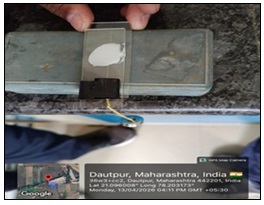
FIG. 4: SPREADABILITY TEST OF HERBAL CREAM FORMULATION
Advantages:
- Indicates Ease of Application -Helps determine how easily the cream spreads on the skin, ensuring smooth and uniform application.
- Improves Patient/User Compliance
- Ensures Uniform Drug Distribution
TABLE 10: OBSERVATION OF SPREADABILITY OF DIFFERENT CREAM FORMULATIONS
| Sr. no. | Cream | Weight (g) | Length (CM) | Time (Sec) | S = M × L / T |
| 1 | Citronella Cream | 50g | 6.2 | 1Min(60Sec) | 5.1 g.cm/sec |
| 2 | Lemongrass Cream | 50g | 5.8 | 1Min(60Sec) | 4.8g.cm/sec |
| 3 | Thuja Cream | 50g | 6.1 | 1Min(60Sec) | 5.0 g.cm/sec |
| 4 | Citronella + Lemongrass Cream | 50g | 5.8 | 1Min(60Sec) | 4.8 g.cm/sec |
| 5 | Lemongrass+ Thuja Cream | 50g | 6.6 | 1Min(60Sec) | 5.5 g.cm/sec |
| 6 | Citronella+ Thuja Cream | 50g | 5.9 | 1Min(60Sec) | 5.9 g.cm/sec |
| 7 | Citronella + Lemongrass+ Thuja +Rosemary Oil Cream | 50g | 6.1 | 1Min(60Sec) | 5.0 g.cm/sec |
Washability Test: A known amount of cream is applied on the skin and then washed with water the ease of removal indicate washability take small amount of cream select a clean area on the forearm or glass plate spread uniformily over a fixed area allow the cream to remain for 5 min wash with tap water or distilled water gently rub with fingers. The interpretation was good washability and observes it has easily washable 27.
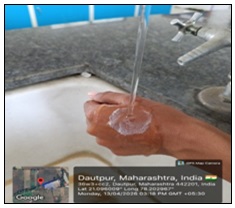
FIG. 5: WASHABILITY TEST OF HERBAL CREAM
Observation:
- Easily Washable ( Good Washable)
- Slight Residue (Moderate)
- Difficult Removal (Poor Wash)
Microbial Study: Suspend nutrient agar powder and other ingredients (mentioned under chemical formula) in required quantity of distilled water. Heat this mixture while stirring to fully dissolve all components. Pour the media in conical flask and cover it with cotton plug. Autoclave the dissolved mixture contained in conical flask at 121°C for 20 minutes. Once the nutrient agar has been autoclaved, allow it to cool and preserve it for further use.
TABLE 11: CHEMICAL COMPOSITION OF NUTRIENT AGAR
| Sr. no. | Ingredients | Quantity |
| 1 | Peptone | 0.5g |
| 2 | Beef extract | 0.3g |
| 3 | Sodium chloride | 0.5g |
| 4 | Agar | 2g |
| 5 | Distilled water | 100ml |
RESULT: The antimicrobial activity of the formulated herbal mosquito repellent cream was evaluated using the agar well diffusion method. The test samples exhibited visible zones of inhibition around the wells in all experimental plates, indicating susceptibility of the test microorganism(s) to the formulation.
Anti-oxidant: Various type of free radical scavenging molecules is found in plants which act as a natural product, rich in antioxidant properties 3. That’s why plants extract is displayed various biological activities such as antioxidant properties4. Antioxidant molecules can be suppressed the oxidative reaction which is instigated by the free radicals. H2O2 scavenging method: Antioxidant activity of individual extract was evaluated by using H2O2 method 23. 0.1ml of sample added with 3.4 ml of 0.1 M phosphate buffer and 0.6 ml of 40 mM H2O2. This mixture was incubated 10 mints at room temperature. After incubation, absorbance was note down at λmax 230 nm against blank solution. Ascorbic acid was used as standard Fig. 5. The percentage scavenging of H2O2 was calculated using the equation.
% 𝑠𝑐𝑎𝑣𝑒𝑛𝑔𝑖𝑛𝑔 𝑜𝑓 𝐻2𝑂2 = (A0-A1) /A0 × 100
Observation table in U.V
Sample 1: For base line correction (sodium Dihydrogen Phosphate Buffer 7.4 PH Buffer solution)
Sample 2: Buffer + Hydrogen peroxide (H2O2) Ao=0.50
Sample 3: Hydrogen Peroxide + Dillution of Cream sample A1 = 6.6646
% 𝑠𝑐𝑎𝑣𝑒𝑛𝑔𝑖𝑛𝑔𝑜𝑓𝐻 2𝑂2 = (A0-A1) /A0 × 100
= -0.5074 – 6.6646 / 0.5074 × 100
=14.12
Irritancy Test: The irritancy test involved applying the cream to a marked area on the dorsal surface of the left hand. The area was monitored for signs of irritancy, redness (erythema), and swelling (edema) at regular intervals over 24 hours.
Arm Cage Method: The evaluation of mosquito repellent activity employs a cardboard frame cage with a cardboard bottom, one side netted for ventilation, plastic paper sides for viewing, and a front net area for access. To begin, mosquitoes are placed in the cage, and a control test is conducted without applying any cream to determine the number of mosquito bites.
Next, the first concentration of the mosquito repellent cream (F1) is applied to a square section of skin on the hand, which is then inserted into the cage, protected by a glove and muslin cloth, leaving only the treated skin area exposed. The number of mosquitoes repelled is observed and recorded for 2 minutes.
This process is repeated for each concentration of the mosquito repellent cream, and the data is analyzed by comparing the number of mosquito bites in the control test to the number of mosquitoes repelled in each treatment test.
TABLE 12: MOSQUITO REPELLENT ACTIVITY OF FORMULATION F7 BY ARM CAGE METHOD
| Formulation no. | Parameter | Control | Test |
| F7 | Number of Mosquitoes | 10 | 10 |
| Number of mosquitoes repels | 0 | 3 | |
| Repellent activity | No | Yes | |
| Observation Time(min) | 3 | 3 | |
| Temperature 0C | 38 | 38 |
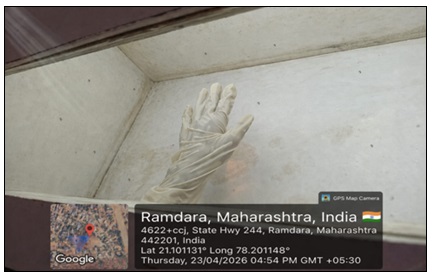
FIG. 6: ARM CAGE METHOD FOR EVALUATION OF MOSQUITO REPELLENT ACTIVITY
CONCLUSION: The development of plant-based mosquito repellents offers a promising solution to prevent mosquito borne diseases. The bioactive compounds present in citronella, lemongrass, rosemary, and thuja essential oils demonstrate potential as effective mosquito repellents, with possible synergistic effects when combined. All of the formulations showed high spreadability, simple washability, pH levels appropriate for skin application, and acceptable physical features. The compositions are safe for topical application, according to preliminary dermatological testing that showed no symptoms of skin irritation. These results imply that the created herbal cream is a viable, all natural substitute for synthetic repellents, providing a skin compatible and environmentally responsible method of personal mosquito protection. To improve its effectiveness and practical application for widespread use in mosquitoprone areas, more research is advised, including long-term stability tests, prolonged field trials, and essential oil mixture optimization.
ACKNOWLEDGMENT: The author would like to thank the administration of P.R. Patil Institute of Pharmacy Talegaon (SP), Wardha, Maharashtra, India, for their support and resourses in facilitating this work.
CONFLICT OF INTEREST: Nil
REFERENCES:
- Ranasinghe MSN, Arambewela L & Samarasinghe S: Development of herbal mosquito repellent formulations. Int J Pharm Sci Res 2016; 7(9): 3643-48.
- Rani N, Wany A, Vidyarthi AS and Pandey DM: Study of Citronella leaf-based herbal mosquito repellents using natural binders. Current Research in Microbiology and Biotechnology 2013; 1(3): 98-103. Available from: URL
- Oladeji OS, Adelowo FE, Ayodele DT & Odelade KA: Phytochemistry and pharmacological activities of Cymbopogon citratus: A review. Scientific African 2019; 6: 00137.
- Kokate CK, Purohit AP & Gokhale SB: Pharmacognosy. 49th ed. Pune: Nirali Prakashan 14.37-14.54.
- Deshmukh SK, Kolet MJ & Verekar SA: Distribution of endophytic fungi in lemon grass (Cymbopogon citratus (DC.) Stapf.). Journal of Cell and Tissue Research 2010; 10(2): 2263.
- Devi LD: Knowledge regarding selected mosquito borne disease and its prevention. Asian Journal of Nursing Education and Research 2022; 12(4): 409-12. http://dx.doi.org/10.52711/2349-2996.2022.00087
- Sharma M, Nagori K, Jain V and Balan NS: Herbal, safe and effective mosquito repellents: Recent development and opportunity. Research Journal of Pharmacy and Technology 2023; 16(5): 2557-64. http://dx.doi.org/10.52711/0974-360X.2023.00420
- Baisane V, Shejwal S, Sawant P, Chavan S and Salunke P: A Review on Thuja Plant Species. Int J Sci R Tech 2025: 2(2): 14-24.
- Kim TH, Li H, Wu Q, Lee HJ and Ryu JH: A new labdane diterpenoid with anti inflammatory activity from Thuja orientalis. Journal of Ethnopharmacology 2013; 146(3): 760-767.
- Mohan ME, Madhusudhan A, Kumar NM and Mohan KC: In Evaluation of antiepileptic activity of Thuja orientalis Linn. on Mes, Ptz and Strychnine induced convulsions in rats, Indian Journal of Pharmacology 2013; Med Know Publications & Media Pvt Ltd B-9, Kanara Business Centre, Off Link 2013; 239-239.
- Asghari G, Asili J, Ebrahimi SS and Jaroszewski J: Influence of extraction methods on the yield and chemical composition of essential oil of Platycladus orientalis (L.) FRANCO. Jundishapur Journal of Natural Pharmaceutical Products 2007; 2(1): 25-33.
- Phasomkusolsil S and Soonwera M: "Comparative mosquito repellency of essential oils against Aedes aegypti (Linn.), Anopheles dirus (Peyton and Harrison) and Culex quinquefas-ciatus (Say)," Asian Pacific Journal of Tropical Biomedicine 2011; 1(1): 113-118.
- Baisane V, Sawant P, Shejwal S, Chavan S and Salunke P: Rosmarinus officinalis L.: An update review of its Phytochemistry and Pharmacological Study. Int J Pharm Sci 2025; 3(2): 224-35.
- Tripathi KD: Essentials of Medical Pharmacology. 8th ed. New Delhi: Jaypee Brothers Medical Publishers; Chapter: Nonsteroidal Anti-inflammatory Drugs and Antipyretic-Analgesics 2019.
- Tripathi KD: Essentials of Medical Pharmacology. 8th ed. New Delhi: Jaypee Brothers Medical Publishers. Section 12: Antimicrobial Drugs (Sulfonamides, Beta-lactams, Macrolides, Antifungals, Antivirals etc.) 2019.
- Tripathi KD: Essentials of Medical Pharmacology. 8th ed. New Delhi: Jaypee Brothers Medical Publishers Chapter on Vitamins and Free Radical Scavengers / Antioxidants 2019.
- Tripathi KD: Essentials of Medical Pharmacology. 8th ed. New Delhi: Jaypee Brothers Medical Publishers 2019.
- World Health Organization. Guidelines for efficacy testing of mosquito repellents for human skin. Geneva: WHO; 2009.
- https://www.1mg.com/otc/similia-thuja-oil-otc574506
- Organix Mantra Rosemary Essential Oil for Hair Growth, Hair Fall Control and Nourishment, Skin Care | 100% Pure, Natural, Undiluted | 15ml https://amzn.in/d/05gV7LkN
- Practical Pharmacognosy Kokate, C.K., Purohit, A.P., Gokhale, S.B. Practical Pharmacognosy Nirali Prakashan, Pune. Latest Edition.
- Energies Katekar, VP, Rao AB and Sardeshpande VR: Review of the rose essential oil extraction by hydrodistillation: An investigation for the optimum operating condition for maximum yield. Sustain Chem Pharm 2022; 29: 100783.
- Clevenger JF: Apparatus for the determination of volatile oil. J of the Assoc of Official Agricultural Chemists 1928.
- Kasture PV, Gokhale SB and Parakh SR: Practical Pharmaceutics-I, Nirali Prakashan.1
- Tripathi AK, Prajapati V, Ahmad A, Aggarwal KK and Khanuja PSS: “Piperitenone oxide as toxic, repellent, and reproduction retardant toward malarial vector Anopheles (Diptera: Anophelinae),” Journal of Medical Entomology 2004; 41(4): 691–698.
- Khandelwal KR: Practical Pharmacognosy Techniques and Experiments. Nirali Prakashan
- International Journal of Novel Research and Development. Evaluation of cream: washability test by applying small amount of cream on hand and washing with tap water 2024.
- Biapa PC, Agbor GA, Oben JE and Ngogang JY: Phytochemical studies and antioxidant properties of four medicinal plants used in Cameroon, Afr J Tradit Comp Altern Med 2007; 4(4): 495-500. Anti oxidant
- Mohan B and Kakkar A: Evaluation of phenolic, flavonoid contents and antioxidant activity in leaves, stem and roots of Solanum indicum Linn. anti oxidant. Environ Conserv J 2020; 21(1&2): 167-172.
- Jatkar P, Vrunal M, Mithun M and Waghamare V: Formulation and evaluation of herbal mosquito repellent cream. European Chemical Bulletin 2023: 12(10): 2105-12.
How to cite this article:
Durga R, Fatteshwar P, Gayatri D, Harshdeep P and Chetan G: Formulation and evaluation of herbal mosquito repellent cream. Int J Pharmacognosy 2026; 13(5): 503-511. doi link: http://dx.doi.org/10.13040/IJPSR.0975-8232.IJP.13(5).503-511.
This Journal licensed under a Creative Commons Attribution-Non-commercial-Share Alike 3.0 Unported License.
Article Information
15
503-511
1112 KB
145
English
IJP
Rathod Durga, Pote Fatteshwar *, Dukare Gayatri, Pandey Harshdeep and Ghulaxe Chetan
P. R. Patil Institute of Pharmacy, Talegaon, Ashti, Wardha, Maharashtra, India.
fatteshwarpote091@gmail.com
16 April 2026
06 May 2026
13 May 2026
10.13040/IJPSR.0975-8232.IJP.13(5).503-511
15 May 2026
 Download