


EVALUATION OF THE ANTI-DIABETIC EFFECTS OF TINOSPORA CORDIFOLIA LEAF EXTRACT ON DIABETIC RATS INDUCED BY STREPTOZOTOCIN
HTML Full TextEVALUATION OF THE ANTI-DIABETIC EFFECTS OF TINOSPORA CORDIFOLIA LEAF EXTRACT ON DIABETIC RATS INDUCED BY STREPTOZOTOCIN
Neelam Pavan Teja *, Darsi Eswar Tony and Nadendla Ramarao
Department of Pharmacology, Chalapathi Institute of Pharmaceutical Sciences, Chalapathi Nagar, Lam, Guntur, Andhra Pradesh, India.
ABSTRACT: Hyperglycemia due to insulin secretion or action abnormalities, or both, characterizes diabetes mellitus, a chronic metabolic condition. Using streptozotocin (STZ)-induced diabetic Wistar rats, this research aimed to determine whether or not extract from the leaves of Tinospora cordifolia had any anti-diabetic effects. A single intraperitoneal injection of 55 mg/kg streptozotocin was used to develop diabetes, and for 28 days, the mice were given an oral dosage of 300 mg/kg of an ethanolic extract of Tinospora cordifolia leaves. The gold standard medicine for comparison was glibenclamide (10 mg/kg). Changes in body weight and fasting blood glucose levels were used to evaluate the extract's anti-diabetic effectiveness. Tannins, flavonoids, and alkaloids were detected in the phytochemical analysis of the extract. In diabetic rats, the extract treatment led to a 58.2% decrease in blood glucose levels (P < 0.01) and an improvement in body weight. The outcomes were similar to those of the gold standard medication, glibenclamide. According to the results, a 50% ethanolic Tinospora cordifolia extract has strong anti-diabetic effects and might be used as a non-invasive treatment for diabetes.
Keywords: Diabetes mellitus, Tinospora cordifolia, Streptozotocin (STZ), Antidiabetic activity, Blood glucose
INTRODUCTION: A chronic metabolic condition known as diabetes mellitus is defined by high blood glucose levels that are caused by either impaired insulin action or insufficient insulin production. Diabetes has emerged as a key issue in public health this century due to its alarming global incidence. The eyes, kidneys, peripheral nervous system, and heart are all vulnerable to the devastating effects of persistent hyperglycemia 1. Traditional methods of diabetes care include a healthy diet, frequent exercise, oral hypoglycemic medication, and insulin injections.
Although these medications help regulate blood sugar levels, they come with risks and may not be able to stop secondary problems altogether if used for an extended period of time. Since medicinal plants and natural products have a lower risk profile and more therapeutic potential, they have attracted a lot of interest as possible alternatives or supplementary treatments 2. Ayurvedic practitioners have long relied on the therapeutic properties of the herb Tinospora cordifolia, most often known as Guduchi or Giloy.
The antioxidant, anti-inflammatory, immuno-modulatory, and antihyperglycemic effects of Tinospora cordifolia have been shown in previous pharmacological and phytochemical investigations. In addition, the results of the experiments show that the plant extract may lower blood sugar levels by increasing insulin production and improving glucose absorption in the periphery 3.
Because Streptozotocin (STZ) kills insulin-producing pancreatic β-cells selectively, creating an insulin-deficient diabetic state comparable to human diabetes, antidiabetic activity may be assessed using Streptozotocin (STZ)-induced diabetic rat models 4.
The current research aimed to validate the traditional usage of Tinospora cordifolia leaf extract in the treatment of diabetes mellitus by investigating its antihyperglycemic action in rats induced with STZ. The purpose was to build on these results.
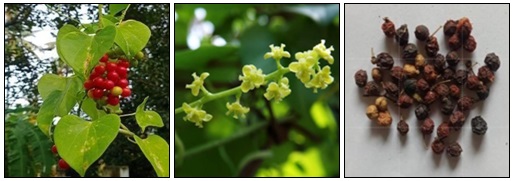
FIG. 1: PLANT OF TINOSPORA CARDIFOLIA (L.) FLOWER OF TINOSPORA CORDIFOLIA (L.) SEED OF TINOSPORA CORDIFOLIA (L.)
Classification of Tinospora cardifolia (L).:
Kingdom: Plantae
Sub Kingdom: Tracheobionta
Super Divion: Spermatophyta
Divion: Magnoliophyta
Class: Magnoliopsida
Subclass: Magnoliidae
Order: Ranunculales
Family: Menispermaceae
Genus: Tinospora
Species: Tinospora cardifolia
Vernacular Names:
Tamil: Sathiyavalli, Seenthil, Amrithapal, Senthil kodi
English: Heart-leaved moonseed, Guduchi, Indian tinospora,
Marathi: Gulvel, Amurutvel, Giloy, Madhuparni, Chhinna
Gujarat: Galo
Portuguese: Giloe, Raizdo Coracao
Germany: Herzblatt mondsaat
Arabic: Jilodishi
MATERIALS AND METHODS:
Selection of Plant Material: The Guntur area of Andhra Pradesh, India, was surveyed for its fresh Tinospora cordifolia leaves. Before being used in experiments, the plant material was taxonomically identified and authenticated by a trained botanist. For phytopharmacological investigations to be consistent and reproducible, correct botanical identification is crucial 5.
Preparation of Plant Extract: The gathered leaves were given a good washing to get rid of any clinging dirt or debris, and then let to dry naturally in the shade. Using a mechanical grinder, the dried leaves were ground into a powder. The substance that had been ground into a powder was then extracted using ethanol. The crude ethanolic extract was obtained by filtering the solution and removing the solvent using a rotary evaporator at decreased pressure after sufficient extraction. Until it was needed again, the extract was kept in the fridge 6.
Experimental Animals: Wistar albino rats, ranging in weight from 150 to 200 g, were used for the research. Standard laboratory settings were employed to house the animals, including a regulated temperature (25 ± 2°C) and a 12 h light/dark cycle, in polypropylene cages. During the duration of the trial, the animals were given water and a standard pellet meal without restriction. Following protocols authorized by the Institutional Animal Ethics Committee, all experimental procedures were carried out 1.
Drugs and Vehicle: The usual antidiabetic medicine used in the trial was glibenclamide. For the purpose of oral administration, a 0.5% solution of carboxymethyl cellulose (CMC) containing the conventional medication and an ethanolic extract of Tinospora cordifolia (EETC) was prepared. To ensure consistent dosing, CMC was used as a stabilizing agent 3.
Chemicals Used: To induce diabetes, scientists employed streptozotocin (STZ) from Sigma-Aldrich. Ethanol, citrate buffer, CMC, and diagnostic kits for estimating blood glucose and lipid profiles were among the other analytical-grade chemicals and reagents used. STZ was chosen because of its specific ability to kill pancreatic β-cells 4.
Drug Treatment: Each set of animals received either a regular therapy, a test treatment, a diabetic control, or a normal control. A single intraperitoneal dose of 55 mg/kg body weight of STZ produced diabetes.
Diabetic animals were defined as those whose fasting blood glucose levels were more than 250 mg/dL after 72 hours.
The antihyperglycemic efficacy of the ethanolic extract of Tinospora cordifolia was assessed by administering it orally to the test groups for a duration of 21 days 2.
Assessment of Parameters:
The following parameters were evaluated during the study period:
Fasting Blood Glucose: Fasting blood glucose levels were measured on days 0, 7, 14, 21, and 28 using blood samples collected from the tail vein.
Body Weight: Body weight of experimental animals was recorded weekly to evaluate metabolic changes and prevention of diabetic weight loss.
Experimental Methodology:
Induction of Experimental Diabetes: Prior to inducing diabetes, animals were allowed to fast for one night. Intraperitoneally, a solution of streptozotocin (55 mg/kg body weight) was produced using a 0.1 M citrate buffer and given to the patient.
Through DNA damage, ATP depletion, and suppression of mitochondrial activity, STZ causes diabetes by specifically destroying pancreatic β-cells 7.
Selection of Diabetic Animals: After 72 hours of using STZ, a digital glucometer was used to assess fasting blood glucose levels. Diabetic rats were defined as rats with fasting blood glucose levels more than 250 mg/dL 8.
Experimental Design: Each of the five groups of rats consisted of six individuals chosen at random. Normal controls, diabetic controls, a regular medicine group, and an extract group treated with varying dosages of Tinospora cordifolia made comprised the study's design. The antihyperglycemic effect was evaluated by maintaining treatment for 21 days 9.
Phytochemical Screening: To find secondary metabolites that have antioxidant and anti-diabetic properties, we conducted a qualitative phytochemical screening of the ethanolic leaf extract. This screening looked for alkaloids, flavonoids, phenolic compounds, and others 10.
RESULTS AND DISCUSSION:
TABLE 1: THE EFFECT OF ETHANOLIC EXTRACT ON THE OGTT MODEL LEVEL OF SERUM GLUCOSE IN NORMAL RATS
| S. no. | Drug/Control | Body weight | Blood glucose level (mg/dl) | ||||
| 0 hour | 1 hour | 2 hour | 3 hour | 4 hour | |||
| 1 | Group-1 control (distilled water) | 180.0±2.0 | 92.0±2.5 | 132.0±3.5 | 117.0±0 | 119.0±1.0 | 100.5±1.5 |
| 2 | Group 2 extract (200mg/kg) | 164.1±2.7 | 102.0±1.0 | 123±0** | 107.0±2.0** | 101.0±3.0* | 98.0±2.0* |
| 3 | Group3 extract (400 mg/kg) | 152.6±3.4 | 99.0±1.5** | 120.0±1.5** | 100.0±2.5** | 96.0±3.0* | 88.5±1.5* |
| 4 | Group 4 extract (20mg/kg) | 151.3±2.3 | 111.0±4.5** | 121.0±31** | 117.0±3.6** | 114.0±2.6* | 112.5±1.2* |
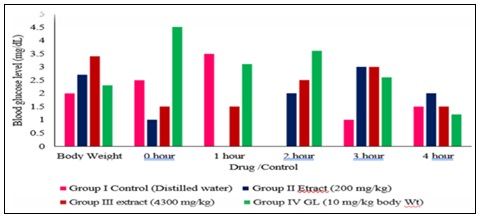
FIG. 2: THE INFLUENCE OF ETHANOLIC EXTRACT ON THE SERUM GLUCOSE LEVELS IN THE OGTT MODEL OF NORMAL RATS
TABLE 2: THE INFLUENCE OF 27 DAYS MANAGEMENT WITH ETHANOLIC EXTRACT TO SERUM GLUCOSE LEVELS OF RATS WITH DIABETIC CONDITION INDUCED BY STZ
| S. no. | Treatment | Initial | 7th day | 14th day | 21st day | 28th day |
| 1 | Normal control | 89.3±3.8 | 91.0±1.5 | 95.0±1.0 | 92.8±2.1 | 89.0±1.7 |
| 2 | Diabetic control | 221.5±3.2 | 267.3±3.5 | 310.3±2.2 | 383.0±2.8 | 405.3±3.2 |
| 3 | Diabetic+Gliben Clamide (10 mg/kg) | 281.0±1.9*** | 261.0±3.6** | 153±3.8*** | 140.1±3.1*** | 129.5±2.7*** |
| 4 | Diabetic+extract (400 mg/kg) | 240.1±2.2*** | 210.6±3.3** | 160.3±3.7*** | 121.3±1.4*** | 96.8±1.7*** |
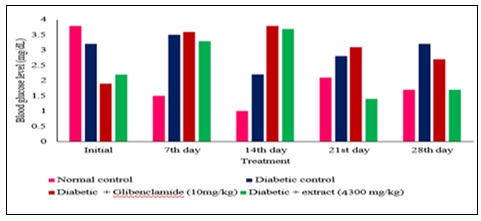
FIG. 3: THE EFFECT OF 27 DAYS OF TREATMENT WITH THE ETHANOLIC EXTRACT ON SERUM GLUCOSE LEVELS IN STZ INDUCED DIABETIC RATS
The results demonstrated that the leaf extract of Tinospora cordifolia shown efficacy similar to traditional antidiabetic treatment in reducing hyperglycemia in streptozotocin-induced diabetic mice. One possible explanation for the antihyperglycemic effects is because it contains bioactive phytoconstituents such alkaloids and flavonoids, which help keep glucose levels stable 10. The extract may have peripheral effects such as reducing blood glucose levels and increasing glycogen production in the liver and skeletal muscles 6.” Moreover, when contrasted with diabetic control rats, the groups treated with extracts demonstrated a considerable retention of body weight, suggesting a decrease in tissue protein breakdown and an improvement in metabolic condition 8. These results provide credence to the long-standing belief in Tinospora cordifolia's efficacy and safety as a natural remedy for the chronic control of diabetes mellitus 5.
Statistical Analysis: Mean ± SEM was used to represent the experimental results. After doing a one-way ANOVA, we used Dunnett's multiple comparison test to see whether there was a statistically significant relationship. It was deemed statistically significant when the value of *p* was less than 0.05.
Through the use of this statistical method, it was verified that the treated groups had much lower blood glucose levels compared to the diabetic control group 11.
CONCLUSION: This research found that streptozotocin-induced diabetic rats showed considerable antidiabetic activity in response to an ethanolic Tinospora cordifolia leaf extract. The extract successfully decreased hyperglycemia and stopped the loss of body weight that comes with diabetes 9. The inclusion of phytoconstituents that improve glucose utilization and glycogen storage, such as alkaloids and flavonoids, may explain the reported pharmacological effects 6. These results provide scientific credence to Tinospora cordifolia's long-standing folk medicine usage and raise the possibility that it might be a viable natural option for the long-term control of diabetes mellitus 2.
ACKNOWLEDGEMENT: Nil
CONFLICT OF INTEREST: Nil
REFERENCES:
- Akbarzadeh A, Norouzian D, Mehrabi MR, Jamshidi SH, Farhangi A and Verdi AA: Induction of diabetes by Streptozotocin in rats. Indian J Clin Biochem 2007; 22(2): 60-64.
- Pari L and Uma Maheswari J: Antihyperglycaemic activity of Musa sapientum flowers: effect on lipid peroxidation in alloxan diabetic rats. J Ethnopharmacol 2000; 71(1-2): 257-262.
- Kamala Kannan S and Prince PSM: Antihyperglycaemic and antioxidant effect of Tinospora cordifolia leaves in streptozotocin-induced diabetic rats. J Basic Clin Physiol Pharmacol 2006; 17(2): 115-123.
- Katisart T: Antioxidant and antihyperglycemic effects of plant extracts in streptozotocin-induced diabetic rats. Asian Biomed 2011; 5(3): 345-352.
- Sharma V and Pandey D: Protective role of Tinospora cordifolia against diabetes and related complications. J Diabetes Metab Disord 2015; 14: 1-9.
- Khandelwal KR: Practical Pharmacognosy: Techniques and Experiments. 23rd ed. Pune: Nirali Prakashan 2013.
- Szkudelski T: The mechanism of alloxan and streptozotocin action in β-cells of the rat pancreas. Physiol Res 2001; 50(6): 537-546.
- Singh H and Mehta M: Evaluation of antihyperglycemic activity of herbal extracts in streptozotocin-induced diabetic rats. Int J Pharm Sci Res 2019; 10(4): 1820-1826.
- Chaudhary A and Das R: Antidiabetic activity of Tinospora cordifolia leaf extract in experimental diabetic rats. J Ethnopharmacol 2024; 320: 117456.
- Kamble LH: Phytochemical screening and pharmacological evaluation of medicinal plants used in diabetes. Int J Pharm Sci Rev Res 2015; 30(1): 120-125
- Tiwari P and Nayak P: Statistical approaches in pharmacological evaluation of antidiabetic herbal formulations. Int J Pharm Sci Rev Res 2018; 52(1): 45-50.
- Sharma R, Amin H and Prajapati PK: Evaluation of antidiabetic activity of Tinospora cordifolia in experimental animal models. J Ayurveda Integr Med 2015; 6(3): 178-184.
- Kamble LH: Phytochemical screening and antidiabetic potential of medicinal plants: A review. Int J Pharm Sci Rev Res 2015; 30(1): 120-125.
- Singh H, Mehta M and Kaur G: Evaluation of antihyperglycemic activity of herbal extracts in streptozotocin-induced diabetic rats. Int J Pharm Sci Res 2019; 10(4): 1820-1826.
- Tiwari P, Nayak P and Sharma A: Statistical approaches in pharmacological evaluation of antidiabetic herbal formulations. Int J Pharm Sci Rev Res 2018; 52(1): 45-50.
- Upadhyay R, Mishra P and Kumar A: Therapeutic potential of Tinospora cordifolia in diabetes and metabolic disorders. World J Pharm Pharm Sci 2017; 6(9): 1456-1465.
- Saha S and Ghosh S: Pharmacological activities and medicinal properties of Tinospora cordifolia: A review. Asian Pac J Trop Biomed 2016; 6(2): 151-159.
- Patel DK, Prasad SK, Kumar R and Hemalatha S: An overview on antidiabetic medicinal plants having insulin mimetic property. Asian Pac J Trop Biomed 2012; 2(4): 320-330.
- Chaudhary A, Das R and Sharma P: Antidiabetic activity of Tinospora cordifolia leaf extract in streptozotocin-induced diabetic rats. J Ethnopharmacol 2024; 320: 117456.
- Khandelwal S and Ratanlal M: Evaluation of glycogen synthesis and peripheral glucose utilization by herbal antidiabetic extracts. IJGP 2016; 10(3): 156-162.
- Verma RK, Singh A and Gupta N: Role of phytoconstituents in management of diabetes mellitus. Pharmacogn Rev 2021; 15(29): 45-54.
- Reddy SS and Kumar PA: Protective effect of herbal extracts against diabetic complications in experimental animals. Int J Res Pharm Sci 2020; 11(2): 2331-2338.
How to cite this article:
Teja NP, Tony DE and Ramarao N: Evaluation of the anti-diabetic effects of Tinospora cordifolia leaf extract on diabetic rats induced by streptozotocin. Int J Pharmacognosy 2026; 13(7): 683-87. doi link: http://dx.doi.org/10.13040/IJPSR.0975-8232.IJP.13(7).683-87.
This Journal licensed under a Creative Commons Attribution-Non-commercial-Share Alike 3.0 Unported License.
Article Information
7
683-687
655 KB
198
English
IJP
Neelam Pavan Teja *, Darsi Eswar Tony and Nadendla Ramarao
Department of Pharmacology, Chalapathi Institute of Pharmaceutical Sciences, Chalapathi Nagar, Lam, Guntur, Andhra Pradesh, India.
neelampavanteja6@gmail.com
26 May 2026
23 June 2026
29 June 2026
10.13040/IJPSR.0975-8232.IJP.13(7).683-87
01 July 2026
 Download