


DESIGN AND EVALUATION OF HERBAL HARD CANDY AS A NATURAL THROAT SOOTHING FORMULATION
HTML Full TextDESIGN AND EVALUATION OF HERBAL HARD CANDY AS A NATURAL THROAT SOOTHING FORMULATION
Vaibhav Adhao, Manaswi Raibagkar * and Swati Katone
Dr. Rajendra Gode College of Pharmacy, Malkapur, Buldhana, Maharashtra, India.
ABSTRACT: Herbal candy is an innovative solid oral dosage form designed for localized soothing relief in the oral cavity and throat. Three formulations (F1, F2, F3) were prepared using fennel (Foeniculum vulgare), ginger (Zingiber officinale), and lemon (Citrus limon) in a sucrose base by the heating and molding method with varying herbal concentrations. All formulations were evaluated for organoleptic properties, weight variation, hardness, dissolution time, surface pH, moisture content, ash value, melting point, and stability over four weeks. Formulation F2 demonstrated the optimum profile: smooth texture, green color, aromatic odor, hardness 6.8 kg/cm², dissolution time 13 min, surface pH 4.5, weight 5.4±0.04 g, and complete stability at 25°C and 35°C for four weeks. The study confirms herbal candy as a safe, patient-friendly dosage form for mild throat discomfort, combining traditional herbal knowledge with modern pharmaceutical formulation techniques.
Keywords: Herbal candy, Throat soothing, Foeniculum vulgare, Zingiber officinale, Citrus limon, Physicochemical evaluation, Stability
INTRODUCTION: Herbal medicines derived from plant sources have been integral to traditional healthcare systems such as Ayurveda, Unani, Siddha, and Traditional Chinese Medicine. Bioactive phytoconstituents including alkaloids, flavonoids, tannins, glycosides, terpenoids, and phenolic compounds confer diverse pharma-cological activities: antimicrobial, anti-inflammatory, antioxidant, and soothing effects 1, 2. Their synergistic interactions frequently amplify therapeutic potential beyond that of isolated compounds 3. Compared to synthetic drugs, herbal medicines exhibit milder pharmacological effects and are considered relatively safe when used appropriately. Their long history of traditional use and lower incidence of adverse reactions have contributed to their increasing global acceptance 1, 4.
Throat-related discomforts irritation, dryness, hoarseness, and mild cough are increasingly prevalent due to environmental pollution, allergens, climatic variation, and lifestyle factors 39, 42. Conventional synthetic preparations carry adverse effects such as drowsiness, gastrointestinal disturbance, and drug interactions, limiting their use in mild or self-limiting conditions 1, 44. Herbal candy is a solid oral dosage form incorporating herbal ingredients into a sweetened base, dissolving slowly in the oral cavity to provide sustained localized action through prolonged mucosal contact, salivation stimulation, and demulcent protection 5, 6. It does not require water for administration and is suitable for all age groups, thus improving patient compliance 7, 8. The present study aimed to formulate herbal candy using fennel, ginger, and lemon in a sucrose base and to evaluate the prepared formulations for physicochemical and stability parameters.
MATERIALS AND METHODS:
Plant Materials and Ingredients: Fennel seeds (Foeniculum vulgare, Fam: Apiaceae), fresh ginger rhizome (Zingiber officinale, Fam: Zingiberaceae), and lemon (Citrus limon, Fam: Rutaceae) were procured from the local certified market. Sucrose and distilled water were used as excipients.
All ingredients were of pharmaceutical grade unless otherwise stated 9, 10.
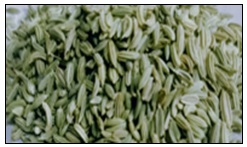
FIG. 1: FENNEL (FOENICULUM VULGARE)
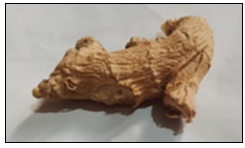
FIG. 2: GINGER (ZINGIBER OFFICINALE)
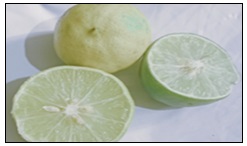
FIG. 3: LEMON (CITRUS LIMON)
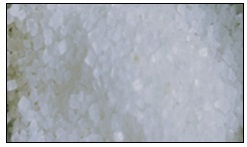
FIG. 4: SUGAR (SUCROSE)
TABLE 1: MATERIALS SELECTED FOR PREPARATION OF HERBAL CANDY
| Sr. | Ingredient | Synonym | Biological Source | Family | Uses |
| 1 | Fennel | Saunf | Foeniculum vulgare (fr.) | Apiaceae | Carminative, soothing, expectorant |
| 2 | Ginger | Adrak | Zingiber officinale (rhiz.) | Zingiberaceae | Anti-inflammatory, antioxidant |
| 3 | Lemon | Citrus | Citrus limon (fruit) | Rutaceae | Antioxidant, antimicrobial, flavoring |
| 4 | Sugar | Sucrose | Saccharum officinarum | Poaceae | Base, sweetener, demulcent |
| 5 | Water | — | — | — | Solvent |
Formulation Design: Three formulations (F1, F2, F3) were prepared with a constant sucrose base (50 g) and increasing concentrations of herbal ingredients as outlined in Table 2 10, 11.
TABLE 2: FORMULATION COMPOSITION OF HERBAL CANDY
| Sr. | Ingredient | F1 | F2 | F3 | Function |
| 1 | Sugar | 50 g | 50 g | 50 g | Base & sweetener |
| 2 | Fennel Powder | 4 g | 6 g | 8 g | Carminative, soothing |
| 3 | Ginger Extract | 1 ml | 1.5 ml | 2 ml | Anti-inflammatory |
| 4 | Lemon Juice | 3 ml | 5 ml | 7 ml | Flavoring, salivation |
| 5 | Water | 100 ml | 100 ml | 100 ml | Solvent |
Equipment Used:
TABLE 3: EQUIPMENT USED FOR FORMULATION AND EVALUATION
| Sr. | Equipment | Company | Sensitivity | Purpose |
| 1 | Weighing Balance | Systronic | 0.1 mg | Accurate weighing of ingredients |
| 2 | Thermometer | Borosil | 1°C | Temperature monitoring during heating |
| 3 | Hot Plate | Remi | ±1–5°C | Uniform heating of sugar syrup |
| 4 | Muffle Furnace | Equiptronics | ±1–5°C | Ash value determination |
| 5 | Dissolution Apparatus | Electrolab | ±1 RPM | Dissolution time measurement |
| 6 | Hardness Tester | Monsanto | 1 kg/cm² | Mechanical strength evaluation |
| 7 | Friability Tester | Electrolab | ±1 RPM | Friability assessment |
Preparation of Herbal Candy: The heating and molding method was employed for all three formulations 12, 13. Accurately weighed sucrose was dissolved in measured distilled water in a stainless steel vessel and heated with continuous stirring until a clear homogeneous syrup formed. Temperature was carefully monitored throughout to prevent caramelization. The syrup was allowed to cool slightly to prevent thermal degradation of herbal constituents 16, 35. Fennel powder, ginger extract, and lemon juice were incorporated and mixed thoroughly to ensure uniform distribution. The mass was poured into pre-lubricated molds, cooled at room temperature until complete solidification, carefully demoulded, and stored in airtight containers pending evaluation 15, 18.
Evaluation Parameters:
Organoleptic Evaluation: Color, odor, taste, texture, and overall appearance were assessed by visual and sensory examination 6, 14.
Weight Variation: Ten candies were individually weighed on a calibrated balance; mean weight and standard deviation (SD) were calculated 18, 20.
Hardness: Resistance to crushing force was measured using a Monsanto hardness tester and expressed in kg/cm² 13, 16.
Friability: Candies were subjected to controlled agitation; percentage weight loss after the test was calculated 15, 18.
Dissolution Time: Time for complete dissolution under simulated oral conditions was recorded in minutes 5, 13.
Surface pH: Candy was dissolved in distilled water and pH was measured using a calibrated pH meter 34, 37.
Moisture Content and Ash Value: Moisture content (%) was determined by loss on drying; ash value was estimated by incineration in a muffle furnace 19, 41.
Melting Point: Determined using the capillary method 16, 35.
Stability Study: Prepared candies were evaluated at 25°C and 35°C for four weeks; organoleptic and physical parameters were monitored weekly 19, 49.
RESULTS AND DISCUSSION:
Organoleptic Properties: All three formulations exhibited a characteristic green color attributable to fennel, a pleasant aromatic odor due to volatile oils such as anethole and fenchone, and a predominantly sweet taste with a characteristic fennel note 22, 23. F2 showed uniform glossy appearance and smooth texture, considered optimal for patient acceptability. F1 was slightly grainy, possibly due to partial crystallization in the absence of liquid glucose 35. F3 exhibited an intense herbal taste owing to higher concentrations, which marginally affected palatability. The agreeable sensory profile of herbal candy enhances compliance particularly in pediatric and geriatric populations 6, 14.
Physicochemical Parameters: Results of physicochemical evaluation are presented in Table 4. The weight of all formulations was within acceptable limits (5.4–5.5 g), confirming batch uniformity and accurate molding 18, 20. Hardness ranged from 5.2 to 6.8 kg/cm²; F2 demonstrated optimum hardness ensuring structural integrity during handling while permitting controlled dissolution 13, 16. Surface pH values (3.9–5.9) were within the safe range for oral mucosal application, minimizing risk of mucosal irritation 34, 37. Dissolution times of 13–16 min provide sustained soothing action by maintaining prolonged contact with the oral and throat mucosa 5, 36. Moisture content (1.9–2.8%) and ash values (1.85–2.16 g) were within acceptable pharmaceutical limits 41, 47.
The higher lemon juice concentration in F3 contributed to a lower surface pH (3.9), which may explain the slight stickiness observed during storage, as acidic conditions can promote hygroscopicity in sugar-based systems 17, 34. The melting points of all formulations (136–142°C) were consistent with the expected range for sucrose-based confectionery preparations, confirming proper processing and structural integrity 16, 35.
TABLE 4: PHYSICOCHEMICAL EVALUATION PARAMETERS OF HERBAL CANDY FORMULATIONS (F1, F2, F3)
| Parameter | F1 | F2 | F3 |
| Colour | Light green | Green | Pale green |
| Odour | Aromatic (fennel) | Aromatic (fennel dom.) | Fennel + citrus |
| Taste | Sweet, fennel | Sweet, strong fennel | Sweet, fennel + citrus |
| Texture | Slightly grainy | Smooth | Smooth |
| Appearance | Uniform | Uniform, glossy | Uniform |
| Surface pH | 5.9 | 4.5 | 3.9 |
| Moisture Content (%) | 2.8 | 1.9 | 2.3 |
| Hardness (kg/cm²) | 5.2 | 6.8 | 5.9 |
| Weight Variation (g) | 5.5 ± 0.03 | 5.4 ± 0.04 | 5.5 ± 0.05 |
| Ash Value (g) | 1.85 | 2.16 | 1.95 |
| Melting Point (°C) | 138 | 142 | 136 |
| Dissolution Time (min) | 16 | 13 | 15 |
| Shelf Life (4 Weeks) | Stable | Stable | Unstable (sticky) |
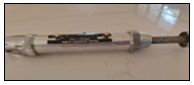
FIG. 5: HARDNESS TESTER
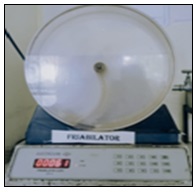
FIG. 6: FRIABILITY TEST APPARATUS
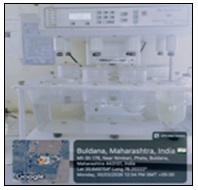
FIG. 7: DISSOLUTION APPARATUS
Stability Study: Stability evaluation was conducted at 25°C and 35°C over four weeks Table 5. Formulations F1 and F2 showed no change in color, odor, or texture at either temperature throughout the study period, confirming adequate stability under the test conditions 16, 19. F3 developed stickiness at four weeks, attributed to the hygroscopicity associated with higher lemon juice content 17, 34. These findings confirm F2 as the most stable formulation suitable for practical use.
TABLE 5: STABILITY EVALUATION OF OPTIMIZED FORMULATION (F2)
| Time Point | Temperature | Colour | Odour | Texture | Stability |
| 1 Week | 25°C | No Change | No Change | No Change | Stable |
| 1 Week | 35°C | No Change | No Change | No Change | Stable |
| 2 Weeks | 25°C | No Change | No Change | No Change | Stable |
| 2 Weeks | 35°C | No Change | No Change | No Change | Stable |
| 3 Weeks | 25°C | No Change | No Change | No Change | Stable |
| 3 Weeks | 35°C | No Change | No Change | No Change | Stable |
| 4 Weeks | 25°C | No Change | No Change | No Change | Stable |
| 4 Weeks | 35°C | No Change | No Change | No Change | Stable |
Selection of Optimized Formulation: F2, containing 6 g fennel powder, 1.5 ml ginger extract, and 5 ml lemon juice in 50 g sucrose base, exhibited the most balanced physicochemical profile. The fennel concentration provided adequate therapeutic soothing without compromising palatability 22, 23. Ginger extract contributed anti-inflammatory and antioxidant activity 26, 27 while lemon juice enhanced salivation, flavor, and mild antimicrobial action 24, 25. The sucrose base provided structural integrity, demulcent protection, and sweetness consistent with established confectionery formulation principles 35, 50. Overall, F2 represents the optimized formulation with the best balance of therapeutic, physicochemical, and stability attributes.
CONCLUSION: The present study successfully formulated and evaluated herbal candy containing fennel, ginger, and lemon in a sucrose base using simple and reproducible pharmaceutical techniques. All formulations showed acceptable physicochemical properties and Formulation F2 was identified as the optimized batch based on its balanced profile of hardness, dissolution, pH, stability, and sensory acceptability. The study confirms herbal candy as a safe, effective, and patient-friendly dosage form for mild throat discomfort, integrating traditional herbal knowledge with modern formulation science. Future studies may explore sugar-free variants using natural sweeteners, standardized herbal extracts, and extended stability evaluation as per ICH Q1A(R2) guidelines 49.
ACKNOWLEDGEMENT: The authors are grateful to [Institute Name] for providing the necessary laboratory facilities and support to carry out this research work.
CONFLICT OF INTEREST: The authors declare no conflict of interest.
REFERENCES:
- Ekor M: The growing use of herbal medicines: issues relating to adverse reactions and challenges in monitoring safety. Front Pharmacol 2014; 4: 177.
- Fabricant DS and Farnsworth NR: The value of plants used in traditional medicine for drug discovery. Environ Health Perspect 2001; 109(1): 69-75.
- Gurib-Fakim A: Medicinal plants: traditions of yesterday and drugs of tomorrow. Mol Aspects Med 2006; 27(1): 1-93.
- Bent S: Herbal medicine in the United States: review of efficacy, safety, and regulation. J Gen Intern Med 2008; 23(6): 854-859.
- Pandey MM, Rastogi S and Rawat AKS: Indian traditional Ayurvedic system of medicine and nutritional supplementation. Evid Based Complement Alternat Med 2013; 2013: 376327.
- Bhusnure OG, Gholve SB and Gholap PS: Herbal lozenges: a review. IJPSR 2015; 6(1): 123-130.
- Allen LV: Lozenges. Int J Pharm Compound 2003; 7(4): 312-315.
- Kunle OF, Egharevba HO and Ahmadu PO: Standardization of herbal medicines—a review. Int J Biodivers Conserv 2012; 4(3): 101-112.
- Williamson EM: Synergy and other interactions in phytomedicines. Phytomedicine 2001; 8(5): 401-409.
- Aulton ME: Aulton's Pharmaceutics: The Design and Manufacture of Medicines. 4th ed. Churchill Livingstone, Edinburgh 2013.
- Mandal MD and Mandal S: Honey: its medicinal property and antibacterial activity. Asian Pac J Trop Biomed 2011; 1(2): 154-160.
- Allen LV: Pharmaceutical dosage forms and drug delivery systems. 8th ed. Lippincott Williams & Wilkins, Philadelphia 2005.
- Aulton ME and Taylor KMG: Pharmaceutics: The Science of Dosage Form Design. 3rd ed. Churchill Livingstone, Edinburgh 2007.
- Kunle OF, Egharevba HO and Ahmadu PO: Standardization of herbal medicines: a review of approaches. Int J Biodivers Conserv 2012; 4(3): 101-112.
- Lachman L, Lieberman HA and Kanig JL: The Theory and Practice of Industrial Pharmacy. 3rd ed. Lea & Febiger, Philadelphia 1986.
- Hartel RW: Crystallization in Foods. Aspen Publishers, Gaithersburg 2001.
- Rowe RC, Sheskey PJ and Quinn ME: Handbook of Pharmaceutical Excipients. 6th ed. Pharmaceutical Press, London 2009.
- Banker GS and Rhodes CT: Modern Pharmaceutics. 4th ed. Marcel Dekker, New York 2002.
- Rowe RC, Sheskey PJ, Cook WG and Fenton ME: Handbook of Pharmaceutical Excipients. 7th ed. Pharmaceutical Press, London 2012.
- Allen LV: Pharmaceutical Calculations and Dosage Forms. Pharmaceutical Press, London 2007.
- Aulton ME: Pharmaceutics. 2nd ed. Churchill Livingstone, Edinburgh 2002.
- Rather MA, Dar BA, Sofi SN, Bhat BA and Qurishi MA: Foeniculum vulgare: a comprehensive review of its traditional use, phytochemistry, pharmacology and safety. Arab J Chem 2016; 9: 1574-1583.
- Badgujar SB, Patel VV and Bandivdekar AH: Foeniculum vulgare Mill: a review of its botany, phytochemistry, pharmacology, contemporary application and toxicology. Biomed Res Int 2014; 2014: 842674.
- Lv X, Zhao S, Ning Z, Zeng H, Shu Y, Tao O, Xiao C, Lu C and Liu Y: Citrus fruits as a treasure trove of active natural metabolites that potentially provide benefits for human health. Chem Cent J 2015; 9:68.
- González-Molina E, Moreno DA and García-Viguera C: Lemon verbena: chemical and functional characterization. Food Chem 2010; 124(3): 1284-1289.
- Mashhadi NS, Ghiasvand R, Askari G, Hariri M, Darvishi L and Mofid MR: Anti-oxidative and anti-inflammatory effects of ginger in health and physical activity: review of current evidence. Int J Prev Med 2013; 4(1): 36-42.
- Ali BH, Blunden G, Tanira MO and Nemmar A: Some phytochemical, pharmacological and toxicological properties of ginger (Zingiber officinale): a review of recent research. Food Chem Toxicol 2008; 46(2): 409-420.
- Pattanayak P, Behera P, Das D and Panda SK: Ocimum sanctum Linn: a reservoir plant for therapeutic applications—an overview. Pharmacogn Rev 2010; 4(7): 95-105.
- Cohen MM: Tulsi Ocimum sanctum: a herb for all reasons. J Ayurveda Integr Med 2014; 5(4): 251-259.
- Asl MN and Hosseinzadeh H: Review of pharmacological effects of Glycyrrhiza and its bioactive compounds. Phytother Res 2008; 22(6): 709-724.
- Fiore C, Eisenhut M, Krausse R, Ragazzi E, Pellati D, Armanini D and Bielenberg J: Antiviral effects of Glycyrrhiza species. Phytother Res 2008; 22(2): 141-148.
- Allen LV: Pharmaceutical Dosage Forms. American Pharmaceutical Association, Washington DC 2008.
- Aulton ME: Pharmaceutics. Latest edition. Churchill Livingstone, Edinburgh 2013.
- Rowe RC, Sheskey PJ and Owen SC: Handbook of Pharmaceutical Excipients. 5th ed. Pharmaceutical Press, London 2006.
- Hartel RW: Confectionery crystallization. Food Sci Technol Int 2000; 6(4): 253-260.
- Boateng JS and Okeke O: Chitosan-based film formulations for the buccal delivery of misoprostol. Int J Pharm 2014; 477(1-2): 8-22.
- Edgar WM: Saliva: its secretion, composition and functions. Br Dent J 1992; 172(8): 305-312.
- Dawes C: Salivary flow patterns and the health of hard and soft oral tissues. J Am Dent Assoc 2008; 139(Suppl): 18-24.
- Eccles R: Understanding the symptoms of the common cold and influenza. Lancet Infect Dis 2005; 5(11): 718-725.
- Paul IM, Beiler J, McMonagle A, Shaffer ML, Duda L and Berlin CM: Effect of honey, dextromethorphan and no treatment on nocturnal cough and sleep quality. Archives of Pediatrics & Adolescent Medicine 2007; 161(12): 1140-1146.
- Khandelwal KR: Practical Pharmacognosy: Techniques and Experiments. 15th ed. Nirali Prakashan, Pune 2006.
- Brunekreef B and Holgate ST: Air pollution and health. Lancet 2002; 360(9341): 1233-1242.
- Wani KA, Bhatt M, Ahmad T and Ahmad S: Airborne particles and respiratory effects. Lung India 2013; 30(2): 91-93.
- Dicpinigaitis PV: Cough reflex sensitivity in cigarette smokers. Chest 2006; 129(4): 866-869.
- Rang HP, Dale MM, Ritter JM and Flower RJ: Rang and Dale's Pharmacology. 7th ed. Churchill Livingstone, Edinburgh 2012.
- Tripathi KD: Essentials of Medical Pharmacology. 7th ed. Jaypee Brothers, New Delhi 2013.
- Indian Pharmacopoeia Commission: Indian Pharmacopoeia. General Tests for Dosage Forms. Government of India, Ghaziabad 2018.
- United States Pharmacopeia: USP 43-NF 38. Uniformity of Dosage Units. United States Pharmacopeial Convention, Rockville 2020.
- ICH Harmonised Tripartite Guideline: Stability Testing of New Drug Substances and Products Q1A(R2). International Conference on Harmonisation, Geneva 2003.
- Sinko PJ: Martin's Physical Pharmacy and Pharmaceutical Sciences. 6th ed. Lippincott Williams & Wilkins, Philadelphia 2011.
- Lachman L, Lieberman HA and Kanig JL: The Theory and Practice of Industrial Pharmacy. Special Indian Edition. Varghese Publishing House, Mumbai 1991.
How to cite this article:
Adhao V, Raibagkar M and Katone S: Design and evaluation of herbal hard candy as a natural throat soothing formulation. Int J Pharmacognosy 2026; 13(4): 321-26. doi link: http://dx.doi.org/10.13040/IJPSR.0975-8232.IJP.13(4).321-26.
This Journal licensed under a Creative Commons Attribution-Non-commercial-Share Alike 3.0 Unported License.
Article Information
12
321-326
716 KB
192
English
IJP
Vaibhav Adhao, Manaswi Raibagkar * and Swati Katone
r. Rajendra Gode College of Pharmacy, Malkapur, Buldhana, Maharashtra, India.
manaswijain14@gmail.com
26 March 2026
15 April 2026
20 April 2026
10.13040/IJPSR.0975-8232.IJP.13(4).321-26
30 April 2026
 Download