


COMPREHENSIVE REVIEW OF CASSIA FISTULA
HTML Full TextCOMPREHENSIVE REVIEW OF CASSIA FISTULA
D. Vasumathi *, T. Anas Ashik Ismail, P. Muthupandi, S. Poornima, C. Sangeetha and M. Selvakumar
KMCH College of Pharmacy, Coimbatore, Tamil Nadu, India.
ABSTRACT: Cassia fistula is commonly referred to as the golden shower tree is a member of the family Fabaceae. It derives its name due to its catchy yellow flower and lengthy long seed. Aragvada or the plant species called the “disease killer” has been used in the past to treat respiratory tract infections and congestion in the upper tract. In Ayurvedic medicine it has been applied in the treatment of Vata, Pitha and Kappa. The numerous components of the plant such as pods, pulp, leaves, bark, and flowers are applied in treating various diseases such as skin diseases, diabetes, constipation, infections, and inflammation. This page aims at compiling a summary of the literature available on the botany, ethnomedicinal potential, phytochemistry, pharmacological effects, safety, and formulation development of Cassia fistula. The compounds possess strong antioxidant, anti-inflammatory, antimicrobial, anti-diabetic, hepatoprotective, anti-tumor, antitussive and laxative properties. This thorough review of the literature offers a base to the further pharmacological research as it summarizes the current information on the therapeutic usefulness of Cassia fistula.
Keywords: Cassia fistula, Phytochemical constituents, Taxonomy, Pharmacological activities, Traditional uses, Toxicology
INTRODUCTION: Cassia fistula Linn. or the golden shower tree is a medium sized tree with family Fabaceae. It can be found flourishing in the tropical and subtropical regions particularly the parts of the Indian subcontinent and Southeast Asia. It has a long tradition of traditional medicine, such as Ayurveda and Unani, and is a famous tree with the stunning yellow flowers 1, 2. The plant has played a role in ethnopharmacology, as almost all its parts: leaves, bark, flowers, fruit pulp and seeds, have been used in folk remedies over centuries 1, 2. C. fistula has been studied to reveal a treasure trove of bioactive secondary metabolites, such as flavonoids, anthraquinones, glycosides, tannins, phenolic, saponins and terpenoids 3, 4.
The anthraquinone derivatives, rhein, chrysophanol and emodin are the abundant ones in fruit pulp and are considered to be the source of its known laxative action 1, 4. The leaves and the bark also have phenolics, flavonoids and tannins which exhibit good antioxidant and antimicrobial activity 3-6. This is the basis of the large number of pharmacological effects credited to the golden shower tree due to this rich phytochemical profile. The pharmacological potential of C. fistula is impressive and the fact has been noted in the numerous experimental and clinical studies.
The extracts of different regions of the plant have been reported to have antimicrobial effects on resistant bacteria and fungi, which supports the traditional activity of the plant in the management of gastrointestinal and skin infections 2, 5. Its antioxidant properties can also be seen in its power to counteract free radicals and protect cell components against oxidative cell damage 4, 6. Also, the bark extract has proven to be able to inhibit the development of the cancer cell lines, which means that it can be used as a source of anti-cancer agent 6. In other recent studies, antiurolithiatic effects of C. fistula fruit extracts were also revealed, with the mode of treatment resulting in fewer crystals and better renal condition in test models of nephrolithiasis 7. In addition to being used in therapeutics, C. fistula is also rocking the pharmaceutical technology. Seeds and pulp have been identified as natural sources of polymers with attractive characteristics of swelling, gelling and binding and it is therefore considered as an ideal choice of excipient used in controlled drug delivery systems 8. These findings highlight the dual nature of the plant as a source of bioactive phytochemicals and as a useful compound in pharmaceutical preparations. Although C. fistula is an old traditional remedy with a growing body of scientific studies, we know very little about the C. fistula as a whole. An extensive review that unites its phytochemical constituents, pharmacological action, and medical applications may actually provide insight to future studies and drug development. The article will offer a new and critical perspective on C. fistula with a primary focus on the ethnomedicinal history, chemical type, biological action, and possible therapeutic application.
Taxonomy: Cassia fistula Linn., also known as Golden Shower Tree or Indian Laburnum, is native to the Indian subcontinent, native to India, Sri Lanka, Pakistan, Nepal, Bangladesh, and Myanmar. This is a lovely tree that is used in ornamental beauty and medicine in the whole world because it grows in tropical and subtropical areas. It thrives in tropical deciduous and combined forests especially in the sunny areas with well-drained soil and in areas that have periods of wet and dry seasons. The flexibility of C. fistula has given it a refuge in most parts of the world; in Southeast Asia, Africa, the Caribbean, and South America. In India, it is also known as Amaltas and is an expensive spice in Ayurvedic medicine where it is beneficial for purgative, antipyretic, and liver protector. In Thailand, it goes by the name Ratchaphruek and is the national flower, which is a symbol of royalty and wealth. Ecologically, this tree is very important in the ecological support of biodiversity since it serves as a source of nectar to the bees and butterflies hence it is a very important component to most of the tropical ecosystems 9.

FIG. 1: CASSIA FISTULA
TABLE 1: THE BOTANICAL DESCRIPTIONS OF CASSIA FISTULA
| Kingdom | Plantae |
| Subkingdom | Tracheobinota |
| Super Division | Spermatophyta |
| Division | Mangoliophyta |
| Class | Mangnoliopsida |
| SubClass | Rosidae |
| Order | Fabales |
| Family | Fabacae |
| Genus | Cassia |
| Species | Fistula |
Morphology: Cassia fistula is a 10m (30ft) tall deciduous tree in the Fabaceae family (subfamily: Caesalpinioideae) that is native to India, Sri Lanka, and parts of South Asia. It grows in the tropical and subtropical regions of the world. Individuals value this species not only because of its beautiful looks but also its medicinal value 1, 10.
Habit and Habitat: Speaking of the habit and the habitat, Cassia fistula is a medium-sized tree, which usually doesn’t exceed 10 to 20 meters in height, but a trunk of the plant is 30 to 40 cm in diameter. It thrives well in wet deciduous woodland, along roadways and in urban gardens all over India and Southeast Asia. This tree is fond of the loamy soils and will grow well in the full sunlight. Funny enough, once established it can cope with dry conditions too well as the leaves fall off during dry season to conserve water 1, 11.
Root: The root system is characterized by a strong taproot with a sufficient number of lateral branches which anchor the plant and contribute to obtaining nutrients. In many cases, these roots contain rhizobia nodules which are important in biological fixation of nitrogen that enhances soil fertility 1, 12.
Stem and Bark: The stem is tall, cylindrical and woody in nature with a smooth grey surface in young trees but which becomes rough and fissured with an age reminiscent of rough dark brown surface. Their inner bark is fibrous, and is yellowish in color and is filled with resinous substances used in traditional medicine as a source of healing 1, 12.
Leaves: The leaves are pinnately compound, spiraled around the stem, and are alternately arranged, and are likewise, the leaves are deciduous. The length of each leaf is approximately 3040 cm and there are 48 pairs of opposite leaflets. They are ovate-lanceolate leaflets with smooth edges, rounded base, and a sharp tip which is 5-15 cm long. The side that is up is slick and dark green and the bottom is green and it has a bit of fuzz. The leaves disappear in the dry season and new leaves are produced immediately prior to the flowering season 1, 10, 11.
Inflorescence and Flowers: The inflorescence is a long, hanging raceme, either growing out of the leaf axils or branch ends, which may be up to 30 to 60 cm in length. Their flowers are yellow, very large 3-4 cm., and have a pleasant smell. Every flower is bisexual, zygomorphic and five unequal petals are free of each other. The calyx consists of five sepals and the corolla contains five petals that are not equal but in an imbricate structure. The androecium has 10 stamens, three of them being long and fruitful, and the rest either diminished or sterile. The gynoecium is better, being lengthy, thread-like and having a unilocular ovary with a high number of ovules 1, 11, 13.
Fruit and Seeds: The fruit is a cylindrically shaped pod which is 30 to 60 cm in length and 2 to 3 cm in diameter, and which does not crack open and dark brown to black color when it is mature. It is a pod that is woody and smooth and contains numerous hard, flat, round seeds which are partitioned by transverse septa and embedded in a dark, sticky pulp. This pulp contains anthraquinone family products such as Rhein, Chrysophanol, and Emodin that make the plant to have laxative and purgative properties 1, 10, 13.
Seed: Their seeds are elliptically shaped, tough, shiny and brown with a length of 0.8 to 1.0 cm and a tough seed coat. The embryo is tiny and germination takes place above the ground. The extreme seed coat causes these seeds to be physically dormant which implies that they require mechanical scarification or acid treatment to germinate 10, 11.
Flowering and Fruiting Season: In flowering and fruiting season, the fruit-trees in the planters have held dominion over Florida. The flowering period normally takes between April and June, a period that is quite intriguing because it also falls in the same period when the leaves begin to fall. Concerning fruiting, that occurs in July- October. It has gorgeous yellow flowers on which it makes it one of the outstanding ornamental species during the summer in India 1, 13.
Phytochemical Constituent: Referring to the IMPPAT database and multiple phytochemical studies, many phytochemicals have been isolated from different parts of Cassia fistula. Anthraquinones (Rhein, emodin, chrysophanol, and aloe-emodin) tend to be prominent in the bark and fruit parts, whereas a variety of flavonoids (kaempferol, clitoris, and proanthocyanidins) and volatile substances (elemicin and methyl salicylate) are found in the flowers the phytochemical components identified from various plant parts are compiled in Table 1.
TABLE 2: LIST OF PHYTOCHEMICAL COMPONENTS IDENTIFIED FROM VARIOUS PLANT PARTS OF CASSIA FISTULA
| Plant Part | Phytochemicals Identified | Functional Groups/ Classes |
| Bark | Rhein, Anthraquinone, 1-Hexacosanol,3,4-Dihydro-2-(4- hydroxyphenyl)-2H-1-benzopyran-3,4,7,8-tetrol, Leucodelphidin, Lupeol, Barbaloin, β-Sitosterol,
Cianidanol, β-D-Glucose |
Anthraquinones, Flavonoids, Alcohols, Glycosides, Phytosterols |
| Flower | Hexadecane, Leucopelargonidin tetramer, β-Bisabolene, Proanthocyanidin, 6,10,14-Trimethylpentadecan-2-one, Elemicin, Clitorin, 2-Tridecanone, Heptacosane, Octadecane, Rhein, Methylsalicylate, Leucopelargonidin, Eugenol, Methyllinoleate, Kaempferol, Methyllinolenate, 1-Docosene, β-Ionone, Methyleugenol, 1-Octadecene, Eicosane, Methyl palmitate, Benzyl salicylate, 1- Hexacosanol, Palmitic acid, 2-Heptadecanone, Heptadecane, Nonadecane, Docosane, Pentacosane, Pentadecane, Tridecane, Nonacosane, Tricosane, | Flavonoids, Sterols, Terpenoids, Alkanes, Ketones, Phenolics |
| Isoelemicin, Farnesylacetone, 1-Eicosene, Asperglaucide, Hexadecan-2-one, Tetradecane, Gibberellic acid, Fucosterol,cis-β-Farnesene,1-Hexadecene,1-Tetradecene, α-Terpineol, Nerol, Phytol, β-Sitosterol, Stigmasterol, β-D- Glucose, Kaempferol-3-O-glucorhamnoside, Nerolidol, β-Sitosterol-β-D-glucoside, CabreuvaoxideB | ||
| Fruit | Tetracosanoic acid, Chrysophanol, Aloe-emodin, Rhein, Hentriacontan-2-one, Galactomannan, Hentriacontan-16-ol, 1,4-Dihydroxy-6,7-dimethoxy-3-methyl-9,10- dioxoanthracene-2-carboxylic acid, Ethyl butyrate, 1- Triacontanol, Anthraquinone, Oxalic acid, Triacontane, Butyric acid, 26-Methylheptacosanoic acid, Emodin, Procyanidin B2, Tannic acid, Sucrose, Barbaloin, β- Sitosterol, Cianidanol, D-Glucose, (−)-Epicatechin, D-
Fructose |
Anthraquinones, Polyphenols, Sugars, Fatty Acids |
| Leaf | Chrysophanol, Hexadecane, β-Bisabolene, Triacontanoic
acid,6,10,14-Trimethylpentadecan-2-one,Elemicin,2- Tridecanone, Heptacosane, Octadecane |
Flavonoids,
Terpenoids, Alkanes, Fatty Acids |
| Root | IMPHY010165, IMPHY012003, IMPHY014836 | (Database-predicted
compounds) |
| Seed | IMPHY001097, IMPHY011724, IMPHY012053, IMPHY014990 | (Database-predicted
compounds) |
| Wood /Stem | IMPHY000220, IMPHY002073, IMPHY010165, IMPHY013089, IMPHY014854, IMPHY014925 | (Database-predicted
compounds) |
| Whole Plant/ Culture | IMPHY000220, IMPHY000569, IMPHY000644, IMPHY011543, IMPHY011990, IMPHY014908, IMPHY014964 | (Database-predicted compounds) |
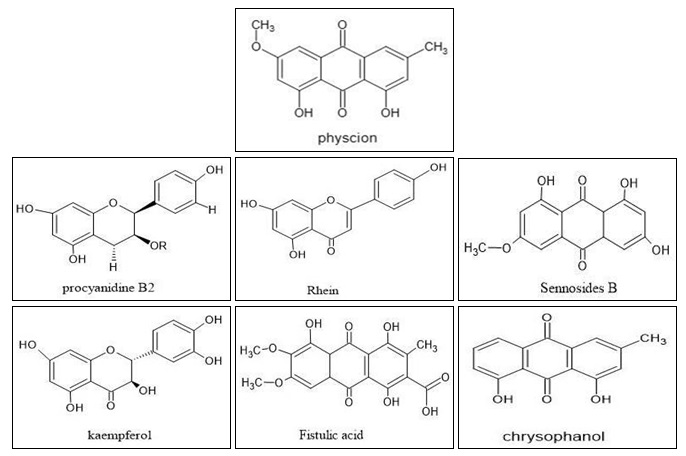
Traditional Use: Cassia fistula is essential for preventing illness. Certain components function as antioxidants and antibacterials, while other components have therapeutic potential for preventing cancer by altering genetic pathways. Numerous chemicals found in plant parts like seeds, bark, leaves, and flowers are utilized to treat variety of human ailments 14.
- The Rajasthani tribes and peoples were used Cassia fistula pod infusions three times a day to treat typhoid.
- The Mulu Kurma tribe utilized Cassia fistula leaf paste to cure leprosy and skin disorders. Khampits use leaf extract as a remedy for dyspepsia.
- The Malamasar tribe utilizes the roots of Cassia fistula to stimulate the nervous system when alcohol paralyzed. The roots are used for digestive issues, diabetes, hematemesis, pruritus, laxatives, analgesics, and antipyretics.
- The root is also used for the treatment of wounds, boils, bleeding, rheumatism, heart disease, and also used in many skin disorders 15.
Leaves: The leaves are used to treat external skin eruptions, piles, rheumatic ulcers, eczema, and jaundice 15. Cassia fistulas leaves are also used to treat constipation 16. The plant's leaf decoction is utilized to safeguard the health of the skin 14.
Flower: It is used to treat skin conditions, stomach-aches, leprosy, and fever. It could heal wounds and act as a laxative. Its extract is used to treat gastrointestinal and stomach issues 16, 17. The floral infusion stimulates uterine function and inhibits ovarian activity in albino rats 14.
Pods: Coughing can be treated using pods.
Stem Bark: Amenorrhea, chest discomfort, and inflammation are all treated with stem bark.
Fruit: Leprosy, fever, stomach issues, and skin conditions are all treated by using Fruit 15. The plant's fruits have demulcent, anti-pyretic, and other biological qualities that reduce body heat and swelling. The fruits of the plant help treat respiratory conditions 14. Fruit is used to treat skin conditions, leprosy, fever, and digestive problems 17.
Pulp: Pulp is used as an anti-pyretic and to treat black water fever and malaria. It is safe to use as a laxative for children and expectant mothers. It is also used to treat rheumatism, biliousness, and liver diseases.
Seed: It’s quite good seeds possess anti-pyretic, laxative, carminative, cooling, and stimulating of the appetite. They are administered to treat biliousness, jaundice, throat irritation and skin conditions. Cassia fistula powder is also used in the treatment of diarrhoea with the seed 15. It is full of fermentation properties, fever reducing effect and digestive aids. Another condition in which it is applied is constipation 17.
Root: Root is useful in the treatment for heart related ailments, healing wounds and ulcers, relieving rheumatic pain, supporting treatment of tubercular conditions and addressing various skin diseases.
The root is well known as tonic, febrifuge, astringent, and effective purgative. The roots are useful for migraine, blood dysentery and backbone pain. The blood sugar level was decrease by the root decoction up to 30% .Root is beneficial for injuries and sores, and also for various skin conditions 14, 16, 17.
Pharmacological and Therapeutic Activities Pharmacological Values: It has many therapeutic uses. Numerous studies conducted worldwide have revealed that this plant possesses a variety of pharmacological activities including antioxidant, antimicrobial, anti inflammatory, antidiabetic, antitumor, hepatoprotective, antitussive, antibacterial, antifungal, wound healing, laxative, antipyretic, larvicidal, and ovicidal 18.
Antioxidant Activity: Because of their exceptional antioxidant qualities, this plant’s blossoms are important for treating skin conditions. Through DPPH scavenging, methanolic extracts from Cassia fistula flowers demonstrate antioxidant potential 17. The bark of Cassia fistula plant has been determined to contain excellent therapeutic properties as far as the extract of the plant in methanol consists of approximately 90% of antioxidants 19.
Laxative Activity: Cassia fistula, especially the plant’s pods, has long been used as a natural laxative. The presence of anthraquinones, which increase intestinal muscular contractions known as peristalsis, is primarily responsible for the laxative effect. A study on the in vitro effects of C. fistula infusion on isolated guinea-pig ileum found that the infusion of C. fistula pods has a substantial dose-dependent laxative effect 17.
Hepatoprotective Activity: Liver damage is a serious global health concern that is frequently brought on by alcohol, pollutants, and some medications. Cassia fistula is a useful plant for shielding the liver from different types of damage because it has shown hepatoprotective benefits. In contrast to the hepatotoxicity caused by CCl₄, pretreatment with C. fistula showed antioxidant and liver-protective effects. It has been demonstrated that the protective effect of C. fistula leaves on the liver which is comparable to that of a typical hepatoprotective drug 17.
Antiinflammatory Activity: C. fistula and other medicinal plants contain significant antioxidant compounds and their flavonoids have the anti-inflammatory properties. Flavonoids are known to inhibit several enzymes that are produced during the inflammatory process 1. Research has been conducted to assess the anti inflammatory effect of C. fistula by the use of different concentrations of the ethanolic leaf extract (ELE). Findings revealed that ELE produced a significant, dose dependent suppression of carrageenan induced paw swelling as well as cotton pellet granuloma formation. Another investigation evaluated both alcoholic and aqueous extracts of C. fistula using sub-acute inflammation models. In air-pouch granuloma and cotton-pellet granuloma tests, both extracts demonstrated marked anti- inflammatory properties 9.
Anti-Tumor Activity: Ayurvedic, Traditional Chinese and Unani medicine have all utilized medicinal plants to treat cancer. A notable study investigated the influence of cassia fistula seed methanolic extract on the progression of Ehrlich ascites carcinoma and on the survival of tumour bearing mice. The researchers reported that treatment with the extract led to a reduction in viable tumour cell count and tumour volume, while also significantly extending the lifespan of the affected mice 9.
Anti-Fertility Activity: The extract from Cassia fistula seeds (petroleum ether) has an anti-implantation action and terminates pregnancies 20. Male rats fertility is reversibly suppressed by Cassia fistula. After 120 days, extract withdrawal brought all the changed parameters back to normal, including organ weights, fertility, hormone levels in the blood, and tissue biochemistry. An aqueous extract of seeds of Cassia fistula administered orally during the first five days of gestation had a dose-related antifertility effect on mated female rats. Pregnancy was inhibited in 57.14 and 71.43 percent of the animals to which 100 and 200 mg/kg body weight was administered respectively. The highest dose of pregnancy inhibition was observed at the largest dose which was 500 mg/kg body weight.
Antifungal Activity: Additionally, Cassia fistula Linn was discovered to have promising antifungal qualities. Cassia fistula leaf is examined in terms of its antifungal activity, in this particular case against Candida albicans. Leaf extracts were prepared in different polarity solvents such as methanol, acetone and diethyl ether. The methanolic extract was the most powerful of the lot with antifungal activity at the same level as the commercial antifungal drugs. Besides, Cassia fistula flower extracts have been shown to be strongly antibacterial against gram-positive and gram-negative bacterial isolates and fungi every extract exhibited good action, particularly those of water, methanol, and chloroform. It was discovered that Pseudomonas aeruginosa was highly susceptible to these extracts. X-ray crystallography techniques were used to determine the structure of 4-hydroxybenzoic acid, the molecule responsible for the antimicrobial activity in ethyl acetate crude extract. This substance worked well against a variety of harmful fungal species. Epidermophyton and trichophyton 21.
Antileishmanial Activity: Cassia fistula leaves contain more bioactive compounds with important medicinal properties. Molecular docking studies showed that these compounds strongly bind to key target enzymes of Leishmania donovani. The methanolic leaf extract effectively inhibit the growth of both promastigote (IC50 value of 43.31 ± 4.202 μg/mL) and also inhibit amastigote forms of the parasite (IC50 value of 80.76 ± 3.626 μg/m). It was found to be safe for human macrophages and caused partial apoptosis in the parasites. Cassia fistula act as a natural and less toxic antileishmanial agent 22.
Hypolipidemic Activity: Studies has shown that Cassia fistula has excellent antidiabetic and lipid-lowering properties. To establish the antidiabetic effect of n-hexane extract of the bark, albino rats were fed with 0.15, 0.30 and 0.45 g/kg body weight of the extract after a period of 30 days.
Streptozotocin was injected intra peritoneally to induce diabetes in the rats. The treatment produced a very significant decrease in the blood glucose of the diabetic rats. Their lipid profiles were also compared and the total lipid profile greatly improved with the biggest dose (0.45 g/kg). Polyphenols and antioxidant components are suggested to be responsible for Cassia fistula's hypoglycemic and hypocholestrolemic effects 21.
Antimicrobial Activity: It’s traditional use for infections, from the extracts such as the leaves, pods, and bark display broad-spectrum antimicrobial activity 23. In-vitro studies confirm this activity against a range of common human pathogens, including Staphylococcus aureus, Escherichia coli, Candida albicans, and Aspergillus niger 23. Some studies suggest that hydroalcoholic and chloroform extracts are particularly effective against Gram-positive bacteria, such as S. pyogenes and S. aureus, showing greater sensitivity than Gram-negative bacteria 24.
Anti-Cancer Activity: The anti-cancer properties of cassia fistula have also proven to be promising therapeutic agent against various types of cancer that have posed a major health problem globally. In research, the plant is able to inhibit the growth of the cancerous cells as well as induce the apoptosis, or programmed cell death, in various forms of cancer including cancer cells of the breast, liver, and colon. The C. fistula seed extract (200 2g) was found to have significant cytotoxicity on methanol manipulation, and COLO320DM cells treated with rhein expressed normal apoptosis. Also, the genomic DNA fragmentation was detected in the prostate cancer cells and this showed the role of the anti-mitotic action of the methanolic extract. All these results indicate the high anticancer potential of Cassia fistula 20.
Immunomodulatory Activity: Recent research has depicted that the Cassia fistula exhibits serious immunomodulatory effects that promote augmentation of immune system and amplification of body response towards infection and illness. A mouse dead space wound model indicated that lupeol which is an important triterpene existing naturally in Cassia fistula has high wound healing potential. Lupeol has been demonstrated to inhibit several immunological reactions such as the capacity of macaques to phagocytose as well as the discharge of cytokines by CD4+ T helper cells. After luteol was administered there was a reduction in CD4+ T cells and cytokines including IL-2, IFN-gamma (Th1), and IL-4 (Th2) 17.
Antitussive Activity: The study of Cassia fistula methanolic extract on a sulfur dioxide gas-induced cough paradigm in mice was examined. When compared to the control, it showed notable antitussive action in a dose-dependent manner 25.
Antipyretic Activity: Antipyretic action in experimental models, it was discovered that Cassia fistula pods had no antipyretic properties. The extracts from the pod had significant antipyretic activity by lowering fever caused by yeast. In rats with yeast-induced pyrexia, the extract improved hypothermal activity. Yeast is injected subcutaneously to screen 36 and cause pyrexia by boosting prostaglandin synthesis 25.
Antidiabetic Activity: This experiment used male Wistar rats, which were intraperitoneally injected with streptozotocin in a dose of 60mg/kg body weight, to induce diabetes. After induction, the diabetic mice exhibited high blood glucose and lacked body weight. These rats were used and dosed orally using an extract of Cassia fistula pod in three doses of 100, 250 and 500 mg/kg body weight/day, over a period of 60 days. A popular drug called glibenclamide was used to compare the two treatment groups. Cassia fistula according to the findings has a meaningful antihyperglycemic effect, having succeeded to reduce the level of blood glucose and the level of HbA1c 22.
Economic values: The flowers of Cassia fistula have not yet gained much commercial importance and remain largely under-utilized. However, tribal communities often use the blossoms since the plant grows abundantly in forests and home gardens. Although it is a common roadside tree in rural areas, many people are still unaware that its flowers are edible.
Some parts of the plant are used for commercial purpose in both local and international markets. The tree is also valued as an ornamental species, and its wood is used as fuel. In local or online markets, the seeds can cost up to ₹400, while the extracts from C. fistula, which are used in several Ayurvedic formulations, may sell for around ₹2200 18.
Pharmaceutical Applications:
- Pulp of the Cassia fistula is used as a polymer for new drug development.
- Utilized as preservatives in food industries due to less toxicity.
- Used in formulating natural dyes and further processing to solar cells.
- Use to develop eco-friendly adsobents to balance the pollution factors.
- Used in balancing quality and shelf life of crops and food products due to antifeedant activity.
- Used in producing numerous cosmetic products possessing antiageing property.
- Used in synthesizing nanomaterials using zinc metal which shows antioxidant activity.
Toxicology and Clinical Safety Profile: A critical component of clinical significance is a favorable safety profile. C. fistula has been extensively evaluated in both preclinical toxicology studies and as part of human clinical trials. Preclinical Safety includes,
- Acute toxicity
- Sub- acute toxicity
- Sub-chronic Toxicity
Preclinical animal studies establish an extremely high safety margin for C. fistula extracts.
Acute Toxicity (LD50): Multiple studies on acute toxicity find C. fistula to be non-toxic at very high doses. The approximate lethal dose (LD50) for the ethanol fruit extract in rats 26 and the methanolic seed extract in mice is estimated to be higher than 5000 mg/kg (10). An infusion of the pods showed an (LD50) of 6600 mg/kg 9.
Sub-acute Toxicity (28-day): A 28-day oral toxicity study in rats using ethanol fruit extract at doses up to 1000 mg/kg/day did not induce any mortality 26. Furthermore, there were no significant changes in hematological or biochemical parameters (including markers for liver and kidney function). Histopathological examination of the liver, heart, and kidneys revealed "no noticeable histological changes" compared to the control group 26.
Sub-chronic Toxicity (90-day): A 90-day study provides an important toxicological nuance. This study, using a bark extract, found that while lower doses were safe, the high dose of 1000 mg/kg/day did induce "histological damages" in the liver and kidney of rats 27. Critically, this damage was found to be "fully recovered" after a 30-day recovery period (no-treatment), indicating the toxicity was reversible 27. This finding suggests that safety is dependent on the plant part used (bark vs. fruit), dose, and duration of use, reinforcing the need for dose optimization 23.
CONCLUSION: The current review was based on Cassia fistula, which has a number of pharmacological activities that are used in the production of new drugs. The Cassia fistula fruits, pods, seeds, flowers, bark and leaves contain bioactive compounds which have many health effects such as antioxidant, laxative, anti-inflammatory, antifungal, antimicrobial, antidiabetic and anticancer effects. Cassia fistula is also known as an antipyretic, anti-tumor, antitussive, anti-leishmanial, and immunom. The medicinal actions of the plants can be attributed to their rich flavanoid contents, tannin, anthraqinone and glycoside contents. The plant is a great future pharmacological agent since, unlike synthetic drugs, the plant has less adverse effects. To enhance the use of Cassia fistula in the traditional and modern medicine, further research on the plant is being conducted to seek effective solutions to most health disorders.
ACKNOWLEDGEMENT
CONFLICT OF INTEREST
REFERENCES:
- Mwangi RW, Macharia JM, Wagara IN and Bence RL: The medicinal properties of Cassia fistula L: A review. Biomed Pharmacother Biomedecine Pharmacother 2021; 144: 112240.
- Kainsa S, Kumar P and Rani P: Pharmacological potentials of Cassia auriculata and Cassia fistula plants: A review. Pak J Biol Sci PJBS 2012; 15(9): 408–17.
- Nagpal MA, Nagpal N, Rahar S, Shah G, Swami G and Kapoor R: Phytochemical Investigation of Methanolic Extract of Cassia fistula Pharmacogn J 2011; 3(26): 61–9.
- Bahorun T, Neergheen V and Aruoma O: Phytochemical constituents of Cassia fistula. Afr J Food Agric Nutr Dev [Internet]. 2011 Nov 9 [cited 2025; 4(13). Available from: http://www.ajol.info/index.php/ajfand/article/view/71772
- Seyyednejad SM, Motamedi H, Vafei M and Bakhtiari A: The Antibacterial Activity of Cassia fistula Organic Extracts. Jundishapur J Microbiol 2014; 7(1): 8921.
- Kour R, Sharma N, Showkat S, Sharma S, Nagaiah K and Kumar S: Methanolic fraction of Cassia fistula bark exhibits potential to combat oxidative stress and possess antiproliferative activity. JTEHA 2023; 86(9): 296–312.
- Partovi N, Fatemi SJ and Ebadzadeh MR: Antiurolithiatic effects of Cassia fistula fruit extracts on ethylene glycol-induced nephrolithiasis in rats. Microsc Res Tech 2024; 87(7): 1494–506.
- Killedar SG, Nale AB, More HN, Nadaf SJ, Pawar AA and Tamboli US: Isolation, characterization, and evaluation of Cassia fistula seed and pulp polymer for pharmaceutical application. IJPI 2014; 4(4): 215–25.
- Rahmani AH: Cassia fistula Linn: Potential candidate in the health management. Pharma Res 2015; 7(3): 217–24.
- Jothy SL, Zakariah Z, Chen Y and Sasidharan S: In-vitro, in-situ and in-vivo studies on the anticandidal activity of Cassia fistula seed extract. Mol Basel Switz 2012; 17(6): 6997–7009.
- Panda SK, Padhi LP and Mohanty G: Antibacterial activities and phytochemical analysis of Cassia fistula (Linn.) leaf. J Adv Pharm Technol Res 2011; 2(1): 62–7.
- Tan J, Zheng M, Duan S, Zeng Y, Zhang Z and Cui Q: Chemical Profiling and Screening of the Marker Components in the Fruit of Cassia fistula by HPLC and UHPLC/LTQ-Orbitrap MSn with Chemometrics. Mol Basel Switz 2018; 23(7): 1501.
- Atarzadeh F, Kamalinejad M, Dastgheib L, Amin G, Jaladat AM and Nimrouzi M: Cassia fistula: A remedy from Traditional Persian Medicine for treatment of cutaneous lesions of Pemphigus vulgaris. Avicenna J Phytomedicine 2017; 7(2): 107–15.
- Abhishek Konar, Pranabesh Ghosh and Sirshendu Chatterjee: Cassia fistula is a Miraculous Medicinal Plant: A Brief Review 2023 June 25 [cited 2025 Nov 29]; Available from: https://zenodo.org/record/8079450
- Jangid T, Jain A, Bhardwaj GS and Jangir RN: A Comprehensive Review of Phytochemical and Pharmacological Appraisal of Cassia fistula Pharmacogn Res 2025; 17(2): 347.
- Saeed M, Naseer S, Hussain S and Iqbal M: Phytochemical Composition and Pharmacological Effects of Cassia fistula. Sci Inq Rev 2020; 4(1): 59–69.
- Aggarwal D, Kashyap D and Sharma P: A comprehensive review on the pharmacological effect of Cassia fistula J Pharmacogn Phytochem 2025; 14(4): 555–9.
- Bhagwati Prashad Sharma1 LMS: Food, medicinal, pharmacological, and economic values of Cassia fistula L. In Zenodo 2023 [cited 2025 Nov 29]. Available from: https://zenodo.org/record/8269630
- Singh R, Khanam H and Pandey J: The Biological Properties and Medical Importance of Cassia fistula: A Mini Review. In: ECSOC 2023 [Internet]. MDPI; 2023 [cited 2025 Nov 29]. p. 95. Available from: https://www.mdpi.com/2673-4583/14/1/95
- Sultana A: Cassia fistula Linn (Khiyar Sambhar 7.
- Samreen Tanveer: A comprehensive review on pharmacological and phytochemical potential of cassia fistula linn: a magical herb. Int J Biol Pharm Allied Sci [Internet]. 2019 June 1 [cited 2025 Nov 29]; 8(6). Available from: http://ijbpas.com/pdf/2019/June/MS_IJBPAS_2019_4734.pdf
- Jangir RN and Jain GC: Evaluation of Antidiabetic Activity of Hydroalcoholic Extract of Cassia fistula Linn. pod in Streptozotocin-Induced Diabetic Rats. Pharmacogn J 2017; 9(5): 599–606.
- Kesari M, Ansari JA, Hasan SM, Ahsan F, Ahmad S and Ansari TM: Unveiling the Therapeutic Arsenal of Cassia fistula L.: Traditional Wisdom to Modern Biomedical Applications. J Drug Deliv Ther 2025; 15(10): 212–20.
- Bhalodia NR and Shukla VJ: Antibacterial and antifungal activities from leaf extracts of Cassia fistula: An ethnomedicinal plant. JAPTR 2011; 2(2): 104–9.
- Danish M, Singh P, Mishra G, Srivastava S, Jha KK and Khosa RL: Cassia fistula (Amulthus)- An important medicinal plant: a review of its traditional uses. Phytochemistry and Pharmacological Properties 2011; 26.
- Abid R and Mahmood R: Acute and sub-acute oral toxicity of ethanol extract of Cassia fistula fruit in male rats. Avicenna J Phytomedicine 2019; 9(2): 117–25.
- Chaerunisaa AY, Susilawati Y, Muhaimin M, Milanda T, Hendriani R and Subarnas A: Antibacterial activity and subchronic toxicity of Cassia fistula L. barks in rats. Toxicol Rep 2020; 7: 649–57.
How to cite this article:
Vasumathi D, Ismail TAA, Muthupandi P, Poornima S, Sangeetha C and Selvakumar M: Comprehensive review of Cassia fistula. Int J Pharmacognosy 2026; 13(2): 59-67. doi link: http://dx.doi.org/10.13040/IJPSR.0975-8232.IJP.13(2).59-67.
This Journal licensed under a Creative Commons Attribution-Non-commercial-Share Alike 3.0 Unported License.
Article Information
1
59-67
671 KB
321
English
IJP
D. Vasumathi *, T. Anas Ashik Ismail, P. Muthupandi, S. Poornima, C. Sangeetha and M. Selvakumar
KMCH College of Pharmacy, Coimbatore, Tamil Nadu, India.
cs2856002@gmail.com
21 January 2026
24 February 2026
25 February 2026
10.13040/IJPSR.0975-8232.IJP.13(2).59-67
28 February 2026
 Download