


COMPARATIVE IN-VITRO ANTIOXIDANT ACTIVITY OF PUNICA GRANATUM PEEL AND VITIS VINIFERA SEEDS
HTML Full TextCOMPARATIVE IN-VITRO ANTIOXIDANT ACTIVITY OF PUNICA GRANATUM PEEL AND VITIS VINIFERA SEEDS
G. Revathi *, D. Yamini, Ch. Siva Ganesh and Shaik Sarmas Sri
Department of Pharmacology, Hindu College of Pharmacy, Guntur, Andhra Pradesh, India.
ABSTRACT: Oxidative stress caused by free radicals contributes significantly to aging and various chronic diseases, including cardiovascular disorders, cancer, diabetes mellitus, and neurodegenerative conditions. Natural antioxidants from plant sources have gained scientific attention due to their therapeutic potential and safer profile compared to synthetic antioxidants. The present study comparatively evaluated the in-vitro antioxidant activity of Punica granatum peel extract and Vitis vinifera seed extract using phytochemical screening and Ferric Reducing Antioxidant Power (FRAP) assay. Ethanolic extracts of both plant materials were prepared by maceration and subjected to preliminary phytochemical analysis for the detection of phenolics, tannins, and flavonoids. Antioxidant activity was assessed at concentrations ranging from 100–800 µM by measuring absorbance at 593 nm using the FRAP method. Both extracts exhibited concentration-dependent antioxidant activity with increasing absorbance at higher concentrations. However, Punica granatum peel extract consistently showed greater ferric reducing antioxidant power than Vitis vinifera seed extract at all tested concentrations. At 800 µM, the absorbance value of Punica granatum was 0.8, while Vitis vinifera showed 0.3. The superior antioxidant activity of Punica granatum may be attributed to its higher content of polyphenols, tannins, punicalagins, and ellagic acid. The study concludes that both extracts possess significant antioxidant potential, with Punica granatum demonstrating higher efficacy and promising applications in pharmaceutical, nutraceutical, and cosmetic formulations against oxidative stress.
Keywords: Punica granatum, Vitis vinifera, Antioxidant activity, Oxidative stress, FRAP assay, Phenolic compounds, Flavonoids, Free radicals
INTRODUCTION:
The Protective Power of Antioxidants: Safeguarding Health and Skin: In the complex environment of the human body, countless chemical reactions occur every second to sustain life. Among the by-products of these reactions are Free radicals, unstable molecules that can harm healthy cells. Much like how rust slowly corrodes iron, free radicals gradually damage the body at the cellular level.
If left unchecked, they lead to a condition known as oxidative stress, which has been closely linked to aging and several chronic diseases, including heart disease, cancer, diabetes, and neurodegenerative disorders 5, 14. This is where antioxidants step in as the body’s natural defense system. Antioxidants are compounds that neutralize free radicals, preventing them from causing further damage. By stabilizing these reactive molecules, antioxidants play a vital role in maintaining overall health and protecting the body from long-term harm 4, 7.
Antioxidants can be obtained from both natural and synthetic sources, but those derived from natural origins are often considered more beneficial and safer. Nature provides a rich variety of antioxidant compounds, especially in the form of plant-based foods and extracts. These include phenolic compounds, vitamins such as vitamin C and E, and essential minerals. Fruits, vegetables, herbs, and plant extracts are particularly abundant in these protective substances, making them an essential part of a healthy diet 3, 15.
One of the most remarkable aspects of antioxidants is their versatility. They can be administered both orally through diet or supplements and topically, in the form of creams and skincare products. Internally, antioxidants support the body by reducing the risk of major illnesses such as cardiovascular diseases, cancer, stroke, cataracts, and diabetes. Several studies have also reported that pomegranate consumption significantly improves oxidative stress status due to its rich phenolic antioxidant content 6. Externally, they play a crucial role in maintaining healthy skin and slowing down the visible signs of aging 17. Studies have demonstrated that pomegranate juice and extract possess significant antioxidant properties and may help reduce oxidative stress in diabetic patients by increasing paraoxonase activity and improving antioxidant defence mechanisms 9.
The skin, being the body’s outermost layer, is constantly exposed to environmental stressors such as ultraviolet (UV) radiation, pollution, and toxins. These factors increase the production of free radicals, leading to a process known as photoaging. Over time, free radicals damage the skin’s structural components, including lipids, proteins, and connective tissues.
Specifically, they oxidize the lipid components of sebum and polyunsaturated fatty acids found in cell membranes. This oxidative damage disrupts the skin’s natural barrier, making it more vulnerable to dryness and irritation. Futhermore, free radicals contribute to the breakdown of collagen and elastin fibres key elements responsible for the skin’s firmness and elasticity. They also degrade hyaluronic acid, a substance that helps maintain skin hydration and plumpness 14, 17.
The visible effects of this damage are often seen as premature wrinkles, fine lines, uneven pigmentation, loss of skin firmness, and excessive dryness. In addition, oxidative stress weakens the skin’s immune defence, increasing susceptibility to infections and even raising the risk of skin cancer 5. Incorporating antioxidants into daily life, therefore, is not just a matter of beauty but of overall health and well-being. A balanced diet rich in fruits, vegetables, and plant-based nutrients, along with proper skincare, can significantly enhance the body’s ability to fight oxidative stress. In a world where environmental stressors are unavoidable, antioxidants offer a powerful and natural way to protect and preserve both health and vitality 4, 7.
What are Free Radicals?: Free radicals are atoms, molecules, or ions that contain one or more unpaired electrons in their outer orbital, making them highly unstable and chemically reactive 14. Since electrons generally exist in pairs, the presence of an unpaired electron causes free radicals to rapidly react with surrounding molecules in an attempt to attain stability. During this process, they may donate or steal electrons from nearby cellular components, initiating chain reactions that can damage biological systems 5.
Formation of Free Radicals in the Human Body: Free radicals are naturally generated during various metabolic and physiological processes in the body 7. These include:
- Cellular respiration and oxygen metabolism
- Exercise and energy production
- Immune system activity against microorganisms
- Inflammatory reactions
Environmental factors such as pollution, cigarette smoke, ultraviolet radiation, pesticides, and industrial chemicals may further increase free radical production 14, 17.
Common examples of free radicals include hydroxyl radical (•OH), superoxide anion (O₂•⁻), nitric oxide (NO•), and hydrogen peroxide (H₂O₂). Among these, the hydroxyl radical is considered highly reactive and damaging because of its strong oxidizing nature 5.
Oxidative Stress: Under normal conditions, the body maintains a balance between free radical generation and antioxidant defence system. However, excessive accumulation of free radicals leads to oxidative stress 14.
Oxidative stress damages important cellular components such as:
- Lipids
- Proteins
- Enzymes
- DNA
This cellular damage may impair normal physiological functions and contribute to tissue injury 5.
Health Effects of Free Radicals: Excessive free radical generation and oxidative stress are associated with the development of several chronic diseases 14, 17, including:
- Cancer
- Cardiovascular diseases
- Diabetes mellitus
- Neurodegenerative disorders
- Inflammatory diseases
- Premature aging
Oxidative damage to DNA may also result in mutations and carcinogenesis 17.
Role of Antioxidants: Antioxidants are substances capable of neutralizing free radicals by donating electrons without becoming unstable themselves 1, 5. They interrupt free radical chain reactions and protect cells from oxidative damage.
Natural antioxidants include:
- Vitamin C
- Vitamin E
- Flavonoids
- Phenolic compounds
- Polyphenols
Plant-derived antioxidants have gained significant scientific attention because of their therapeutic potential and safer profile compared to synthetic antioxidants 5.
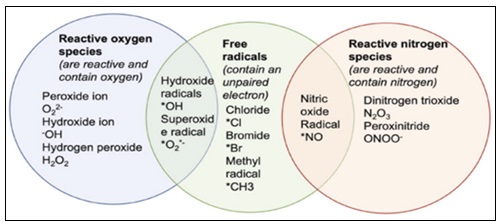
FIG. 1: TYPES OF FREE RADICALS 14
METHODOLOGY:
Extraction:
Pomegranate Peel Extract 18, 23:
- 250 to 300 g of pomegranate peel was taken after shade-dried for 1 week.
- Fully dried pomegranate peel was ground into fine powder
- From the fine powder take 10g of powder macerated with 200ml of ethanol for 3 days [24 to 72 hrs]
- Filter the solvent using Whatman filter paper
- Solvent was subjected for evaporation for 24 hours in room temperature
- Obtained concentrated semisolid was collected.
- The obtained Semisolid was stored in refrigerator at 4o
Grape Seed Extract 11:
- 1000 to 1500g of grape seeds were taken after shade dried for 3 days.
- Fully dried grape seeds were ground into fine powder.
- From the fine powder, 10g was macerated with 200 ml of ethanol for 3 days
- Filter the solvent using Whatman filter paper.
- Solvent was subjected 10 evaporation for 24 hours in room temperature
- Obtained concentrated semisolid was collected.
- The obtained Semisolid was stored in refrigerator at 4°C
Preliminary Phytochemical Screening: Preliminary phytochemical screening of the ethanolic extracts of Punica granatum peel and Vitis vinifera seeds was carried out using standard qualitative chemical tests to identify the presence of bioactive phytoconstituents responsible for antioxidant activity. Medicinal plants are known to contain several secondary metabolites such as phenolics, flavonoids, tannins, alkaloids, and saponins, which contribute significantly to free radical scavenging activity and protection against oxidative stress 5, 14.
Phenolic compounds and flavonoids are considered major natural antioxidants because of their ability to donate hydrogen atoms or electrons and inhibit oxidative damage caused by reactive oxygen species 4, 8.
Pomegranate peel and grape seeds are particularly rich in polyphenolic compounds, including tannins, anthocyanins, catechins, proanthocyanidins, ellagic acid, and punicalagins, which are responsible for their strong antioxidant potential 1, 11, 23.
The ethanolic extracts were subjected to qualitative phytochemical analysis using standard procedures described in pharmacognosy studies 16. Ferric chloride test was employed for detection of phenolic compounds and tannins, Shinoda test for flavonoids, Mayer’s test for alkaloids, and foam test for saponins. Formation of characteristic colour changes or precipitates confirmed the presence of specific phytochemicals.
The phytochemical investigation revealed the presence of phenolics, flavonoids, and tannins in both Punica granatum peel extract and Vitis vinifera seed extract, whereas alkaloids and saponins were absent. The presence of these polyphenolic constituents may contribute to the antioxidant activity observed in the FRAP assay. Previous studies have also reported that pomegranate peel contains abundant hydrolysed tannins and phenolic acids with strong reducing and radical scavenging activity 18, 20.
Similarly, grape seeds are rich in proanthocyanidins and flavonoids that exhibit antioxidant and protective effects against oxidative stress 10, 11. The higher antioxidant activity observed in Punica granatum peel extract may be attributed to its comparatively higher concentration of phenolic compounds and tannins.
Therefore, phytochemical screening supports the antioxidant findings of the present study and indicates the therapeutic potential of these plant extracts as natural antioxidant agents.
TABLE 1: TEST FOR PHENOLIC COMPOUNDS (FERRIC CHLORIDE)
| Test Procedure | Observation | Inference |
| To 2 mL of plant extract, few drops of 5% ferric chloride solution were added. | Formation of bluish-black coloration. | Presence of phenolic compounds |
TABLE 2: TEST FOR FLAVONOIDS (SHINODA TEST)
| Test Procedure | Observation | Inference |
| To 2 mL of extract, small pieces of magnesium, ribbon and few drops of concentrated hydrochloric acid were added. | Appearance of pink coloration. | Presence of flavonoids |
TABLE 3: TEST FOR TANNINS (FERRIC CHLORIDE TEST)
| Test Procedure | Observation | Inference |
| To 2 mL of extract, few drops of ferric chloride solution were added. | Development of dark green coloration | Presence of tannins |
TABLE 4: TEST FOR ALKALOIDS (MAYER’S TEST)
| Test Procedure | Observation | Inference |
| To 2 mL of extract, few drops of Mayer’s reagent were added. | Formation of cream or pale-yellow precipitate. | Presence of alkaloids |
TABLE 5: TEST FOR SAPONINS (FOAM TEST)
| Test Procedure | Observation | Inference |
| About 2 mL of extract was shaken vigorously with distilled water in a test tube for few minutes. | Persistent froth or foam formation observed. | Presence of saponins |
Confirmatory Test:
FRAP Assay (Ferric Reducing Antioxidant Power) 2:
Principle: The Ferric Reducing Antioxidant Power (FRAP) assay is based on the reduction of ferric ions (Fe³⁺) to ferrous ions (Fe²⁺) by antioxidants present in the sample under acidic conditions.
In this method, the ferric complex is reduced to ferrous form, resulting in the formation of a blue or purple colored complex. The intensity of the colour produced is directly proportional to the antioxidant capacity of the sample and is measured spectrophotometrically at 593 nm 2, 8.
Materials Required:
- Acetate buffer (pH 3.6)
- Ferric chloride
- O-Phenanthroline
- Hydrochloric acid
- Ferrous sulphate
- Distilled water
- Sample extract
Preparation of Acetate Buffer 2:
- About 3.1 g of sodium acetate trihydrate was dissolved in 16 mL of glacial acetic acid.
- The volume was made up to 1 L with distilled water.
- The pH was adjusted to 3.6 using hydrochloric acid or sodium hydroxide solution.
Preparation of O-Phenanthroline Solution 2:
- About 0.031 g of O-phenanthroline was dissolved in 10 mL of hydrochloric acid.
- The solution was warmed in a water bath at 50°C.
Preparation of Ferric Chloride Solution 2:
- About 0.054 g of ferric chloride (FeCl₃·H₂O) was dissolved in 10 mL of distilled water.
Preparation of FRAP Reagent 2, 8:
- Acetate buffer, O-phenanthroline solution, and ferric chloride solution were mixed in the ratio of 10:1:1.
- The reagent initially showed straw brown or yellow colour.
- The prepared reagent was incubated at 37°C in a water bath for 10 minutes.
- The colour gradually changed to blue or purple indicating formation of the FRAP reagent.
Preparation of Standard Solution of Ferrous Sulphate 2, 8:
- A 1 mM stock solution of ferrous sulphate was prepared by dissolving 0.278 g of FeSO₄·7H₂O in 1 L of distilled water.
- Different standard concentrations ranging from 100–1000 µM were prepared.
- Standard dilutions of 100 µM, 200 µM, 400 µM, 600 µM, and 800 µM were used for analysis.
FRAP Assay Procedure 2, 8:
- FRAP reagent was freshly prepared before the experiment.
- Different concentrations (100–800 µM) of ethanolic extracts of Punica granatum peel and Vitis vinifera seeds were prepared.
- About 150 µL of sample extract was mixed with 2.85 mL of FRAP reagent. Alternatively, 10 µL of sample with 200 µL reagent may be used for microplate analysis.
- The reaction mixture was incubated at 37°C for 4–10 minutes.
- Antioxidants present in the extracts reduced ferric ions to ferrous ions, producing a blue-coloured complex.
- The absorbance was measured at 593 nm using a UV-Visible spectrophotometer.
- Increased absorbance indicated higher ferric reducing antioxidant power and greater antioxidant activity of the extracts.
RESULTS:
TABLE 6: PRELIMINARY PHYTOCHEMICAL SCREENING OF EXTRACTS
| Phytochemical Constituents | Punica granatum Peel Extract | Vitis vinifera Seed Extract |
| Phenolics | Present | Present |
| Flavonoids | Present | Present |
| Tannins | Present | Present |
| Alkaloids | Absent | Absent |
| Saponins | Absent | Absent |
TABLE 7: FRAP ASSAY ABSORBANCE VALUES
| Concentrations | Absorbance at 593 nm | |
| Pomegranate peel | Grape seed | |
| 100 μM | 0.2 | 0.08 |
| 200 μM | 0.3 | 0.1 |
| 400 μM | 0.5 | 0.2 |
| 600 μM | 0.6 | 0.26 |
| 800 μM | 0.8 | 0.3 |
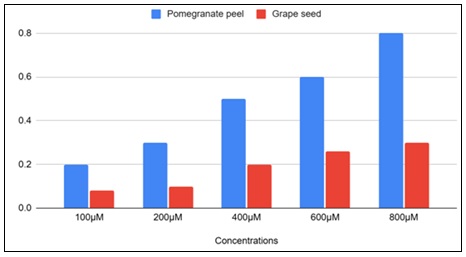
FIG. 2: POMEGRANATE PEEL AND GRAPE SEED
Comparative Study between Punica granatum and Vitis vinifera: Based on the obtained results, both Punica granatum and Vitis vinifera extracts exhibited antioxidant activity due to the presence of phenolic compounds, flavonoids, and other phytoconstituents known for their free radical scavenging properties 11, 12. However, Punica granatum showed comparatively higher antioxidant activity compared with Vitis vinifera, as evidenced by the greater absorbance values observed in the FRAP assay. The enhanced antioxidant potential of pomegranate peel extract may be attributed to its rich content of polyphenols, tannins, punicalagins, and ellagic acid 3, 18. The superior antioxidant activity of Punica granatum observed in the present study is supported by previous comparative studies reporting high phenolic and anti-inflammatory activity in pomegranate peel varieties 21.
DISCUSSION: The present study evaluated and compared the antioxidant activity of Punica granatum (pomegranate peel) and Vitis vinifera (grape seed) extracts using phytochemical screening and FRAP assay. Preliminary tests confirmed the presence of phenolic compounds, tannins, and flavonoids in both extracts, which are known for their free radical scavenging and reducing properties 12, 16. The antioxidant activity observed in both extracts may be associated with the presence of phenolic compounds, which possess effective hydrogen peroxide scavenging and free radical neutralizing properties 13.
The FRAP assay demonstrated that both extracts exhibited concentration-dependent antioxidant activity, as absorbance increased with increasing concentration. However, Punica granatum showed consistently higher absorbance values than Vitis vinifera at all tested concentrations, indicating greater ferric reducing antioxidant power 2.
The stronger antioxidant activity of pomegranate peel extract may be attributed to its higher content of polyphenols and tannins, particularly punicalagins and ellagic acid, which possess potent reducing and antioxidant properties 3, 12, 18. Previous studies have also reported significant antioxidant activity in pomegranate peel extracts using various in-vitro antioxidant models 20, 22, 23. Although grape seed extract also contains antioxidant phytoconstituents such as flavonoids and proanthocyanidins, its activity was comparatively lower under the present experimental conditions. The antioxidant activity observed in Vitis vinifera may be attributed to the presence of polyphenols and proanthocyanidins, as grape-derived products have been widely reported to reduce oxidative stress and exhibit significant antioxidant effects 10, 11. These findings suggest that both plant extracts are valuable natural antioxidant sources, with Punica granatum demonstrating superior antioxidant potential. The study supports the growing interest in plant-derived antioxidants for pharmaceutical, nutraceutical, and cosmetic applications 4, 19.
CONCLUSION: The present study successfully evaluated and compared the antioxidant potential of Punica granatum and Vitis vinifera extracts using phytochemical screening and FRAP assay. The results confirmed the presence of important antioxidant phytoconstituents such as phenolic compounds, tannins, and flavonoids in both extracts. Comparative analysis demonstrated that Punica granatum exhibited significantly higher ferric reducing antioxidant power than Vitis vinifera at all tested concentrations, indicating superior antioxidant activity. The study outcome suggests that pomegranate peel extract may serve as a promising natural antioxidant source with potential applications in pharmaceutical, nutraceutical, and cosmetic formulations for protection against oxidative stress and related cellular damage. These findings further support the growing interest in the utilization of plant-derived antioxidants as Safer and more effective alternatives to synthetic antioxidants.
ACKNOWLEDGEMENT: Nil
CONFLICT OF INTEREST: Nil
REFERENCES:
- Bagchi D, Garg A, Krohn RL, Bagchi M, Tran MX & Stohs SJ: Oxygen free radical scavenging abilities of vitamins C and E, and a grape seed proanthocyanidin extract in-vitro. Research Communications in Molecular Pathology and Pharmacology 1997; 95(2): 179–189.
- Benzie IFF & Strain JJ: The ferric reducing ability of plasma (FRAP) as a measure of antioxidant power: The FRAP assay. Analytical Biochemistry 1996; 239(1): 70–76. https://doi.org/10.1006/abio.1996.0292
- de Oliveira FL, Arruda TYP and da Silva Lima R: Pomegranate as a natural source of phenolic antioxidants: A review. Journal of Food Bioactive 2020; 9: 10–22.
- Gulcin I: Antioxidants and antioxidant methods: An updated overview. Archives of Toxicology 2020; 94(3): 651–715. https://doi.org/10.1007/s00204-020-02689-3
- Lobo V, Patil A, Phatak A & Chandra N: Free radicals, antioxidants and functional foods: Impact on human health. Pharmacognosy Reviews 2010; 4(8): 118–126. https://doi.org/10.4103/0973-7847.70902
- Lorzadeh E, Heidary Z and Mohammadi M: Does pomegranate consumption improve oxidative stress? A systematic review and meta-analysis of randomized controlled clinical trials. Clinical Nutrition ESPEN 2022; 47: 117–127.
- Pham-Huy LA, He H & Pham-Huy C: Free radicals, antioxidants in disease and health. International Journal of Biomedical Science 2008; 4(2): 89–96.
- Prior RL, Wu X & Schaich K: Standardized methods for the determination of antioxidant capacity and phenolics in foods and dietary supplements. Journal of Agricultural and Food Chemistry 2005; 53(10): 4290–4302. https://doi.org/10.1021/jf0502698
- Rock W, Rosenblat M, Miller-Lotan R, Levy AP, Elias M & Aviram M: Consumption of wonderful variety pomegranate juice and extract by diabetic patients increases paraoxonase activity and decreases oxidative stress. Atherosclerosis 2008; 198(1): 136–142.
- Sarkhosh-Khorasani S, Sangsefidi ZS & Hosseinzadeh M: The effect of grape products containing polyphenols on oxidative stress: A systematic review and meta-analysis of randomized clinical trials. Nutrition Journal 2021; 20(1): 25. https://doi.org/10.1186/s12937-021-00686-5
- Shi J, Yu J, Pohorly JE & Kakuda Y: Polyphenolics in grape seeds—Biochemistry and functionality. Journal of Medicinal Food 2003; 6(4): 291–299. https://doi.org/10.1089/109662003772519831
- Singh B, Singh JP, Kaur A & Singh N: Phenolic compounds as beneficial phytochemicals in pomegranate (Punica granatum) peel: A review. Food Chemistry 2018; 261: 75–86. https://doi.org/10.1016/j.foodchem.2018.04.039
- Sroka Z & Cisowski W: Hydrogen peroxide scavenging, antioxidant and anti-radical activity of some phenolic acids. Food and Chemical Toxicology 2003; 41(6): 753–758. https://doi.org/10.1016/S0278-6915(02)00329-0
- Valko M, Leibfritz D, Moncol J, Cronin MTD, Mazur M & Telser J: Free radicals and antioxidants in normal physiological functions and human disease. The International J of Biochemistry & Cell Biology 2007; 39(1): 44–84. https://doi.org/10.1016/j.biocel.2006.07.001
- Wojdyło A, Oszmiański J & Czemerys R: Antioxidant activity and phenolic compounds in 32 selected herbs. Food Chemistry 2007; 105(3): 940–949. https://doi.org/10.1016/j.foodchem.2007.04.038
- Yadav RNS & Agarwala M: Phytochemical analysis of some medicinal plants. J of Phytology 2011; 3(12): 10–14.
- Young IS & Woodside JV: Antioxidants in health and disease. Journal of Clinical Pathology 2001; 54(3): 176–186. https://doi.org/10.1136/jcp.54.3.176
- Malviya S, Arvind Jha A & Hettiarachchy N: Antioxidant and antibacterial potential of pomegranate peel extracts. Journal of Food Science and Technology 2014; 51(12): 4132–4137. https://doi.org/10.1007/s13197-013-0956-4
- Elzaher MASA, El-Kholany EA, Bakr YM, Khattab ES & Ghazy MB: Evaluation of biological activity of pomegranate peel extract as antioxidant, antimicrobial and anticancer. Research J of Pharmacy and Technology. 2024 https://doi.org/10.52711/0974-360X.2024.00430
- Shiban MS, Al-Otaibi MM & Al-Zoreky NS: Antioxidant activity of pomegranate (Punica granatum) fruit peels. Food and Nutrition Sciences 2012; 3(7): 991–996. https://doi.org/10.4236/fns.2012.37131
- Parisi V, Santoro V, Donadio G, Bellone ML, Diretto G, Sandri C, Mensitieri F, De Tommasi N, Dal Piaz F & Braca A: Comparative chemical analysis of eight Punica granatum peel cultivars and their antioxidant and anti-inflammatory activities. Antioxidants 2022; 11(10): 1992. https://doi.org/10.3390/antiox11101992
- Derakhshan Z, Ferrante M, Tadi M, Ansari F, Heydari A, Hosseini MS, Conti GO & Khalili Sadrabad E: Antioxidant activity and total phenolic content of ethanolic extract of pomegranate peels, juice and seeds. Food and Chemical Toxicology 2018; 114: 108–111. https://doi.org/10.1016/j.fct.2018.02.023.
- Singh RP, Chidambara Murthy KN & Jayaprakasha GK: Studies on the antioxidant activity of pomegranate (Punica granatum) peel and seed extracts using in-vitro models. Journal of Agricultural and Food Chemistry 2002; 50(1), 81–86. https://doi.org/10.1021/jf010865b.
How to cite this article:
Revathi G, Yamini D, Ganesh CS and Sri SS: Comparative in-vitro antioxidant activity of Punica granatum peel and Vitis vinifera seeds. Int J Pharmacognosy 2026; 13(7): 688-95. doi link: http://dx.doi.org/10.13040/IJPSR.0975-8232.IJP.13(7).688-95.
This Journal licensed under a Creative Commons Attribution-Non-commercial-Share Alike 3.0 Unported License.
Article Information
8
688-695
626 KB
180
English
IJP
G. Revathi *, D. Yamini, Ch. Siva Ganesh and Shaik Sarmas Sri
Department of Pharmacology, Hindu College of Pharmacy, Guntur, Andhra Pradesh, India.
gajularevathi0812@gmail.com
26 May 2026
23 June 2026
29 June 2026
10.13040/IJPSR.0975-8232.IJP.13(7).688-95
01 July 2026
 Download